The most decorated composer in Gujarati cinema is Mehul Surti, who scored Hellaro, the only Gujarati film to win the National Film Award for Best Feature Film, and who has fifteen Gujarati features on his Wikipedia filmography. Sachin-Jigar are the highest profile duo, with nine Gujarati scores including Bey Yaar, Wrong Side Raju, Love Ni Bhavai, Chaal Jeevi Laiye! and the three time National Award winning Kutch Express. Kedar and Bhargav scored Vash, which won Best Gujarati Feature Film at the 71st National Film Awards, and Smmit Jay wrote all seven tracks of Laalo, the highest grossing Gujarati film on record. Among singers, Geeta Rabari has the largest verified following in the language at 4.81 million on Instagram, and Hemant Chauhan holds a Padma Shri, awarded in 2023.
Gujarati film music has no proper credits database. There is no equivalent of the writer and producer records that make a list like this straightforward in Hindi or Tamil. Song credits live inside film articles, folk artists move between dayro stages and film soundtracks without anyone filing the paperwork, and half the biggest names in the language have no encyclopedia entry at all. So this list was built one soundtrack tracklist at a time, from film infoboxes, album track listings and award records, and every single line of it was checked.
One rule shaped the whole page. Being Gujarati is not the same as making Gujarati music. Plenty of the biggest names in Hindi film music were born in Gujarat, and a list that quietly counted them would be a list of Gujaratis in Bollywood wearing a false label. Nobody is here unless they have a verified credit in a Gujarati language work. Where somebody crosses over, the exact Gujarati credit is named in their entry so you can check it yourself.
The list at a glance
| Name | Role | Signature Gujarati work | Hardest credential |
|---|---|---|---|
| Mehul Surti | Music director | Hellaro, Kasoombo, Umbarro | Scored Hellaro, the National Film Award Best Feature Film winner |
| Sachin-Jigar | Composer duo | Nine Gujarati scores: Bey Yaar, Chaal Jeevi Laiye!, Kutch Express | Kutch Express won three awards at the 70th National Film Awards |
| Parth Bharat Thakkar | Music director | Gujjubhai the Great, Chhello Divas | Scored both 2015 films that opened the Gujarati comedy boom |
| Kedar and Bhargav | Composer duo | Vash, 3 Ekka, Naadi Dosh | Vash won Best Gujarati Feature Film, 71st National Film Awards |
| Smmit Jay | Music director | Laalo, all seven tracks | Scored the highest grossing Gujarati film on record |
| Rahul Munjariya | Music director | Shu Thayu? | Shu Thayu? reported a gross of Rs 21 crore |
| Advait Nemlekar | Music director | Gujjubhai the Great, GujjuBhai: Most Wanted | Co-composer on both films of the Gujjubhai franchise |
| Hemu Gadhavi | Composer and folk singer | Mor Bani Thanghat Kare | His 1940s composition opens Sanjay Leela Bhansali's Ram-Leela |
| Purushottam Upadhyay | Composer and singer | Over 20 Gujarati films | Padma Shri, 2017 |
| Arvind Barot | Singer and music director | Desh Re Joya Dada Pardesh Joya | More than 8,000 recorded Gujarati songs |
| Aishwarya Majmudar | Playback singer | Asvaar from Hellaro, Kaan Tari Re from Laalo | Gujarat State Award for Best Playback Singer, three times |
| Jigardan Gadhavi | Singer and composer | Vhalam Aavo Ne from Love Ni Bhavai | Sings and composes, with three films scored |
| Bhoomi Trivedi | Playback singer | Vaagyo Re Dhol from Hellaro | Sang on a National Film Award Best Feature Film soundtrack |
| Parthiv Gohil | Singer and producer | E Deewangi from Vitamin She, Kutch Express | Produced Kutch Express, a triple National Award winner |
| Keerthi Sagathia | Playback singer | Kutch Express, Luv Ni Love Storys | Second generation Gujarati folk voice turned playback singer |
| Darshan Raval | Playback singer | Maachhalio Ude from Vitamin She | Crossover, one verified Gujarati film song |
| Kirtidan Gadhvi | Folk singer | Three tracks on Laalo | Master of Performing Arts in music, MS University Vadodara |
| Aditya Gadhvi | Folk and playback singer | Sapna Vinani Raat from Hellaro | Khalasi on Coke Studio Bharat, plus a GIMA award |
| Osman Mir | Folk and playback singer | Mor Bani Thanghat Kare in Ram-Leela | Sang the Gujarati song that opens a Bhansali film |
| Mooralala Marwada | Sufi folk singer | Asvaar from Hellaro | Eleventh generation Meghwal singer from Kutch |
| Hemant Chauhan | Bhajan and folk singer | More than 5,000 recorded bhajans | Padma Shri, 2023 |
| Falguni Pathak | Garba singer | London Ke Limbdi from Umbarro | Four decades as the defining voice of live garba |
| Geeta Rabari | Folk singer | Gujarati folk and garba catalogue | 4.81 million verified Instagram followers, the largest here |
| Kinjal Dave | Folk singer | Chaar Chaar Bangdi Vali Gadi | 3.12 million verified Instagram followers |
How this list was built
Inclusion rule for crossover artists: a person ships only if there is a verified credit on a Gujarati language work, meaning a Gujarati film soundtrack they composed or sang on, or a documented body of recorded Gujarati folk and devotional music. Gujarati birth is not a qualification. Darshan Raval is on the list because he sang Maachhalio Ude in Vitamin She, not because he is from Ahmedabad. Falguni Pathak is here for London Ke Limbdi in Umbarro. Osman Mir is here for the Mor Bani Thanghat Kare title track of Ram-Leela, which is a Gujarati language song inside a Hindi film. Sanjeev-Darshan, Ismail Darbar, Shekhar Ravjiani and Kalyanji-Anandji were all checked and left off because their verified output is Hindi. Credits came from English Wikipedia film infoboxes and soundtrack tracklists, cross checked against a credits research file covering 118 Gujarati films. Where a person's biography page and a film page disagree on a credit, the credit was dropped rather than guessed, which is why two titles are missing from Parth Bharat Thakkar's entry. The same rule was applied again on 30 July 2026, after this page first published: Chor Bani Thangaat Kare was removed from Sachin-Jigar's Gujarati tally, because the film's own music credit names Parth Bharat Thakkar and Sachin Sanghvi's involvement there was as a singer, which takes their verified Gujarati score count to nine rather than ten. Every entry carries either a free licensed Wikimedia Commons photograph or an Instagram account confirmed by scrape on 29 July 2026. That test cut real names, and it cut them along a clear historical line. Avinash Vyas, who composed for over 190 Gujarati films and won the Padma Shri in 1970, has no free licensed photograph anywhere on Commons. Neither does Diwaliben Bhil, the Padma Shri of 1990. Neither does Praful Dave. Bhikhudan Gadhvi, Padma Shri 2016 and a Sangeet Natak Akademi laureate, has exactly one Commons file attached to his name, a 2025 upload of a Twitter sized image of a 2016 Rashtrapati Bhavan ceremony that claims own work, which is a licence claim that will not survive a deletion review, and the Instagram account carrying his name has no verifying signal, so he was cut too. Four decorated folk musicians dropped for the same reason is not a small footnote. It is what the archive of Gujarati music actually looks like right now. Ranking weighs national and state honours first, then verified Gujarati credit count, then verified reach.
The composers who actually score the films
Seven names carry most of modern Gujarati cinema's soundtrack work. Every credit below was read off a film page, not a press release.
1Mehul Surti
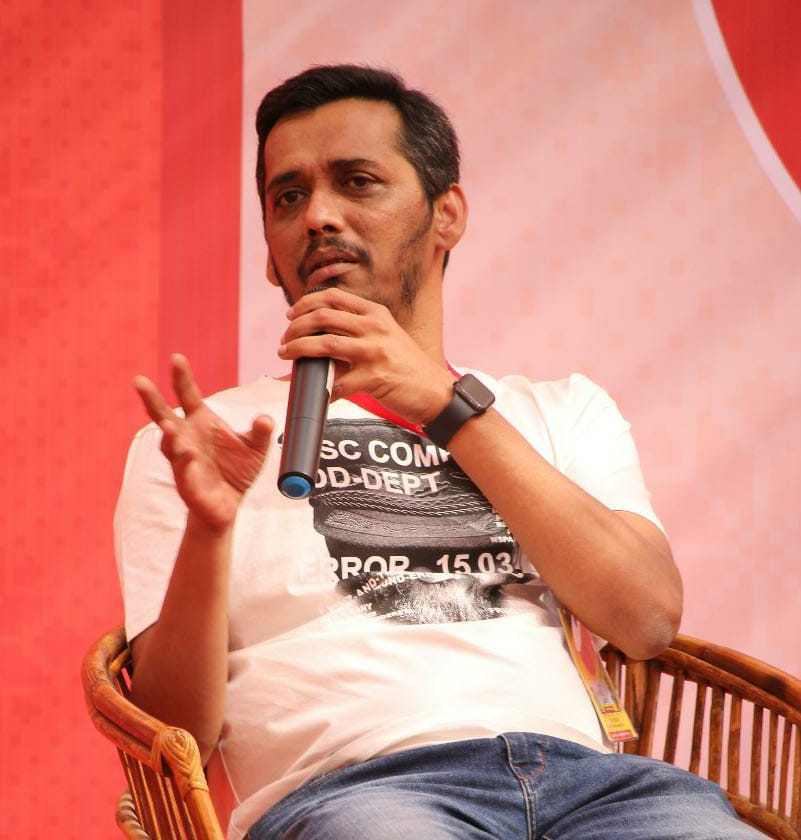
If Gujarati cinema has a house composer, it is Mehul Surti. He started at twenty two with Narmada Tara Vahi Jata Pani, then scored Kevi Rite Jaish in 2012, the satire that is generally credited with restarting the industry. From there the run reads like a spine of the revival: Aapne to Dhirubhai, Passport, Kookh, Vitamin She, Montu Ni Bittu, Short Circuit, 21mu Tiffin, Kamthaan, Kasoombo, Umbarro and Shastra. Fifteen Gujarati features, which in a language that releases a few dozen films a year is not a filmography, it is an era.
The credential nobody else in this category has is Hellaro. It won the National Film Award for Best Feature Film at the 66th National Film Awards, the only Gujarati film ever to take the top prize, and Surti wrote its four song score with lyrics by Saumya Joshi. He won the GIFA Gujarati Iconic Film Award for both Best Music Director and Best Background Score for it. Away from film he has scored theatre, including Samudramanthan and Dhaad, and set more than two hundred Gujarati poems to music, from Narmad and Umashankar Joshi to Mareez and Mukul Choksi. That last habit is the tell. He treats Gujarati as a literature first and a market second.
Photo: Imfarhad7, camera owner A. M. Pathan, CC BY-SA 4.0, via Wikimedia Commons.
2Sachin-Jigar
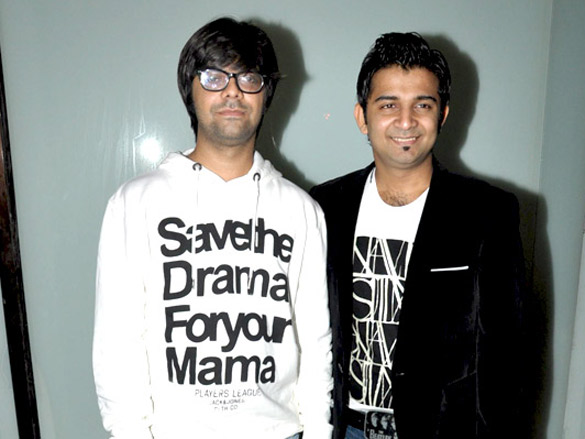
Sachin Sanghvi and Jigar Saraiya are the biggest Gujarati names in Indian film music, and unlike most people who fit that sentence they actually came home to work. Both are from Gujarat and both are settled in Mumbai. They spent years as assistants to Rajesh Roshan and Pritam and arranged for A. R. Rahman, Amit Trivedi and Nadeem-Shravan before their first independent album in 2011. The Hindi run since then is enormous: OMG Oh My God!, ABCD, Badlapur, Stree, Bhediya, Zara Hatke Zara Bachke. None of that is why they are on this page.
They are here for nine Gujarati soundtracks, each one confirmed in the music credit of the film itself: Bey Yaar in 2014, Wrong Side Raju in 2016, Love Ni Bhavai and Best of Luck Laalu in 2017, Chaal Jeevi Laiye! in 2019, Kehvatlal Parivar and Aum Mangalam Singlem in 2022, Kutch Express in 2023 and Mom Tane Nai Samjay in 2025. Between them they define the modern commercial sound of the language. Bey Yaar was the first post revival blockbuster. Love Ni Bhavai gave the language Vhalam Aavo Ne, which is probably the most played Gujarati film song of the last decade. Chaal Jeevi Laiye! reported a gross around Rs 50 crore. Two of the nine carry National Film Awards at film level rather than music level: Wrong Side Raju took Best Feature Film in Gujarati at the 64th ceremony, an award collected by Mikhil Musale and CineMan Productions, and Kutch Express won three prizes at the 70th, including Best Feature Film Promoting National, Social and Environmental Values. Neither is a composing award and neither belongs to the duo personally. A tenth title is often added to their Gujarati list and is left off here: Chor Bani Thangaat Kare in 2017 names Parth Bharat Thakkar in the film's music credit while the same article's soundtrack section attributes the song album to Sachin-Jigar, and a credit an encyclopedia argues with itself about is dropped rather than counted. What is not in dispute is that Sachin Sanghvi sang two songs on it, Bhuli Javu Che and Yaad Chhe. One further fact belongs in the record: in October 2025 Sachin Sanghvi was arrested in Mumbai following an assault complaint and was released on bail shortly afterwards, and his lawyer has called the allegations baseless. The matter has not been tested in court.
Photo: Bollywood Hungama, CC BY 3.0, via Wikimedia Commons.
3Parth Bharat Thakkar
Parth Bharat Thakkar started learning music at three and had composed an album, Majja Ni Life for radio host Dhvanit Thaker, before he turned twenty one. In 2015 he scored both Gujjubhai The Great and Chhello Divas. Those two films are the reason the Gujarati multiplex comedy exists as a category, and one composer is on both. Since then the verified list runs through Ventilator, Sharato Lagu, Luv Ni Love Storys and Bachubhai, with Mann Melo from Sharato Lagu becoming the kind of song that outlives the film it came from.
A note on honesty here, because it matters. His own Wikipedia discography lists Bey Yaar and Love Ni Bhavai, but the film pages for both credit Sachin-Jigar in the music field. When an encyclopedia contradicts itself the right move is to drop the disputed credit rather than pick the flattering version, so neither title is counted above. What is left is still a formidable body of work, and it is all first hand Gujarati, composed in Ahmedabad for Gujarati films, with none of it borrowed from a Hindi career.
Instagram: @parthmusic (verified 2026-07-29).
4Kedar and Bhargav
Kedar Upadhyay and Bhargav Purohit are the composers of the horror thriller that changed what a Gujarati film could be. Vash, released in February 2023, won the National Film Award for Best Gujarati Feature Film at the 71st National Film Awards and was remade in Hindi. Their score is a large part of why a low budget possession story played to full houses for months. In the same year they scored 3 Ekka, which reported a gross around Rs 26 crore, and the year before that Naadi Dosh, which reported around Rs 11.85 crore.
The duo works in both directions, which is unusual. Bhargav Purohit wrote every lyric on the Umbarro soundtrack in 2025, a film composed by Mehul Surti, so the two halves of this list keep passing work between them. Their Instagram page is small by the standards of the singers further down the page, a few thousand followers against Geeta Rabari's four and a half million, and that gap is the honest shape of this industry. The people who write the music are not the people the audience follows.
Instagram: @kedarandbhargav (verified 2026-07-29).
5Smmit Jay
Smmit Jay wrote all seven tracks on Laalo, the devotional drama that became the biggest commercial event in the history of Gujarati cinema. The film was made on a reported budget of Rs 50 lakh and has a reported worldwide gross of around Rs 120 crore, figures that are industry reported rather than audited. The soundtrack runs thirty one minutes on the Gujarati Jalso label with lyrics by Prem D Dave, and the closing track Dwarika No Naath is a traditional composition he recreated rather than wrote.
What makes the album worth studying is the casting of voices. He put Krishna Beuraa on the opener, gave Kirtidan Gadhvi three tracks, brought in Aishwarya Majmudar for Kaan Tari Re and Parthiv Gohil for Navee Savaar. That is a producer's instinct as much as a composer's, using the biggest folk and playback voices in the language as instruments rather than as marquee names, and it is a large part of why a film about devotion outgrossed every comedy and horror title that came before it.
Instagram: @smmit_jay (verified 2026-07-29).
6Rahul Munjariya
Rahul Munjariya scored Shu Thayu?, the 2018 Belvedere Films comedy that reported a gross of around Rs 21 crore and sat in Gujarati multiplexes for months. His profile describes him as a film and independent music composer, and the second half of that phrase is doing real work. A composer in this language cannot live on film scores alone, because there are not enough films, so the independent single is the day job and the soundtrack is the showcase.
His filmography is short next to Mehul Surti's or Parth Bharat Thakkar's, and pretending otherwise would be padding. He is on this list because Shu Thayu? was a genuine commercial hit whose songs travelled, and because he is one of a small handful of composers a Gujarati producer can actually call. In an industry this size, being one of ten people who can do the job is a credential.
Instagram: @rahulmunjariya (verified 2026-07-29).
7Advait Nemlekar
Advait Nemlekar is the co-composer on both Gujjubhai films, credited alongside Parth Bharat Thakkar on the 2015 original and alongside Thakkar and Sagar Desai on GujjuBhai: Most Wanted in 2018. That is a narrow Gujarati footprint and it is stated plainly here rather than inflated, but it is a footprint on the most commercially durable comedy franchise the language has.
The rest of his work is Hindi and Marathi, and it is substantial: the Marathi film Naal, plus Special Ops, Aashram, Khakee, Vadh 2 and the animated series Lamput. He runs a studio called The Tuning Folk. He is included because the credit is verifiable on both film pages and because the Gujjubhai films are impossible to leave out of any honest account of what Gujarati audiences actually listened to between 2015 and 2018.
Instagram: @advaitnemlekar (verified 2026-07-29).
The foundation, before the revival
Three names from the era when Gujarati film music was built. The archive around them is thinner than it should be, and the photograph problem is at its worst here.
8Hemu Gadhavi
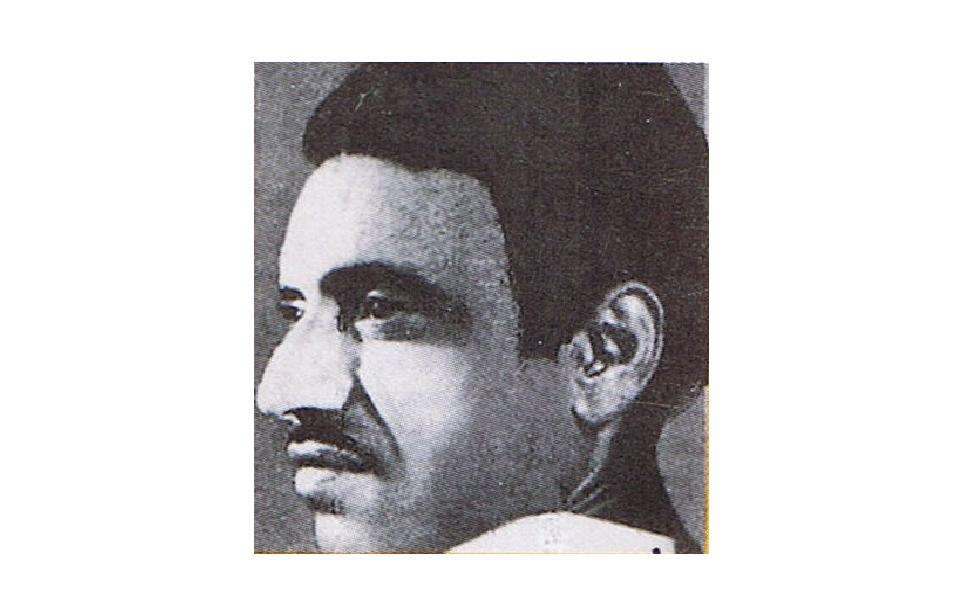
Hemu Gadhavi died at thirty five and is still, six decades later, the reference point for Saurashtrian folk music. He was a singer, songwriter, composer, playwright and actor, and he worked at a moment when Gujarati folk was moving off village stages and onto radio and record for the first time. The version of a Charani song most Gujaratis carry in their head is very often his arrangement of it.
The credit that carries furthest is Mor Bani Thanghat Kare. Jhaverchand Meghani wrote the Gujarati lyric in 1944, a loose translation of Tagore's Navavarsha published in his anthology Ravindra-Veena, and Hemu Gadhavi set it to music. In 2013 Sanjay Leela Bhansali used it over the title credits of Goliyon Ki Raasleela Ram-Leela, sung by Osman Mir, which is how a Kathiawadi folk melody from the 1940s ended up opening one of the biggest Hindi films of the decade. Very few composers in any Indian language have a tune that survives that long without their name attached to it.
Photo: Original uploader જીતેન્દ્રસિંહ at Gujarati Wikipedia, CC BY-SA 3.0, via Wikimedia Commons.
9Purushottam Upadhyay

Purushottam Upadhyay spent ninety years inside Gujarati music and shaped the part of it that never gets called film music. He was the central figure in Gujarati sugam sangeet, the semi classical light song tradition that fed straight into film soundtracks, and he composed for more than twenty films and thirty stage plays. The Government of India gave him the Padma Shri in 2017. He died in December 2024.
He is a good illustration of why this page is shorter than it should be. The only free licensed photograph of him anywhere on Wikimedia Commons is a group shot from a Mumbai concert in February 1981, donated by the poet Musafir Palanpuri, in which he is one of four men on a stage. That is the entire visual record of a Padma Shri composer in the open archive. It is enough to keep him on this list, and it is nowhere near enough for a man who wrote the melodies a generation of Gujaratis sang at weddings.
Photo: Musafir Palanpuri aka Amirmohammad Sindhi, CC BY-SA 4.0, via Wikimedia Commons.
10Arvind Barot

Arvind Barot has recorded more than eight thousand Gujarati songs. Read that number again, because it explains the shape of the industry he worked in. Through the 1990s and early 2000s, when Gujarati cinema was making rural melodramas for a shrinking single screen circuit, the same handful of voices sang almost everything, and Barot was one of them. He is a singer, songwriter, music director, composer and poet, and he specialises in bhajan, devotional and garba forms alongside his film work.
His hardest verified film credit is as music director on Desh Re Joya Dada Pardesh Joya in 1998, one of the biggest Gujarati commercial successes of that period. He sits in this list as the bridge between the folk record industry and the film industry, the point where those two things were effectively the same business. The Gujarat Vishwakosh Trust released two free licensed photographs of him to Commons, which is more than most of his contemporaries got.
Photo: Gujarat Vishw Kosh Trust, CC BY-SA 4.0, via Wikimedia Commons.
The playback voices of the new wave
Six singers whose Gujarati film credits are on the record, track by track.
11Aishwarya Majmudar
Aishwarya Majmudar recorded her first Gujarati playback song, for the film Ghar Maru Mandir, in February 2003. She was a child. She won STAR Voice of India Chhote Ustad at fifteen, went through Music Ka Maha Muqabala on Himesh Reshammiya's team, and could easily have spent the next twenty years as a Hindi television voice. Instead she has three Gujarat State Awards for Best Playback Singer and a Gujarati catalogue that no other female voice in the language comes close to.
The credits do the arguing. Aa Safar in Kevi Rite Jaish in 2012, the film that restarted the industry. Prem Ni Masti in Vitamin She. The female version of Vhalam Aavo Ne in Love Ni Bhavai. Asvaar, the opening track of Hellaro, sung with the Kutchi Sufi singer Mooralala Marwada. Kaan Tari Re on Laalo in 2025 with Kirtidan Gadhvi. That is a straight line through the National Award winner, the revival film and the highest grosser, which is a sentence you can write about almost nobody else on this page.
Instagram: @aishwarya_tm (verified 2026-07-29).
12Jigardan Gadhavi
Jigardan Gadhavi trained as a physiotherapist at JG College in Ahmedabad and started composing songs in primary school, which tells you which of those two things was going to win. He made his Gujarati cinema debut with Hardik Abhinandan and then sang the three tracks that made him unavoidable: Vhalam Aavo Ne from Love Ni Bhavai, Mane Kahi De from Karsandas Pay & Use, and Chaand Ne Kaho from Chaal Jeevi Laiye!. His singles Dhimo Varsad, Mogal Taro Aashro and Mogal Aave did the same job outside film.
What separates him from the other big voices is that he also writes the music. He has composed the scores for Hardik Abhinandan, I Wish and Lapet, which puts him in both halves of this page. Very few artists in Gujarati music can sing a lead track and hand in a full soundtrack, and the ones who can tend to end up shaping how the next decade sounds.
Instagram: @jigrra (verified 2026-07-29).
13Bhoomi Trivedi
Bhoomi Trivedi grew up in a musical household in Vadodara where her mother ran her own folk music group, quit Indian Idol twice for reasons outside her control, came back for the fifth season and finished runner up. Then Sanjay Leela Bhansali heard her. She had originally been approached to write Gujarati lyrics for a song being arranged by Shail Hada, and ended up singing Ram Chahe Leela instead. Husn Parcham in Zero followed in 2018.
Her Gujarati work is the reason she is here and not on a Bollywood list. She sang Vaagyo Re Dhol on Hellaro, the closing track of the only Gujarati film to win the National Film Award for Best Feature Film, and she sang on Kutch Express alongside Keerthi Sagathia. A voice with that much power usually gets pulled permanently into Hindi. Hers kept coming back to a language with a tenth of the budget.
Instagram: @bhoomitrivediofficial (verified 2026-07-29).
14Parthiv Gohil
Parthiv Gohil has sung for Devdas, Saawariya, Saheb Biwi Aur Gangster and Kisaan, and in Gujarati he is known for Aasmani, Thai Jashe and Soni Gujarati Ni. His film credits run from E Deewangi in Vitamin She to the opening track of Kutch Express, sung with Manasi Parekh, to Navee Savaar on the Laalo soundtrack in 2025. That last one puts him on the highest grossing Gujarati film ever made.
The more interesting half of his career is behind the camera. He co-produced Golkeri in 2020, then produced Kutch Express, which won three awards at the 70th National Film Awards, and then Shubhchintak. A playback singer who becomes a producer of National Award winning films in his own language is not a normal career shape. It is what happens when someone decides the industry is too small to wait for someone else to build it.
Instagram: @parthivgohil9 (verified 2026-07-29).
15Keerthi Sagathia
Keerthi Sagathia is the son of the Gujarati folk singer Karsan Sagathiya, which means he grew up inside the dayro tradition rather than discovering it later. He came to national attention as a contestant on Fame Gurukul in 2005 and appeared as a celebrity guest singer on X Factor in 2011. His own profile lists Switty Switty, Tum Tak, Mujh Mein Tu, Shubh Din and Mayya Mayya among his Hindi work.
In Gujarati he sang on Kutch Express, sharing a track with Bhoomi Trivedi, and on Luv Ni Love Storys. The gravel in his voice is a folk inheritance being used inside a modern film arrangement, which is exactly the trade this whole list is built on. Gujarati cinema does not have a separate playback tradition. It borrows the folk voice and puts a studio around it.
Instagram: @keerthisagathia (verified 2026-07-29).
16Darshan Raval

Darshan Raval is the crossover case this page was most careful with. He is one of the biggest independent pop voices in India, he was runner up on India's Raw Star in 2014, and English Wikipedia describes him as working in Hindi, Gujarati, Punjabi and Bengali. Almost all of the commercial output that made him famous is Hindi. Being from Ahmedabad does not earn a place on a Gujarati music list, so the question was whether there was a real Gujarati credit underneath the fame.
There is one, and it is properly documented. He sang Maachhalio Ude on the Vitamin She soundtrack in 2017, composed by Mehul Surti with lyrics by Raeesh Maniar. That is a Gujarati language song in a Gujarati film scored by the most credentialed composer in the industry, and it is the whole basis for his inclusion here. Anyone selling you a longer Gujarati filmography for him should be asked to show the tracklists.
Photo: Bollywood Hungama, CC BY 3.0, via Wikimedia Commons.
The folk singers who became the sound
In Gujarati cinema the line between folk artist and playback singer barely exists. These eight are the reason.
17Kirtidan Gadhvi
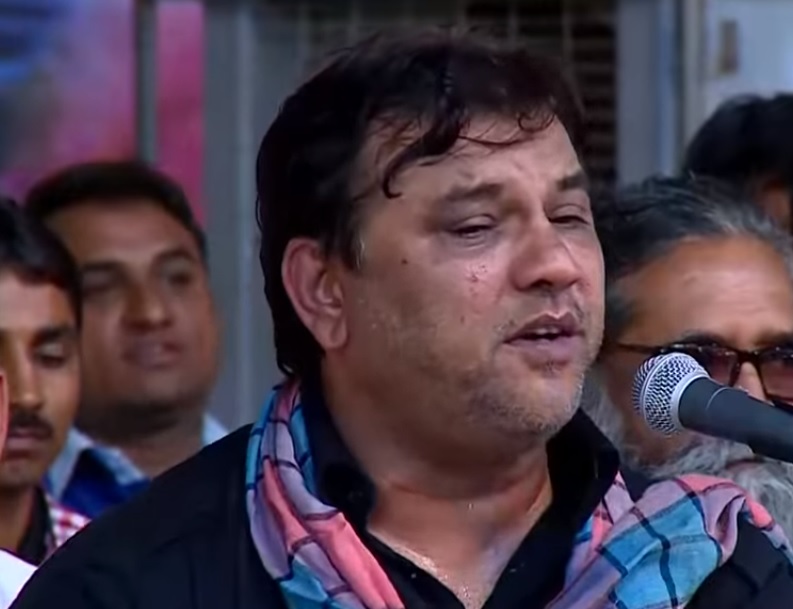
Kirtidan Gadhvi is the rare folk singer with a Master of Performing Arts in music, taken at MS University Vadodara under B. I. Mahant and Rajesh Kelkar, and he taught at Bhavnagar University before performing became a full time job. He made his public debut at a cow protection rally in Jamnagar in 2005 that raised Rs 45 million, which is a very Gujarati way to start a career. Laadki, sung on MTV Coke Studio in April 2015 with Sachin-Jigar, Tanishka Sanghvi and Rekha Bhardwaj, took him national. Nagar Me Jogi Aaya and Gori Radha Ne Kaalo Kaan are the songs the crowd sings back at him.
His film work peaked with Laalo in 2025, where Smmit Jay gave him three of the seven tracks, including Manorath Jeev and a share of Kaan Tari Re with Aishwarya Majmudar. He received the Kavi Kag Award in 2019, presented by Murari Bapu, which in the Saurashtra folk world carries more weight than most film trophies. Two million verified followers and a postgraduate degree in the tradition he performs is an unusual combination anywhere.
Photo: Soni Anil Maheshbhai, CC BY-SA 4.0, via Wikimedia Commons.
18Aditya Gadhvi

Aditya Gadhvi won ETV Lok Gayak Gujarat, sang for Gujarat's tableau at the Republic Day parade attended by Barack Obama and Narendra Modi, worked with A. R. Rahman on Lekar Hum Deewana Dil and sang backing vocals in Rahman's live shows. Two of his songs from Kamasutra: The Revenge were shortlisted for nominations in the Best Original Song category at the 86th Academy Awards. Then in July 2023 Coke Studio Bharat released Khalasi and the ceiling disappeared.
His Gujarati film work is on the record: Sapna Vinani Raat on the Hellaro soundtrack, plus backing vocals on Haiyaa. He performed the Gujarat Titans anthem Aava De at the Narendra Modi Stadium during IPL 2023. He holds a Global Indian Music Academy Award for Best Traditional Folk Single, and he features on Wheel of Time from Sounds of Kumbha, an album nominated at the 68th Grammy Awards for Best Global Music Album. A folk singer from Gujarat with a line to the Grammys is new. He is the first.
Photo: Imfarhad7, CC BY-SA 4.0, via Wikimedia Commons.
19Osman Mir

Osman Mir does not have an English Wikipedia biography, which is a decent measure of how badly Gujarati music is documented, because he sings the song that opens one of the most watched Hindi films of the last fifteen years. Mor Bani Thanghat Kare runs over the title credits of Goliyon Ki Raasleela Ram-Leela in 2013. The lyric is Jhaverchand Meghani's 1944 Gujarati rendering of Tagore. The tune is Hemu Gadhavi's. The voice is his.
His own verified profile describes him as an Indian playback singer working since 2013 in Hindi and Gujarati, and he has close to half a million followers. He belongs on this list under the strict version of the rule this page applies: the credit that qualifies him is a Gujarati language song, even though the film around it is Hindi. That distinction is the whole point. What matters is the language of the music, not the passport of the singer.
Photo: Gazal world, CC BY-SA 4.0, via Wikimedia Commons.
20Mooralala Marwada

Mooralala Marwada is an eleventh generation Meghwal singer from a village in Kutch, and he started performing at eight by following his father and grandfather to satsangs. He sings Kabir, Mirabai and Ravidas in the Kafi form carried by the Hindu singers of Shah Abdul Latif Bhittai. His touring group is family: two nephews and a grandson. That is not a marketing story, that is how the repertoire has been transmitted.
The Kabir Project brought him wider attention and Vari Jaun on Coke Studio in 2012 made him recognisable outside Gujarat. In 2019 he sang Asvaar on the Hellaro soundtrack with Aishwarya Majmudar, and in 2021 he sang Rann Ma Kutchh in the Hindi film Rashmi Rocket under Amit Trivedi. In 2025 he worked with the Kathak dancer Sanjukta Sinha at the Jahan-e-Khusrau World Sufi Music Festival. When a Gujarati film needs a voice that sounds like the land it is shot on, this is the number they call.
Photo: Joseph N D, CC BY-SA 4.0, via Wikimedia Commons.
21Hemant Chauhan

Hemant Chauhan released his first album, Dasi Jivan na Bhajano, in 1978 and it went across Gujarat. He has recorded more than five thousand bhajans since. Pankhida O Pankhida and Unchi Medi Te Mara Sant Ni Re are the ones every Gujarati household knows without being able to say when they learned them. He is routinely called the bhajan king of Gujarati music, and he is also regarded as one of the strongest voices in sugam sangeet.
The Government of India awarded him the Padma Shri in 2023 for his contribution to Gujarat's traditional folk music, and he received the Akademi Ratna Award in 2011. His audience is diaspora shaped: Gujarat first, then the United Arab Emirates, the United Kingdom, the United States and East Africa. His 2007 Kathiyawadi Lok Dayra and Bhajan Sandhya tour of North America is still cited as the point where Gujarati devotional music became a stadium proposition abroad. He is one of only a handful of living Gujarati musicians with a national civilian honour and a verifiable free licensed photograph, which as this page's methodology explains is a rarer combination than it should be.
Photo: Suyash Dwivedi, CC BY-SA 4.0, via Wikimedia Commons.
22Falguni Pathak

Falguni Pathak has been the sound of Navratri for close to four decades. She debuted professionally in 1987, released her first album in 1998, and built a live business around her band Tha Thaiyaa at a scale no other Gujarati artist has matched. Her music sits on traditional Gujarati forms and her subject is almost always love. For an entire generation of Gujaratis, garba is a Falguni Pathak recording playing somewhere in the background of their adolescence.
The film credit that qualifies her here is recent and specific. She sang London Ke Limbdi on the Umbarro soundtrack in 2025, a duet with the composer Mehul Surti, with lyrics by Bhargav Purohit. Umbarro reported a gross around Rs 13.3 crore. Her long career has been mostly albums and live shows rather than playback, and stating that plainly is more useful than inventing a filmography for her. One verified Gujarati film song plus forty years of defining how the language sounds when it dances is a strong enough case.
Photo: Bollywood Hungama, CC BY 3.0, via Wikimedia Commons.
23Geeta Rabari

Geeta Rabari has the largest verified audience of anyone on this page. Four point eight million followers on a scrape run on 29 July 2026, more than double Kirtidan Gadhvi's and more than twenty times what the biggest composer duo in the language carries. She sings Gujarati folk and garba, she tours the live circuit relentlessly, and her account is run with a booking number in the bio rather than a label's press team.
She also has no English Wikipedia biography. That contrast is the single sharpest fact about how Gujarati music is documented in 2026. The most followed artist in the language is invisible to the encyclopedia that every AI assistant and search engine reads from, while she is entirely visible to five million people who actually listen to her. What Commons does hold is two free licensed photographs of her, uploaded by Gujarati Wikipedia contributors, which is two more than four Padma Shri winners in this field managed. Her catalogue is folk and garba rather than verified film playback, and that is stated here rather than papered over.
Photo: Soni Anil Maheshbhai, CC BY-SA 4.0, via Wikimedia Commons.
24Kinjal Dave
Kinjal Dave debuted with the single Jonadiyo and then released Chaar Chaar Bangdi Vali Gadi in 2016, which became one of the most played Gujarati songs of the decade. Leri Lala, Chhote Raja, Jay Adhyashakti Aarti, Dhan Chhe Gujarat and Makhan Chor followed. She made her acting debut in the 2018 Gujarati film Dada Ho Dikri and joined the Bharatiya Janata Party in 2019. She holds the Gauravshali Gujarati Award from the 12th Gauravvanta Gujarati Awards in 2019 and the Feelings Pride of India Award in the music category in 2020.
The song that made her also went to court. Red Ribbon Entertainment and the Australia based Gujarati singer Kartik Patel sued over Chaar Chaar Bangdi Vali Gadi, claiming it copied his earlier upload. An Ahmedabad commercial court restrained her from using the song in January 2019, the Gujarat High Court lifted the restraint a month later, and the case was dismissed in April 2019 on jurisdiction. A fresh notice followed in September 2019, after which her publisher RDC Media and Saraswati Studio accepted infringement and pulled the song, leaving her to defend it alone. Her work is folk and garba singles rather than film playback, and that is where the honest boundary sits.
Instagram: @thekinjaldave (verified 2026-07-29).
What the numbers say
Verified Instagram reach in Gujarati music, 29 July 2026
Every figure was read directly off the artist's own Instagram profile by scrape on 29 July 2026, not taken from a media report or an aggregator. Follower counts move daily. The pattern that matters is structural rather than exact: the folk singers carry between ten and four hundred times the audience of the composers who write the film scores they sing. Only three composers on this page clear 100,000 followers. The single largest account belongs to an artist with no encyclopedia entry at all.
Questions people actually ask
Who is the best music director in Gujarati cinema?
On verified credentials it is Mehul Surti. He has fifteen Gujarati features on his Wikipedia filmography and he scored Hellaro, the only Gujarati film to win the National Film Award for Best Feature Film, for which he also took GIFA awards for Best Music Director and Best Background Score. Sachin-Jigar have the bigger overall profile, but most of their catalogue is Hindi.
Who composed the music for Hellaro, Chhello Show, Chaal Jeevi Laiye, Kutch Express and Laalo?
Hellaro was scored by Mehul Surti with lyrics by Saumya Joshi. Chaal Jeevi Laiye! and Kutch Express were both scored by Sachin-Jigar. Laalo: Krishna Sada Sahaayate was scored by Smmit Jay, all seven tracks, with lyrics by Prem D Dave. Chhello Show, released internationally as Last Film Show, was scored by the French composer Cyril Morin, which is why he is not on this list of Gujarati music makers.
Are Sachin-Jigar and Darshan Raval really Gujarati music artists or are they Bollywood?
Both, and the distinction is handled explicitly on this page. Sachin-Jigar have nine verified Gujarati soundtracks, from Bey Yaar in 2014 to Mom Tane Nai Samjay in 2025, so they qualify on Gujarati work rather than Gujarati birth. Darshan Raval has one verified Gujarati film song, Maachhalio Ude from Vitamin She in 2017, and the rest of his catalogue is Hindi. Being from Gujarat is not a qualification for this list.
Which Gujarati folk singers have won the Padma Shri?
Hemant Chauhan received the Padma Shri in 2023 and Bhikhudan Gadhvi received it in 2016, along with a Sangeet Natak Akademi Award. Diwaliben Bhil received it in 1990, the composer Avinash Vyas in 1970 and the composer and singer Purushottam Upadhyay in 2017. Of those five, only Hemant Chauhan and Purushottam Upadhyay have a free licensed photograph on Wikimedia Commons, which is why the other three are named in the methodology instead of getting an entry.
Why are some famous Gujarati singers missing from this list?
Because an entry ships only with verified facts plus either a free licensed Commons photograph or an Instagram account confirmed by scrape. Avinash Vyas, who scored more than 190 Gujarati films, Diwaliben Bhil, Praful Dave and Bhikhudan Gadhvi all failed that test. In Bhikhudan Gadhvi's case the only Commons file attached to his name is a 2025 upload of a 2016 ceremony photograph claiming own work, a licence claim unlikely to survive review, and no Instagram account carrying his name could be confirmed as his. Shipping a blank card would be worse than leaving them out and saying why.
Sources and image credits
All photographs are free-licensed files from Wikimedia Commons, reused with the attribution each licence requires. No press agency or studio photographs are hosted on this site. Instagram content is linked or embedded from the official account, never re-hosted.
- English Wikipedia film articles and soundtrack tracklists for Hellaro, Kutch Express, Laalo: Krishna Sada Sahaayate, Chaal Jeevi Laiye!, Vash, Vash Level 2, Umbarro, Kasoombo, Love Ni Bhavai, Vitamin She, Chhello Divas, Bey Yaar, Kevi Rite Jaish, Gujjubhai the Great, GujjuBhai: Most Wanted, Shu Thayu?, 3 Ekka, Naadi Dosh, Reva, Wrong Side Raju, Best of Luck Laalu, Kehvatlal Parivar, Aum Mangalam Singlem, Mom Tane Nai Samjay, Chor Bani Thangaat Kare, Desh Re Joya Dada Pardesh Joya and Last Film Show, retrieved July 2026
- English Wikipedia biographies of Mehul Surti, Sachin-Jigar, Parth Bharat Thakkar, Jigardan Gadhavi, Aishwarya Majmudar, Bhoomi Trivedi, Parthiv Gohil, Keerthi Sagathia, Darshan Raval, Kirtidan Gadhvi, Aditya Gadhvi, Mooralala Marwada, Hemant Chauhan, Falguni Pathak, Kinjal Dave, Hemu Gadhavi, Purushottam Upadhyay, Arvind Barot, Avinash Vyas, Diwaliben Bhil and Bhikhudan Gadhvi, retrieved July 2026
- English Wikipedia article on the song Mor Bani Thanghat Kare, for the Jhaverchand Meghani lyric, the Hemu Gadhavi composition and the Osman Mir vocal in Goliyon Ki Raasleela Ram-Leela
- Wikimedia Commons file pages, checked individually for licence tag, stated author and the plausibility of the own-work claim, July 2026
- Instagram profile data for every handle on this page, scraped directly from the artist's own profile on 29 July 2026
- A credits research file covering 118 Gujarati films, used as a shortlisting aid only, with every credit it suggested re-checked against a film page before use