Manasi Parekh is the first Gujarati actress to win the National Film Award for Best Actress, which she took at the 70th National Film Awards for Kutch Express. Janki Bodiwala followed at the 71st with Best Actress in a Supporting Role for Vash, the horror film later remade in Hindi as Shaitaan. Before both of them, thirteen women shared the Special Jury Award at the 66th National Film Awards for Hellaro, and Nirupa Roy, Aruna Irani, Asha Parekh and Rita Bhaduri carried Gujarati names through five decades of Indian cinema.
For most of its life, Gujarati cinema treated its actresses as decoration. The heroine sang, cried, got married in the last reel and went home. Then a handful of women started collecting the one thing in Indian cinema that no publicist can arrange: a National Film Award. Thirteen of them got there at once in 2019 with Hellaro. Manasi Parekh got there alone in 2024. Janki Bodiwala got there a year later with a role so unnerving that Bollywood bought the whole film and cast her again in Hindi.
This list runs twenty deep. It is not a popularity contest and it is not a follower count. Every woman here has a verified body of work in Gujarati film, Gujarati theatre or Gujarati television, and every entry carries either a free-licensed photograph with its attribution or an Instagram account confirmed by scrape on the day of publication. Where a name could not clear both bars, the name is not on the page. That is the whole editorial policy in one sentence.
The list at a glance
| Actress | Era | Known for | Biggest credential |
|---|---|---|---|
| Manasi Parekh | 2004 to present | Kutch Express, Jhamkudi, Golkeri | National Film Award for Best Actress, 70th National Film Awards |
| Janki Bodiwala | 2015 to present | Chhello Divas, Vash, Shaitaan | National Film Award for Best Actress in a Supporting Role, 71st National Film Awards |
| Shraddha Dangar | 2017 to present | Hellaro, Machchhu, Kasoombo | Special Jury Award, 66th National Film Awards, for Hellaro |
| Niilam Paanchal | 2007 to present | Hellaro, Vash, Saraswatichandra | Special Jury Award, 66th National Film Awards, for Hellaro |
| Kaushambi Bhatt | 2019 to present | Hellaro, Montu Ni Bittu, Dhunki | Special Jury Award, 66th National Film Awards, for Hellaro |
| Nirupa Roy | 1946 to 1999 | Ranakdevi, Do Bigha Zamin, Deewaar | Three Filmfare Awards and the Filmfare Lifetime Achievement Award in 2004 |
| Aruna Irani | 1960s to present | Beta, Pet Pyaar Aur Paap, Gujarati cinema | Two Filmfare Awards for Best Supporting Actress and a record ten nominations |
| Asha Parekh | 1952 to 1990s | Teesri Manzil, Kati Patang, Akhand Saubhagyavati | Dadasaheb Phalke Award in 2020 and the Padma Shri in 1992 |
| Rita Bhaduri | 1970s to 2018 | Lakho Phulani, Sawan Ko Aane Do, Raja | Lead actress of Gujarati cinema for eight years after Lakho Phulani |
| Mallika Sarabhai | 1970s to present | Mena Gurjari, The Mahabharata, Darpana | Played Draupadi in Peter Brook's The Mahabharata |
| Supriya Pathak | 1981 to present | Khichdi, Kalyug, Carry On Kesar | Filmfare Award for Best Supporting Actress for Kalyug |
| Ketki Dave | 1973 to present | Kyunki Saas Bhi Kabhi Bahu Thi, Gujarati theatre | Fifty years on the Gujarati stage, beginning at age thirteen |
| Vandana Pathak | 1995 to present | Khichdi, Golkeri, Umbarro | Eleven Gujarati feature releases between 2020 and 2025 |
| Suchita Trivedi | 1982 to present | Baa Bahoo Aur Baby, Ventilator, Umbarro | Two Indian Telly Awards for Best Actress in a Comic Role |
| Aarohi Patel | 2010s to present | Love Ni Bhavai, Chaal Jeevi Laiye, Aum Mangalam Singlem | Led Premji: Rise of a Warrior, winner of ten Gujarat State Awards |
| Deeksha Joshi | 2017 to present | Sharato Lagu, Dhunki, Luv Ni Love Storys | Critics' Choice Film Award for Best Actress in Gujarati for Dhunki |
| Kinjal Rajpriya | 2015 to present | Chhello Divas, Kem Chho?, 3 Ekka | Gujarat State Award for Best Actress in 2020 for Kem Chho? |
| Esha Kansara | 2010 to present | Duniyadaari, 3 Ekka, Fakt Purusho Maate | Carried a blockbuster Gujarati lead after a decade of Hindi television |
| Puja Joshi | 2012 to present | Aa Family Comedy Che, Hu Ane Tu, Jalso | Anchored two Colors Gujarati sitcoms as the lead |
| Vyoma Nandi | 2016 to present | Cash on Delivery, Gujjubhai Most Wanted, Oxygen | Best Debut Actress at the Gujarati Iconic Film Awards |
How this list was built
Four filters. First, a verified body of work in the Gujarati language on film, stage or television, checked against English Wikipedia biographies and the official National Film Awards citation tables. Gujarati ancestry alone was not enough, which is why several famous Gujarati-origin names in Hindi cinema were left out. Second, a real image: a free-licensed Wikimedia Commons photograph with its photographer and licence carried on the page, or an Instagram account confirmed live by scrape. Third, order by hardest verifiable credential, so National Film Award holders lead, followed by the foundation generation, the stage and television spine, and the current leads. Fourth, no invented numbers. Award years come from the official citation tables, career film counts are quoted as reported in published biographies, and anything that could not be sourced was cut rather than smoothed over.
The National Film Award tier
Five of the twenty hold a National Film Award. It is the only credential in Indian cinema that cannot be bought, traded or spun.
1Manasi Parekh

Manasi Parekh spent close to fifteen years being almost famous. She was one of eight finalists on Channel V's Popstars in 2003, in the same batch as Ayushmann Khurrana. She made her acting debut in the serial Kitni Mast Hai Zindagi in 2004, broke through on Star One's India Calling in 2005, won Zee TV's Star Ya Rockstar, and then played Gulaal on Star Plus in Zindagi Ka Har Rang and Maya in Sumit Sambhal Lega. That is a full Hindi television career, and none of it made her a name anyone outside the industry could place.
Then she went home. She produced the Gujarati web series Do Not Disturb in 2019, made her Gujarati film debut with Golkeri in 2020, and at the 70th National Film Awards won Best Actress for Monghi in Kutch Express, sharing the honour with Nithya Menen for Thiruchitrambalam. She is the first Gujarati actress to win it. Kutch Express also took Best Feature Film Promoting National, Social and Environmental Values, and Best Costume Design for Niki Joshi. Her horror comedy Jhamkudi followed in 2024 and was a commercial success. The pattern is worth naming: the industry that could not place her for fifteen years placed her in one film, in her own language.
Photo: Bollywood Hungama, CC BY 3.0, via Wikimedia Commons.
2Janki Bodiwala

Janki Bodiwala qualified as a dental surgeon before she qualified as a movie star. She holds a Bachelor of Dental Surgery from the Goenka Research Institute of Dental Science in Gandhinagar, and she was a top three finalist for Miss India Gujarat in 2019. Her acting debut came earlier, in Krishnadev Yagnik's Chhello Divas in 2015, which opened on 231 screens worldwide and turned a college comedy into the film that told the industry a young Gujarati audience existed. Chhutti Jashe Chhakka, Tari Maate Once More, Bau Na Vichaar and Naadi Dosh followed.
Vash, in 2023, changed the arithmetic. Yagnik cast her as a girl enslaved by a stranger's dark magic, and the performance was strong enough that Bollywood bought the whole film. Vikas Bahl remade it in Hindi as Shaitaan in 2024 and kept her in the same role opposite Ajay Devgn, Jyothika and R. Madhavan, renamed Jahnvi Rishi. At the 71st National Film Awards, Vash won Best Gujarati Feature Film and Bodiwala won Best Actress in a Supporting Role, shared with Urvashi for the Malayalam film Ullozhukku. She also won the IIFA Award for Best Supporting Actress in 2025 for Shaitaan. She was nominated for the Filmfare in the same category and did not win it, that one went to Chhaya Kadam for Laapataa Ladies.
Photo: Bollywood Hungama, CC BY 3.0, via Wikimedia Commons.
3Shraddha Dangar
Shraddha Dangar debuted in Pappa Tamne Nahi Samjaay in 2017 alongside Bhavya Gandhi, Manoj Joshi and Ketki Dave, then did the musical comedy Tari Maate Once More in 2018. In 2019 she landed two films that could not have been less alike. Machchhu was built on the true events of the Machchhu dam disaster. Hellaro was Abhishek Shah's period drama about a group of women in the Rann of Kutch in the 1970s who find a drummer and start to dance.
Hellaro won the National Film Award for Best Feature Film at the 66th National Film Awards, and the Special Jury Award went to its thirteen actresses as a single citation: Dangar, Shachi Joshi, Denisha Ghumra, Niilam Paanchal, Tarjani Bhadla, Brinda Nayak, Tejal Panchasara, Kaushambi Bhatt, Ekta Bachwani, Kamini Panchal, Jagruti Thakore, Riddhi Yadav and Prapti Mehta. Thirteen women, one award, one line in the official citation table. She followed it with Luv Ni Love Storys in 2020, the period action film Kasoombo in 2024, and the Telugu and Hindi series Mansion 24 in the same year. Her own Instagram bio still leads with the 2019 award, which tells you what it meant.
Instagram: @shraddhadangar_official (verified 2026-07-29).
4Niilam Paanchal
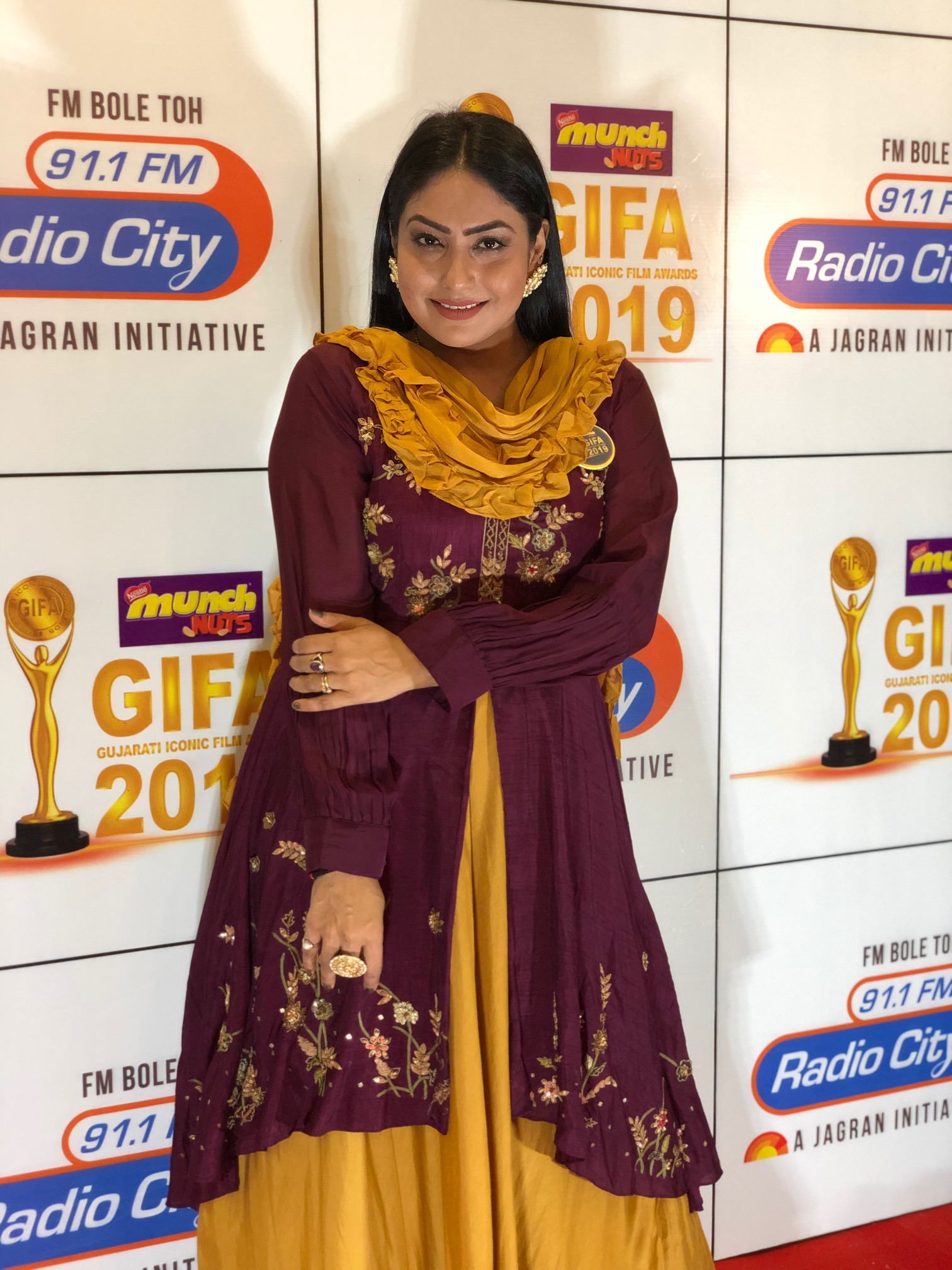
Niilam Paanchal built a career on the channels most award juries never watch. She started on Gujarati television with Ek Daal Na Pankhi on Doordarshan, then Pati Patni Ane Vavajodu, Geet Gunjan, Yuva Sangram and Parnya Atle Pati Gaya on ETV Gujarati, and Saraswatichandra on Zee Gujarati. Her film debut came in 2007 with Sneh Na Sagpan. She crossed into Hindi television with Hamari Devrani, Ruk Jaana Nahin, Ek Veer Ki Ardaas, Lajwanti and Ishqbaaaz, and made her Hindi film debut in Kaabil in 2017.
Then Hellaro put her in the citation table at the 66th National Film Awards alongside twelve other women. Four years later she was the mother in Vash, which is a small detail with a large consequence: she is one of the very few actresses to appear in both of the Gujarati films that won at the national level in the last decade. She has also played Kasturba Gandhi on stage in Bharat Bhagyavidhata, and a Gujarati woman named Parul in the Marathi series Vaiju No. 1. Range, in her case, means moving between four languages without ever leaving the character.
Photo: Imfarhad7, CC BY-SA 4.0, via Wikimedia Commons.
5Kaushambi Bhatt

Very few actors win a National Film Award with their first film. Kaushambi Bhatt did. She was schooled in Rajkot, took her college education at GLS College in Ahmedabad, and completed a master's degree in development communication from Gujarat University, which is not the standard route into a period drama about repressed women in the Rann of Kutch. Hellaro was her debut, and the Special Jury Award at the 66th National Film Awards went to her and twelve colleagues as one citation.
She did not treat the award as an exit. In the same year she appeared in Vijaygiri Bava's romantic comedy Montu Ni Bittu and Anish Shah's Dhunki, two films with nothing in common except that both were made for a Gujarati audience rather than a festival jury. She also works the Gujarati stage, most notably in the play Kaalu Etle Andhaaru. A National Film Award on a debut usually gets an actor a plane ticket to Mumbai. She stayed.
Photo: Imfarhad7, CC BY-SA 4.0, via Wikimedia Commons.
The foundation
The generation that carried Gujarati names into Indian cinema long before Gujarati cinema could pay for its own films.
6Nirupa Roy

She was born Kokila Kishorechandra Bulsara in a village in what is now Valsad, married at fifteen, and moved to Mumbai. In 1946 she and her husband answered an advertisement in a Gujarati newspaper looking for actors. She was selected, and her first film was the Gujarati production Ranakdevi. Her first Hindi film, Amar Raj, came the same year. That is the entire origin story: a classified ad in a Gujarati paper produced one of the most recognised faces in Indian cinema.
She was active from 1946 to 1999, appeared in over 250 films, won three Filmfare Awards from four nominations, and received the Filmfare Lifetime Achievement Award in 2004. In the 1950s her mythological roles were so convincing that people came to her house for blessings after Har Har Mahadev. In the 1970s she became the suffering mother of Hindi cinema opposite Amitabh Bachchan and Shashi Kapoor, and the line from Deewaar is still quoted in rooms where nobody can name the film it came from. The industry called her the Queen of Misery. It was a compliment, and it was also a cage.
Photo: BV Productions, public domain, via Wikimedia Commons.
7Aruna Irani
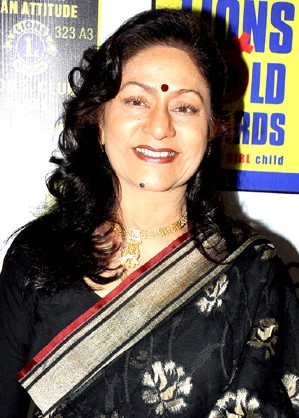
Five hundred films is not a career, it is an institution. Aruna Irani worked across Hindi, Kannada, Punjabi, Marathi and Gujarati cinema, almost always in supporting and character parts, and built the kind of body of work that is easy to underrate precisely because it is everywhere. She won the Filmfare Award for Best Supporting Actress twice, for Pet Pyaar Aur Paap in 1984 and Beta in 1992, and she holds the record for the most nominations in that category with ten.
The Filmfare Lifetime Achievement Award came in January 2012 at the 57th ceremony. Her Gujarati work sits inside that half-thousand rather than beside it, which is exactly the point of her presence on this list: for most of the second half of the twentieth century, Gujarati cinema could not sustain a full career on its own, so the best Gujarati actresses put Gujarati films into a filmography that also fed them. Irani did that longer and more prolifically than anyone.
Photo: Bollywood Hungama, CC BY 3.0, via Wikimedia Commons.
8Asha Parekh

Asha Parekh's father, Bachubhai Parekh, was a Gujarati Hindu; her mother, Sudha Lakdawala, was a Bohri Muslim and a freedom fighter who was jailed while pregnant with her. She started as a child actor in Maa in 1952, was rejected at sixteen for not being star material, and eight days later was cast in Dil Deke Dekho opposite Shammi Kapoor. Then came Teesri Manzil, Do Badan, Kati Patang, Caravan and around eighty more, across more than forty years.
The Gujarati line in her filmography is short and specific: three Gujarati films, including Akhand Saubhagyavati in 1963 and Kulvadhu in 1977. She also directed a Gujarati-language television show, Jyoti, from 1988 to 1989, which is the part almost nobody remembers. She received the Padma Shri in 1992, the Filmfare Lifetime Achievement Award in 2002, a Lifetime Achievement Award at the first International Gujarati Convention in 2006, and the Dadasaheb Phalke Award in 2020. Her autobiography, The Hit Girl, was published in 2017 and is worth reading for how unsentimental it is.
Photo: Ministry of Information and Broadcasting, GODL-India, via Wikimedia Commons.
9Rita Bhaduri

Rita Bhaduri came out of the 1973 batch of the Film and Television Institute of India in Pune, the same batch as Zarina Wahab. Hindi cinema used her as a supporting actress through the 1970s, 1980s and 1990s, and she is best remembered there for Sawan Ko Aane Do in 1979 and for Raja in 1995, which brought her a Filmfare nomination for Best Supporting Actress. Her landmark role outside Hindi came in the Malayalam film Kanyakumari opposite Kamal Haasan.
Gujarati cinema is where she got to be the lead. She was cast in Lakho Phulani in 1976, it was a hit, and she stayed with Gujarati films for the next eight years as a leading actress. That eight-year run is the most complete answer anyone has to the question of what Gujarati cinema looked like for its heroines in the late 1970s. She died in Mumbai in 2018 at sixty two while being treated for a kidney ailment, still working, with the serial Nimki Mukhiya as her last role.
Photo: Bollywood Hungama, CC BY 3.0, via Wikimedia Commons.
10Mallika Sarabhai

Mallika Sarabhai is the daughter of the space scientist Vikram Sarabhai and the classical dancer Mrinalini Sarabhai, which means she inherited both a laboratory and a stage. She took an Economics degree from St. Xavier's College in Ahmedabad, an MBA from IIM Ahmedabad in 1974, and a doctorate in organisational behaviour from Gujarat University in 1976, and started in parallel cinema at fifteen. Her Gujarati film is Mena Gurjari, released on 30 August 1975 and drawn from Gujarati folklore.
Her largest role was Draupadi in Peter Brook's staging of The Mahabharata, which took an Ahmedabad dancer to audiences that had never heard a Gujarati name. She won the Golden Star for Best Dance Soloist at the Theatre des Champs Elysees in Paris in 1977. Since then she has run the Darpana Academy of Performing Arts in Ahmedabad and produced roughly three thousand hours of television for Doordarshan Gujarati through Darpana Communications, most of it aimed at behaviour change rather than ratings. Her solo work, Shakti: The Power of Women and Sita's Daughters, has been performed more than five hundred times in three languages.
Photo: Yoddal, public domain, via Wikimedia Commons.
The stage and television spine
Gujarati acting did not survive on films. It survived on theatre in Ahmedabad and Mumbai, and on sitcoms that ran for a decade.
11Supriya Pathak

Supriya Pathak's first acting job was in a revival of the Bhavai play Maina Gurjari, directed by her mother Dina Pathak, who had performed in it herself. Jennifer Kendall spotted her in a later production at Prithvi Theatre and recommended her to Shyam Benegal, who cast her as Subhadra in Kalyug in 1981. That won her the Filmfare Award for Best Supporting Actress on her first film. Vijeta, Bazaar, Masoom and Mirch Masala followed, along with a small part in Gandhi and the title role in the Malayalam film Akalathe Ambili.
Television made her a household presence rather than a critic's name. Hansa Parekh in the Khichdi franchise is one of the most quoted comic performances in Indian television, and Filmfare called her Dhankor Baa in Goliyon Ki Raasleela Ram-Leela the watershed of her career. She has three Filmfare Awards and a Filmfare OTT Award. Her first Gujarati film came surprisingly late, Carry On Kesar in 2016, which is a strange fact for a woman raised inside Gujarati theatre and a fair measure of how thin the Gujarati film industry was for most of her working life.
Photo: Bollywood Hungama, CC BY 3.0, via Wikimedia Commons.
12Ketki Dave
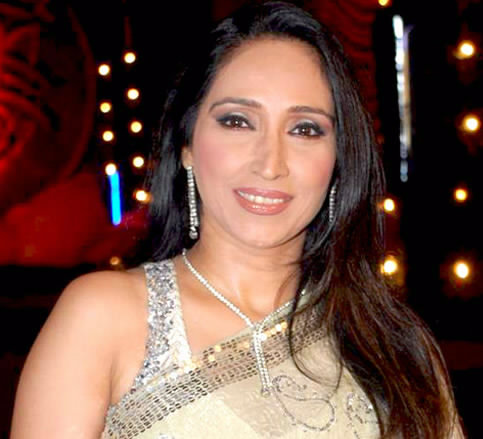
Ketki Dave was accompanying her mother, Sarita Joshi, on tour at thirteen when an actress dropped out of the Gujarati play Vaisakhi Koel and she was pushed on as the replacement. She has not left the stage since. She and her late husband Rasik Dave ran their own theatre company, Mudra, and their daughter Riddhi is a theatre actress too, which makes three generations working the same boards.
Nationally she is Daksha Virani from Kyunki Saas Bhi Kabhi Bahu Thi, the big bindi and the catchphrase, a character so durable that she left in 2001, returned in 2007, left again in 2008, and was brought back for the 2025 sequel. She has done Hindi films including Kal Ho Naa Ho, Aamdani Atthanni Kharcha Rupaiya and Money Hai Toh Honey Hai, plus reality television on Nach Baliye and Bigg Boss. Alongside all of it she has kept working in Gujarati films and Gujarati theatre for five decades, which is the credential that puts her here.
Photo: Bollywood Hungama, CC BY 3.0, via Wikimedia Commons.
13Vandana Pathak

Vandana Pathak was born into a Maharashtrian family and raised in Ahmedabad by a father, Arvind Vaidya, who worked in Gujarati theatre, Gujarati and Hindi films and television. She started on Hindi television in 1995 as Meenakshi Mathur in Hum Paanch, then played Jayshree Parekh in Khichdi and Instant Khichdi, and took the villainous turn as Gaura in Saath Nibhaana Saathiya. For twenty years that was the whole picture: a comic actor with a sideline in menace.
Then the Gujarati film industry started paying. Since 2020 she has appeared in Golkeri, Swagatam, Kehvatlal Parivar, Nava Pappa, Bushirt T-shirt, Gulaam Chor, Vanilla Ice Cream, Umbarro, All The Best Pandya, Jai Mata Ji Let's Rock and Jalebi Rocks. Eleven Gujarati features in six years is a heavier recent Gujarati workload than almost anyone else on this list, and it happened after twenty five years of being known for a Hindi sitcom. Careers in this industry do not run in a straight line, they run in loops.
Photo: Nizil Shah, CC BY-SA 4.0, via Wikimedia Commons.
14Suchita Trivedi

Suchita Trivedi has been on a set since she was six. Her debut was the short film Ek Sawaal Munni Ka, directed by Balwant Dullat, and she was a child artist in Woh Saat Din in 1983 alongside Anil Kapoor and Naseeruddin Shah. As an adult she took the part that defined her: Meenakshi Thakkar in Baa Bahoo Aur Baby on Star Plus, which won her the Indian Telly Award for Best Actress in a Comic Role twice and brought two further nominations.
Her Gujarati work is recent and steady. She was in Ventilator in 2018, The Great Gujarati Matrimony in 2024, Umbarro in 2025 and Paatki in 2026, and she took the Gujarati stage in Ishwar Ni Exchange Offer in 2005. She has also worked in serious Hindi cinema, including Nandita Das's Firaaq in 2008 and Mission Kashmir in 2000. Comic actors get written off as one-note by people who have never tried to be funny on cue for five seasons.
Photo: Bollywood Hungama, CC BY 3.0, via Wikimedia Commons.
The current leads
The women carrying Gujarati films at the box office right now, most of them under forty, most of them working only in Gujarati by choice.
15Aarohi Patel
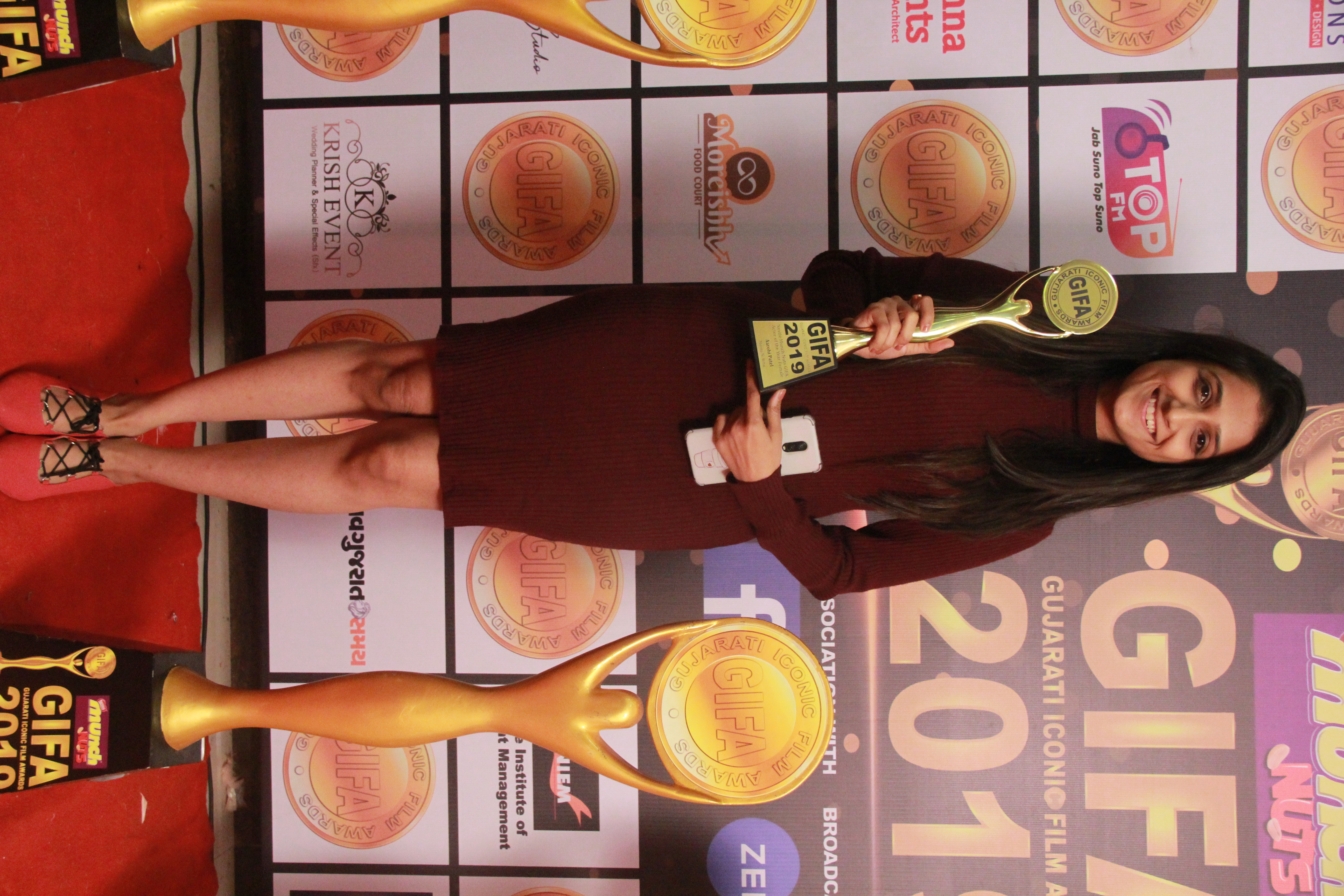
Aarohi Patel started as a child artist in Saandeep Patel's Moti Na Chowk Re Sapna Ma Ditha and got her first leading role while she was still in college, in Vijaygiri Bava's Premji: Rise of a Warrior. That film went on to win ten Gujarat State Awards including Best Film. She has a commerce degree from H. L. Institute of Commerce and a postgraduate degree in development communication from Gujarat University, and she interned at 94.3 My FM and TV9 Gujarati before acting became the job.
Since then she has been in three of the films that defined the modern Gujarati mainstream: Love Ni Bhavai, Chaal Jeevi Laiye and Aum Mangalam Singlem. What is notable about her filmography is what is missing from it. There is no Hindi debut, no Mumbai pivot, no crossover announcement. She has built a full career inside one language, which twenty years ago would have been a career-limiting decision and today is a business model.
Photo: Farhad Shaikh, CC BY-SA 4.0, via Wikimedia Commons.
16Deeksha Joshi
Deeksha Joshi read English Literature at St. Xavier's College in Ahmedabad and made her debut in 2017 in Amit Barot's Shubh Aarambh, following it in the same year with Karsandas Pay & Use and Colorbaaj. Three films in a debut year is either ambition or a very hungry industry, and in Gujarati cinema in 2017 it was both. Sharato Lagu opposite Malhar Thakar won her the GIFA Best Actress of the Year award in 2018.
Dhunki, opposite Pratik Gandhi, was the critical peak, and it brought her the Critics' Choice Film Award for Best Actress in Gujarati in 2020. She took the title role in Luv Ni Love Storys the same year, made her Hindi film debut in Jayeshbhai Jordaar with Ranveer Singh, and from December 2025 has been on Hindi television in Pushpa Impossible. She also co-founded a production company, Eight Winds. Her Instagram bio lists the poetry account before the production company, which is a small honest detail about a working actor.
Instagram: @deekshajoshiofficial (verified 2026-07-29).
17Kinjal Rajpriya

Kinjal Rajpriya came out of the same film as Janki Bodiwala. Both were in Krishnadev Yagnik's Chhello Divas in 2015, and both were in the Hindi remake, Days of Tafree, in 2016. Their careers diverged from there. Rajpriya stayed almost entirely in Gujarati and has been one of the most consistently cast leads of the last decade: Shu Thayu?, Saheb opposite Malhar Thakar, and Short Circuit, the first Gujarati science fiction film, built on a time loop.
Kem Chho? brought her the Gujarat State Award for Best Actress in 2020. Then came 53 Mu Panu in 2022 and a heavy 2023 with Nava Pappa, 3 Ekka and Var Padharavo Saavdhan, the first Gujarati film to be dubbed into Kannada. That last credit is worth pausing on. A regional industry exporting into another regional language, rather than up into Hindi, is a different theory of how a small cinema grows.
Photo: Dabhianil8, CC BY-SA 4.0, via Wikimedia Commons.
18Esha Kansara

Esha Kansara trained in Bharatanatyam from the age of six, performed her arangetram at fourteen, and reached the top hundred on Dance India Dance while still in school. She moved to Mumbai in 2010 and spent a decade on Hindi television: Mukti Bandhan, Ek Nanad Ki Khushiyon Ki Chaabi, My Name Ijj Lakkhan opposite Shreyas Talpade, the bratty police officer Misri Pandey in Maddam Sir, and Amrita in Zindagi Mere Ghar Aana.
Her Gujarati run began in 2017 with Duniyadaari opposite Malhar Thakar and kept going through Midnights with Menka, Vandha Vilas, Mijaaj and Prem Prakaran. 3 Ekka was the commercial breakout, with a reported figure of over twenty crore rupees in its first two weeks, though that number is industry-reported rather than audited. In 2024 she was in both Builder Boys and Fakt Purusho Maate. She has also given two TEDx talks and runs her own production banner, which is the shape most serious Gujarati actors are moving towards.
Photo: Hirencompubrain, CC0, via Wikimedia Commons.
19Puja Joshi

Puja Joshi grew up in a Gujarati family in Mumbai with an Air Force father and graduated in biotechnology from Mithibai College, which is an unusually technical entry into a comedy career. She started on national television with Gargi Patel in Channel V's The Buddy Project, then did Kaal Bhairav Rahasya on Star Bharat and Internet Wala Love on Colors TV.
Colors Gujarati is where she became a lead rather than a supporting name, first as Charu Shashtri in the sitcom Aa Family Comedy Che and then as Kumkum in Kumkum Na Pagla Padya. Her Gujarati films include Hoon Tari Heer, Hu Ane Tu opposite Siddharth Randeria, Lagan Special, Shastra and Jalso. She has since founded a cafe and a production banner. Anchoring two channel sitcoms in the same language is a specific skill, and it is the one that keeps a regional industry alive between film releases.
Photo: Nizil Shah, CC BY-SA 4.0, via Wikimedia Commons.
20Vyoma Nandi

Vyoma Nandi was born in Jamnagar, spent her early childhood in Ahmedabad, and then moved with her family to Toronto, where she finished school and took a psychology degree from York University. She came back to India in 2014, trained at the Roshan Taneja School of Acting in Mumbai, and made her screen debut in the Telugu film Marala Telupana Priya in 2016. Most people who take that route never come back to a regional industry.
She did. Her Gujarati debut was the crime thriller Cash on Delivery in 2017 opposite Malhar Thakar, which won her Best Debut Actress at the Gujarati Iconic Film Awards. Gujjubhai Most Wanted and Oxygen followed in 2018, then Luv Ni Love Storys in 2020. She judged the first season of the Colors Gujarati dance show Naach Maari Sathe in 2018. A Canadian psychology graduate choosing to build a career in Gujarati-language cinema is a useful signal about where the industry is heading.
Photo: Sherlock05, CC BY-SA 4.0, via Wikimedia Commons.
What the numbers say
Screen volume: career film counts of Gujarati actresses, as reported
Career totals are as stated in published biographies. They are industry-reported figures, not audited filmography counts, and different sources round them differently. Dina Pathak is charted for scale but is not one of the twenty entries above, because no free-licensed photograph of her exists on Wikimedia Commons and this site does not publish a person without a real image or a verified account.
Questions people actually ask
Who is the best Gujarati actress of all time?
By the hardest available measure, Manasi Parekh. She is the first Gujarati actress to win the National Film Award for Best Actress, which she received at the 70th National Film Awards for playing Monghi in Kutch Express. Janki Bodiwala is the closest challenger with a National Film Award for Best Actress in a Supporting Role for Vash at the 71st ceremony.
Which Gujarati actresses have won a National Film Award?
Manasi Parekh won Best Actress for Kutch Express at the 70th National Film Awards, shared with Nithya Menen. Janki Bodiwala won Best Actress in a Supporting Role for Vash at the 71st, shared with Urvashi. Thirteen actresses from Hellaro shared the Special Jury Award at the 66th National Film Awards, including Shraddha Dangar, Niilam Paanchal, Kaushambi Bhatt and Denisha Ghumra.
Is Janki Bodiwala in Shaitaan the same actress from the Gujarati film Vash?
Yes. Krishnadev Yagnik directed Vash in Gujarati in 2023, and Vikas Bahl remade it in Hindi as Shaitaan in 2024 with Janki Bodiwala reprising the same role, renamed Jahnvi Rishi, opposite Ajay Devgn, Jyothika and R. Madhavan. She won the IIFA Award for Best Supporting Actress in 2025 for Shaitaan and a National Film Award for the Gujarati original.
Why is Hellaro considered important for Gujarati actresses?
Abhishek Shah's 2019 period drama about women in the Rann of Kutch won the National Film Award for Best Feature Film at the 66th National Film Awards, and its thirteen actresses were honoured together with the Special Jury Award in a single citation. It gave a generation of Gujarati actresses a national credential and put four of them on this list.
Are Supriya Pathak and Ratna Pathak Shah Gujarati actresses?
Both are daughters of Dina Pathak, the Kathiyawadi Gujarati theatre doyenne, and both grew up inside Gujarati stage work. Supriya Pathak is included here because she works in Gujarati films and television and made her stage debut in the Bhavai play Maina Gurjari under her mother's direction. Ratna Pathak Shah was left out because her documented body of work is in Hindi and English theatre, television and film rather than in the Gujarati language.
Sources and image credits
All photographs are free-licensed files from Wikimedia Commons, reused with the attribution each licence requires. No press agency or studio photographs are hosted on this site. Instagram content is linked or embedded from the official account, never re-hosted.
- English Wikipedia biographies of each actress, retrieved July 2026
- Official citation tables of the 66th, 70th and 71st National Film Awards, via English Wikipedia
- English Wikipedia articles on Hellaro, Vash, Kutch Express and Chhello Divas
- Wikimedia Commons file pages for licence and photographer attribution on every photograph used
- Wikidata entity records for Instagram handle claims, cross-checked by live account scrape
- Instagram account verification by Apify scrape, 29 July 2026