Gujarati theatre is seventy nine years older than Gujarati cinema. The Parsee Natak Mandali staged Rustam Sohrab at the Grant Road Theatre in Mumbai on 29 October 1853; the first Gujarati talkie arrived in 1932. The longest run belongs to Deshi Natak Samaj, started by Dahyabhai Dholshaji in 1889 and active until 1980, ninety one years. The Mumbai Gujarati Natak Mandali produced more than a hundred plays before closing in 1948 and trained Jaishankar Sundari and Bapulal Nayak. The stage that is still working runs through the Indian National Theatre in Mumbai, where Sanjeev Kumar, Dilip Joshi and Siddharth Randeria all began, Sanjay Goradia Productions with more than a hundred Gujarati plays produced, and Budhan Theatre in Ahmedabad's Chharanagar.
Read any page on this site about Gujarati film and you will hit the same sentence in a different costume. Siddharth Randeria has crossed twelve thousand live performances. Pratik Gandhi was doing Mohan No Masalo and Hu Chandrakant Bakshi at night while drawing a salary from Reliance Infrastructure. Paresh Rawal has no drama school on his record, only a commerce degree and a Gujarati stage. Sanjeev Kumar went to IPTA and the Indian National Theatre before he went anywhere near a camera. The Gujarati film industry did not train its own actors. It hired people the theatre had already finished training, and it has been doing that for ninety years.
This page is about the organisations that did the training. Not the actors, not the film banners, the companies: who founded them, what they staged, how long they lasted and who walked out of them into the industry. The shape of the story is unusual. It starts with hereditary folk troupes performing in temple courtyards, moves into hard-nosed proscenium companies that toured Saurashtra with painted backdrops, collapses almost completely when the talkies arrive in the 1930s, gets rebuilt after independence by a literary institute in Ahmedabad and a socialist theatre movement in Bombay, and today runs on two engines that never talk to each other: a commercial Gujarati comedy circuit in Mumbai that sells out halls worldwide, and a handful of Ahmedabad groups doing work the commercial circuit would never finance.
The list at a glance
| Company or group | Base | Active | Why it matters |
|---|---|---|---|
| The Bhavai troupes | Villages across north Gujarat, Kutch and Saurashtra | 14th century to the present | The hereditary form every early Gujarati stage family came out of |
| Mumbai Gujarati Natak Mandali | Bombay | 1878 to 1948 | More than a hundred plays, and the company that made Jaishankar Sundari and Bapulal Nayak |
| Deshi Natak Samaj | Gujarat and Bombay | 1889 to 1980 | Ninety one years, the longest run of any Gujarati theatre company |
| Natmandal | Ahmedabad | 1951 to about 1971 | The troupe of India's first theatre school, and the Mena Gurjari production |
| Indian National Theatre | Mumbai | Mid 1940s to the present | Where Sanjeev Kumar, Dilip Joshi and Siddharth Randeria started |
| Indian People's Theatre Association | Bombay and nationwide | 1943 to the present | The political theatre wing that produced Shanta Gandhi, Dina Pathak and Jashwant Thaker |
| Budhan Theatre | Chharanagar, Ahmedabad | 1998 to the present | Denotified tribe theatre that sent two of its own to the National School of Drama |
| Natarani | Ahmedabad | Darpana's performance venue and producing arm | The riverside amphitheatre that keeps non-commercial Ahmedabad performance alive |
| Gujarat State Sangeet Natak Academy | Gandhinagar | State body under the Sports, Youth and Cultural Activities Department | Funds the one act and three act state drama competitions amateur Gujarat runs on |
| Sanjay Goradia Productions | Mumbai | Launched with Karo Kanku Na | More than a hundred Gujarati plays produced, the biggest commercial slate in the language |
| Leela Theatres | Mumbai | Darshan Jariwala's company, named for his mother | Still staging Gujarati one act plays built from Ramesh Parekh's writing |
| National Centre for the Performing Arts | Nariman Point, Mumbai | Founded 1969 | Hosted the first Vasant Gujarati Natya Utsav in 2011 to push experimental Gujarati work |
How this list was built
Inclusion required a company or group with a verifiable record, meaning founding and working details recorded in English Wikipedia, a government body's own site or a published interview, plus an image that passes this site's rule: a free licensed Wikimedia Commons photograph of the company's work, its founder or a documented member, or a scrape-confirmed official Instagram account with a corroborating bio or link. Six candidates were researched and dropped for failing the image test, and they are named here rather than hidden: Parsee Natak Mandali, which started the whole tradition in 1853 under Framjee Gustadjee Dalal; Arya Subodh Natak Mandali, formed at Morbi in 1878 by Mulji and Vaghji Oza; Rangbhumi, the post-independence commercial company; Gandharva Natak Mandali of Vadodara; Aakar Theatre, formed in Vadodara in 1980; and Bahuroopi, the Bombay Gujarati company Mahesh Champaklal worked with from 1973. Two entries deliberately do not appear because they belong to other pages: The Comedy Factory, which is a sketch and live comedy outfit covered on the Gujarati YouTube page, and Siddharth Randeria Productions, which is a film banner covered on the production houses page. Two founding years are contested in the sources and are printed as contested rather than picked: English Wikipedia dates the Indian National Theatre to 1943 in its lead and 1944 in its own history section, and dates IPTA to 1943 while India Post issued a fiftieth anniversary stamp for it in 1994.
The root, and the companies that came off it
Before there was a stage there was a courtyard, and before there were actors there were families who did nothing else.
1The Bhavai troupes

Bhavai is not a company, it is roughly two dozen generations of family firms. The origin story is specific enough to be uncomfortable. Asaita Thakar, a Brahmin priest in the 14th century, went to a Muslim subedar to recover Ganga, the kidnapped daughter of the Unjha headman Hema Patel, and claimed her as his own daughter. To prove the claim he had to eat with her, which a Brahmin of the period did not do with a lower caste, and he was outcaste for it. He started performing plays to eat. Hema Patel gave him land and money, and village patronage of the Bhavaiya began there. Asaita is credited with about three hundred and sixty veshas, of which sixty survive, one of them dated by him to 1360.
The reason this belongs at the top of a page about theatre companies is the surname trail. Bapulal Nayak and Jaishankar Bhojak Sundari, the two actors who defined the Gujarati proscenium stage between 1900 and 1930, carry the caste names of Bhavai performers. Muljibhai Nayak was born in Umta village into a family of Bhavai performers and started on stage at six or seven for one rupee. Rasiklal Bhojak composed the music for Mena Gurjari. Dina Pathak's most durable production was a Bhavai musical. Ketan Mehta's Bhavni Bhavai in 1980, the film that gave Gujarati cinema a conscience, is a caste story told inside the Bhavai form. When people say Gujarati theatre began in 1853, they mean the ticketed proscenium version. The performing families were already five centuries deep.
Photo: Suyash Dwivedi, CC BY-SA 4.0, via Wikimedia Commons.
2Mumbai Gujarati Natak Mandali

This company was founded as an argument. Gujarati actors were unhappy working under the Parsi theatre owner Framji Gustadji Dalal, and the playwright Ranchhodbhai Dave, who had come out of the Natak Uttejak Mandali, helped a group of Gujarati schoolteachers set up on their own. They were known as the Mehtajis' theatre company, which tells you exactly how respectable the founding cohort was. Their first production, Lalita Dukhdarshak, was the first social tragedy written in Gujarati: five acts, thirty four scenes, twenty characters, one of them a fool named Nandan whose name entered the language. Chhotalal Mulchand Kapadia of Khambhat later bought the company and Dayashankar Girnara renamed and rebuilt it in 1889.
The best story in the company's file is also a lesson in how casually the early Gujarati stage treated writers. The relaunched company opened on 29 June 1889 with Kulin Kanta, adapted from Manilal Nabhubhai Dwivedi's novel Kanta without asking him. Dwivedi saw the advertisement, and asked Govardhanram Tripathi to serve a legal notice. Dayashankar travelled to Nadiad, apologised in person, offered a diamond ring, was refused, and instead commissioned a new play, Nrusinhavatar, for four to five hundred rupees. What the company produced over the next six decades matters more than the plays themselves. It trained and introduced the actors and directors the whole industry later borrowed, including Jaishankar Bhojak Sundari, who retired from acting in 1932, came back in 1948 to direct and teach, and took the Padma Vibhushan in 1971.
Photo: Photographer not recorded, public domain, via Wikimedia Commons.
3Deshi Natak Samaj
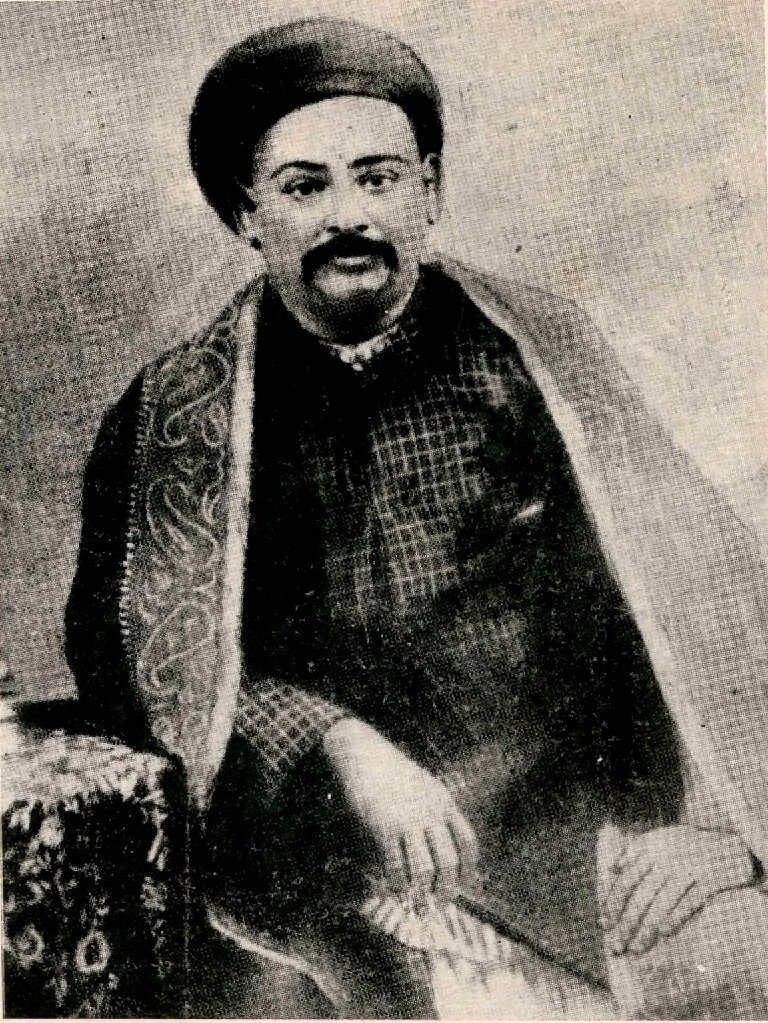
Ninety one years is a longer continuous run than any Gujarati film company has managed, and it was achieved by a company whose founder died at thirty five. Dahyabhai Dholshaji was a playwright first, and the 1880s were the decade when as many as seven Gujarati theatre groups came up at once, which is the closest thing the form has had to a startup boom. Deshi Natak Samaj outlived every one of them, kept working through the talkies that destroyed the rest of the professional stage in the 1930s, and did not close until 1980, by which point the Gujarati film industry was collecting subsidy cheques a few hundred kilometres away.
Follow one career through it and you can see how the economics worked. Muljibhai Nayak, born into a Bhavai family in Umta, was on stage at six or seven for a rupee. He joined Deshi Natak Samaj in 1904 and became a partner in it, then left in 1914 for Saraswati Natak Samaj at seventy five rupees. That is the shape of a working actor's ladder in a period with no film industry to escape into: from folk troupe to company salary to partnership to a better offer. He won the Sangeet Natak Akademi award for acting in Gujarati in 1965, was felicitated by the Government of Gujarat in Ahmedabad on 13 September 1963, and was honoured again in Mumbai on 9 February 1966 under the aegis of the company he had joined sixty two years earlier.
Photo: Photographer not recorded, public domain, via Wikimedia Commons.
The rebuild after independence
The talkies emptied the professional stage in the 1930s. Three organisations put it back, and two of them were not commercial at all.
4Natmandal

Natmandal is the only entry here that was born inside a literary institute. At the centenary celebration of Gujarat Vidhya Sabha in 1948, the politician Ganesh Vasudev Mavalankar and the writer Rasiklal Parikh proposed a theatre training school for Gujarat. Natya Vidya Mandir opened in 1949 with Jaishankar Sundari, then sixty, brought in to lead it, and the troupe Natmandal followed in 1951 to 1952. Training and performance happened in the same building, the old Premabhai Hall in Bhadra. The repertoire is the giveaway on ambition: Bhasa's Urubhanga and Bodhayana's Bhagavadajjukiya from the Sanskrit, Dalpatram's Mithyabhiman and Ramanbhai Neelkanth's Raino Parvat from Gujarati, Tagore's Chitrangada and Muktadhara, Sarat Chandra's Vijaya and Birajbahu, and Ibsen's A Doll's House and An Enemy of the People. That is a syllabus disguised as a season.
Its most consequential production was Mena Gurjari, Rasiklal Parikh's musical play written in the Bhavai style, staged by Natmandal in 1953. The theatre scholar Hasmukh Baradi records that Jaishankar Sundari combined his own Bhavai grounding with Dina Pathak's experience of watching Chinese opera to build a production driven by music and dance. Dina Pathak played Mena, Prabhabahen Pathak played Amthikaki, Kailash Pandya the Shahjado and Pransukh Nayak the Brahmin, with music by Rasiklal Bhojak and playback for Mena by Daksha Mehta. It ran for years, travelled to Surat, Mumbai and Delhi, was staged at the Rashtrapati Bhavan during the Republic Day celebrations of 1957, and was performed for delegates at a UNESCO conference. Twenty years of work, and a teaching line that runs forward: Natmandal trained Jashwant Thaker, Thaker as an IPTA director taught Gujarati from scratch to the outsider Arvind Vaidya, who went on to direct more than two hundred plays and take the Padma Shri in January 2026, and whose daughter Vandana Pathak is a face national television knows.
Photo: Aseem Inam, CC BY-SA 3.0, via Wikimedia Commons.
5Indian National Theatre

The INT is the single most important name on this page for anyone tracing how Gujarati actors reach the screen, because it kept operating as an entry point for fifty years. Sanjeev Kumar, who lost his father at eleven and came to Bombay young, started on the Bombay stage with IPTA and then the INT, and at twenty two played an old man in an adaptation of Arthur Miller's All My Sons. Dilip Joshi, now the most recognised comic face on Indian television, won the INT Best Actor award while he was still a student doing a BCA. Siddharth Randeria, who has since crossed twelve thousand live performances, made his stage debut in the lead of Chako Mako, an INT production. Mahesh Champaklal acted in INT productions through his Bombay commercial years from 1973 to 1981 before leaving to teach dramatics at M. S. University.
The organisation started poor and improvised. Early performances were ballets and dance dramas, including Kalbhairav and Bhukh written by Avinash Vyas and directed by Yogendra Desai, staged on two lorries parked together as a platform and driven around Bombay Province. In 1947 Shanti Bardhan directed a dance drama of Nehru's Discovery of India for the Asian Relations Conference with Nehru in the audience. From 1949 the INT began producing Gujarati plays properly, starting with Lagnani Bedi, a Gujarati adaptation of Acharya Atre's Marathi play directed by Chandravadan Bhatt, which is recorded as the first Gujarati production to sell tickets in advance. A company that began by borrowing trucks ended up inventing the advance booking that the modern Gujarati comedy circuit lives on.
Photo: Ministry of Information and Broadcasting, Government of India, GODL-India, via Wikimedia Commons.
6Indian People's Theatre Association

IPTA is not a Gujarati organisation, and that is precisely why it belongs here. It was the route by which Gujarati theatre people got connected to a national, political, non-commercial idea of what a stage is for, at a moment when the commercial Gujarati stage was collapsing under the talkies. Shanta Gandhi, born in 1917, was closely associated with IPTA, studied alongside Indira Gandhi at a residential school in the early 1930s, received the Padma Shri in 1984 and chaired the National School of Drama from 1982 to 1984. Her sister was Dina Pathak, and their third sister Tarla Gandhi also performed. One Gujarati family, one movement, and a direct line into the national theatre establishment.
The output side is just as traceable. Dina Pathak acted in over a hundred and twenty films across six decades and directed Gujarati theatre, but the work she is credited with sustaining is Mena Gurjari in the Bhavai style, which entered the permanent repertoire. Jashwant Thaker, a Natmandal student who became an IPTA director, taught Gujarati from nothing to Arvind Vaidya. Sanjeev Kumar began there before the INT. Fifty years later, when a group of Chhara young people in Ahmedabad started making theatre about police violence, the influences they named were Brecht, the Indian aesthetic of rasa, and IPTA. Political theatre in Gujarat has one ancestor and this is it.
Photo: India Post, Government of India, GODL-India, via Wikimedia Commons.
Ahmedabad's own stage
Three organisations keep live performance running in Gujarat itself, and none of them is a commercial producer.
7Budhan Theatre
The Chharas were classified a criminal tribe by the British, denotified after independence, and are still treated as suspects by default in the city they live in. Budhan Theatre was founded in 1998 by the linguist G. N. Devy and the writer Mahasweta Devi with the young people of Chharanagar as the company. Its signature play, Budhan, restages the death of Budhan Sabar and demands justice for his killing. That is the whole method: take the thing the audience already believes about you, put it on a platform in your own neighbourhood, and make them watch it from your side. Their influences are listed as IPTA, Bertolt Brecht and the Indian aesthetic of rasa, which is a genuinely unusual trio to hold at once.
What makes it a training institution rather than a protest group is what came out of it. The company ran a one year diploma in journalism, a diploma in theatre arts, journalism and media studies, and a certificate course in dramatics, in a neighbourhood the mainstream education system had effectively written off. Alok Gagdekar graduated from the National School of Drama in 2006 and Vivek Ghamande in 2007. Two admissions to India's national drama school out of one stigmatised locality is a harder credential than most funded arts programmes in Gujarat can show. The group's work was documented in Shashwati Talukdar and P. Kerim Friedman's film Please Don't Beat Me, Sir.
Instagram: @budhantheatre (verified 2026-07-29).
8Natarani
Every city with a theatre culture needs one room that will take a booking from a company nobody has heard of. In Ahmedabad that room is Natarani, the riverside amphitheatre run by Darpana. The parent academy was founded in 1949 by Mrinalini and Vikram Sarabhai, its building was commissioned from the architect Achyut Kanvinde in 1962, and Mallika Sarabhai has directed it for the last three decades. Darpana's theatre department, run in its early years by Kailash Pandya, is where the institution's stage work sits, and Natarani is where it meets an audience.
The reason it is on a page about companies rather than schools is that a venue with a curatorial position behaves like a producer. Darpana built two arms specifically to use performance as a working tool rather than an evening out: Darpana for Development in 1980 and Darpana Communication in 2001, and through the latter Mallika Sarabhai has produced roughly three thousand hours of broadcast programming for Doordarshan Gujarati. In a state where the commercial Gujarati stage is a Mumbai business selling comedies, Natarani is the standing counter-argument, and it has stayed open long enough to matter.
Instagram: @nataraniamphitheatre (verified 2026-07-29).
9Gujarat State Sangeet Natak Academy
Amateur Gujarati theatre does not run on ticket sales. It runs on competitions, and the Academy is the body that pays for them. Its own scheme list includes the state level three act drama competition, the zonal three act competition, one act play competitions, a solo drama competition and drama training camps, plus dedicated production support for Turi Barot theatre under the Scheduled Caste sub plan. For a college group in Rajkot or Bhavnagar, the calendar of the year is that list. Win the zonal, go to the state final, get seen. Markand Bhatt, who ran theatre at M. S. University for twenty years, chaired this Academy from 1992 to 1995, so the competition circuit and the university department have never been separate worlds.
The Academy's own roll of honoured artists is a useful cross-check on everything else on this page, because it opens with Jayshankar Sundari, Lalji Nanda and Dina Pathak, all named for acting. The state has been formally recognising the same lineage this page traces, from the Bhavai families through the proscenium companies to the post-independence rebuild. What the Academy does not do is produce commercial theatre, and that gap is the reason the money side of Gujarati theatre sits four hundred kilometres away in Mumbai.
Instagram: @gujaratsangeetnatakacademy (verified 2026-07-29).
The commercial Gujarati stage, which is a Mumbai business
The plays that sell out halls in Mumbai, Ahmedabad, London and New Jersey are produced by a small number of Mumbai banners.
10Sanjay Goradia Productions

Goradia started in 1979 backstage on Pagla Ghoda, a play directed by Latesh Shah, and has ended up with the largest production slate in the language on any stage. More than a hundred Gujarati plays produced is not a number Gujarati cinema can match in any comparable window, and he acts in roughly a quarter of them, which keeps his own face on the poster and the payroll efficient. The titles carry the strategy on their sleeve: Pappu Paas Thayi Gayo, De Taali Kona Baap Ni Diwali, Bairaono Bahubali. Domestic comedy, joke density high, running time predictable, tours well. That is a product, and he has manufactured it repeatedly for four decades.
The part that gets missed is that the same company crosses languages both ways. It produced Hindi plays with Jaya Bachchan, Shatrughan Sinha and Zeenat Aman, and it produced television in Gujarati for Colors Gujarati and in Marathi for Zee Marathi. Somebody has to book the halls, print the tickets, pay the actors on Monday and put a new comedy into rehearsal on Tuesday, and that job is the least visible and most load bearing in this whole tradition. Goradia also carries the film credits that come from being permanently in front of Gujarati audiences, from Ventilator in 2018 through Kehvatlal Parivar, Kamthaan and Jhamkudi.
Photo: Nizil Shah, CC BY-SA 4.0, via Wikimedia Commons.
11Leela Theatres

A National Film Award winning actor who could coast on Hindi television instead runs a theatre company named after his mother, and uses it to stage one act plays made out of a Gujarati poet. Ramesh Parekh is one of the most loved lyric poets in the language and about as far from a commercial theatre proposition as material gets. Ramesh Aakhi Raat puts two one act plays built from his writing in front of a paying audience, which is a decision about what the company is for rather than what it earns. Leela Theatres also co-produced the English play Salt and Pepper and produced the English comedy Your Place Or Mine?, so the Gujarati work is a choice, not the only option available.
Jariwala's own record explains the choice. He is the son of the Gujarati actress Leela Jariwala, grew up with the stage as a trade, and did Hatheli Par Baad Baaki, Patro Mitro, Mulraj Mansion and Andhalo Pato in Gujarati long before Feroz Abbas Khan cast him as Gandhi in Gandhi, My Father in 2007 and the 55th National Film Awards gave him Best Supporting Actor. He came into new wave Gujarati cinema with Bey Yaar in 2014 at fifty five. The award is the headline on his page. The company staging Gujarati one act plays is the argument.
Photo: Chirag Thakkar, CC BY-SA 4.0, via Wikimedia Commons.
12National Centre for the Performing Arts

The Gujarati stage in Mumbai has always had a split personality: big star led commercial comedies on one side, experimental work with no obvious buyer on the other, and a long argument between them that nobody has won. In 2011 the NCPA took a position by hosting Vasant, its first Gujarati theatre festival, specifically to promote the experimental end. An institution founded by J. R. D. Tata and Jamshed Bhabha in 1969, sitting on prime Nariman Point land and better known for western classical music, deciding that Gujarati experimental theatre needed a platform is a real intervention rather than a token one.
It matters because the alternative infrastructure is thin. Vadodara had ten theatre groups in the 1990s and lost most of them and their audiences by the 2000s. Surat and Rajkot kept groups going, Ahmedabad has a handful, and the commercial circuit in Mumbai finances only what tours. A festival slot in a serious venue is one of the few ways a Gujarati production with no comedy in it gets seen by anyone outside the room it was made in, and Gujarati theatre has been growing steadily since the mid 2000s partly because those slots exist.
Photo: DesiBoy101, CC BY 4.0, via Wikimedia Commons.
What the numbers say
How long each company kept the stage lit, in years
Counted from the founding years recorded in English Wikipedia and run to 2026 for companies still working. Two are contested and are shown as contested: the Indian National Theatre article gives 1943 in its lead and 1944 in its history section, and the IPTA article gives 1943 while India Post issued a fiftieth anniversary stamp in 1994. Bars use 1943 for IPTA and 1944 for the INT. Companies with no recorded founding year, including Sanjay Goradia Productions and Leela Theatres, are left out of the chart rather than estimated.
Questions people actually ask
Which is the oldest Gujarati theatre company?
The Parsee Natak Mandali, founded in 1853 by Framjee Gustadjee Dalal, staged Rustam Sohrab at the Grant Road Theatre in Mumbai on 29 October that year, and that performance is treated as the start of Gujarati theatre. Of the companies with a documented full run, Deshi Natak Samaj lasted longest, from 1889 to 1980.
Did Gujarati theatre come before Gujarati cinema?
By a wide margin. Ticketed Gujarati theatre starts in 1853, the folk form Bhavai is credited to the 14th century, and the first Gujarati talkie, Narsinh Mehta, arrived on 9 April 1932. The film industry inherited an audience, a repertoire and a trained acting workforce that the stage had already built.
Which Gujarati film actors came from the stage?
Almost all of the durable ones. Sanjeev Kumar started with IPTA and the Indian National Theatre, Dilip Joshi won the INT Best Actor award as a student, Siddharth Randeria made his debut in an INT production and has since crossed twelve thousand live performances, Paresh Rawal learned on the Gujarati stage with no drama school on his record, and Pratik Gandhi was performing in Gujarati plays while employed at Reliance Infrastructure.
Is Gujarati theatre still active in 2026?
Yes, on two separate circuits. The commercial circuit is a Mumbai business, led by producers such as Sanjay Goradia with more than a hundred plays behind him, and it tours Gujarat, the United Kingdom and North America. The non-commercial side runs through Ahmedabad organisations including Budhan Theatre and Natarani, plus the state drama competitions funded by the Gujarat State Sangeet Natak Academy.
What is Bhavai and is it still performed?
Bhavai is the folk theatre form of Gujarat, credited to Asaita Thakar in the 14th century and performed as an offering to the goddess Amba in the open ground outside the temple. About sixty of the roughly three hundred and sixty veshas attributed to Asaita survive. It is still performed, including at Ambaji during Navratri, and it shaped modern Gujarati work from Mena Gurjari on stage to Bhavni Bhavai on screen.
Sources and image credits
All photographs are free-licensed files from Wikimedia Commons, reused with the attribution each licence requires. No press agency or studio photographs are hosted on this site. Instagram content is linked or embedded from the official account, never re-hosted.
- English Wikipedia article on Gujarati theatre, including its history of Parsee Natak Mandali, Arya Subodh Natak Mandali, Deshi Natak Samaj, Nat Mandal and the Vadodara groups, retrieved July 2026
- English Wikipedia articles on Mumbai Gujarati Natak Mandali, Natmandal, Mena Gurjari, Indian National Theatre, Indian People's Theatre Association, Budhan Theatre and Darpana Academy of Performing Arts, retrieved July 2026
- English Wikipedia biographies of Jaishankar Bhojak, Bapulal Nayak, Muljibhai Nayak, Chhotalal Rukhdev Sharma, Dina Pathak, Shanta Gandhi, Rasiklal Parikh, Markand Bhatt, Mahesh Champaklal, Sanjay Goradia, Siddharth Randeria and Darshan Jariwala, retrieved July 2026
- Gujarat State Sangeet Natak Academy official site, sangeetnatak.gujarat.gov.in, for the drama competition schemes, wings and honours list, retrieved July 2026
- Mumbai Theatre Guide interview with Sanjay Goradia for the launch of Sanjay Goradia Productions with Karo Kanku Na
- Wikimedia Commons file pages for licence, photographer and date on every image used here
- Apify Instagram profile scrapes for account verification, run 29 July 2026