Gujarati cinema and Hindi television were staffed by Gujarati commercial theatre, not by film schools. Siddharth Randeria holds the record for the most live performances by an actor with more than 12,000, Sanjay Goradia has produced over a hundred Gujarati plays, and Sarita Joshi began performing at nine and won the Sangeet Natak Akademi Award for acting in Gujarati in 1988 before the Padma Shri. Paresh Rawal came out of the same commercial circuit and was appointed chief of the National School of Drama in September 2020. Pratik Gandhi, the most visible product of the pipeline today, built his stage reputation inside Manoj Shah's company, whose Mohan No Masalo entered the Limca Book of Records for being performed in three languages in a single day.
India does not have many working apprenticeship systems left. Gujarati commercial theatre is one of them. A play in Mumbai or Ahmedabad runs three hundred, five hundred, eight hundred shows, tours to Nairobi and New Jersey, and pays its cast on a Monday so it can rehearse the next one on Tuesday. An actor inside that machine performs more in one production than most film actors perform in a lifetime, in front of an audience close enough to see them think. That is the training. There was never anything else.
This page is about what that system exported. Not just actors, though it sent a National Film Award winner to Hindi cinema, the most watched comic character on Indian television, and the director of the sharpest sitcom the country has made. It also exported a way of building a scene: long takes, small rooms, timing that belongs to a live room rather than an edit. Everyone here is filed somewhere as a film or television name. All of them learned the job standing on a stage in Gujarati.
The list at a glance
| Name | Stage base | Signature stage work | Screen credential |
|---|---|---|---|
| Sarita Joshi | Indian National Theatre, Gujarati | Plays with Pravin Joshi through the 1970s | Sangeet Natak Akademi Award 1988, Padma Shri 2020 |
| Siddharth Randeria | Gujarati commercial stage since 1970 | The Gujjubhai series and dozens of plays before it | More than 12,000 live performances, then Chaal Jeevi Laiye! |
| Dilip Joshi | Indian National Theatre, from backstage | Commercial stage at about Rs 50 a role | Jethalal in Taarak Mehta Ka Ooltah Chashmah since 2008 |
| Sanjay Goradia | Gujarati commercial stage since 1979 | Produced over 100 plays, acted in about a quarter | Fixture of the modern Gujarati film wave |
| Paresh Rawal | Gujarati commercial theatre | Dear Father, later filmed | National Film Award 1994, Padma Shri 2014, NSD chief 2020 |
| Supriya Pathak | Maina Gurjari, directed by Dina Pathak | Prithvi Theatre productions in the early 1980s | Filmfare Award for her first film, Kalyug (1981) |
| Manoj Joshi | Marathi, Gujarati and Hindi theatre | Chanakya, played for years on stage | National Film Award, Padma Shri 2018 |
| Darshan Jariwala | Gujarati stage, plus Leela Theatres | Hatheli Par Baad Baaki, Ramesh Aakhi Raat | National Film Award for Gandhi, My Father |
| Tiku Talsania | Freelance in Gujarati theatre productions | Four decades of parallel stage work | Dharamdas in Devdas, four decades of Hindi comedy |
| Neha Mehta | Gujarati theatre, including Sahebji | Years on the Gujarati stage before television | Anjali Mehta in Taarak Mehta Ka Ooltah Chashmah, 2008 to 2020 |
| Deven Bhojani | Gujarati plays first, by his own billing | The plays he is still best known for | Three best director awards for Sarabhai vs Sarabhai |
| Jamnadas Majethia | Two decades in Gujarati theatre | Hats Off Productions and its stage catalogue | Khichdi, Sarabhai vs Sarabhai, Wagle Ki Duniya |
| Jimit Trivedi | Gujarati theatre alongside screen work | Kept the stage while working in two film industries | Lead in Gujjubhai The Great (2015) and its sequel |
| Pratik Gandhi | Ideas Unlimited and the Gujarati stage | Mohan No Masalo, Hu Chandrakant Bakshi | Led the National Award winning Wrong Side Raju, then Scam 1992 |
How this list was built
Two filters. First, documented Gujarati-language stage work, verifiable in an English Wikipedia biography or in a Wikimedia Commons file record, plus a real screen career that the stage work fed. That combination is stricter than it sounds and it cut some of the biggest names in Gujarati theatre. Pravin Joshi, who trained at the Royal Academy of Dramatic Art and produced around twenty five plays at the Indian National Theatre in the 1960s and 1970s, has no free-licensed photograph anywhere and died in 1979, so he appears throughout this page in other people's entries rather than in his own. The same applies to Padmarani, who performed in over 6,000 Gujarati theatre shows and played opposite Sanjeev Kumar in Kalapi in 1966, to Arvind Joshi, who spent a decade in theatre before Gujarati and Hindi films, to Sujata Mehta, whose Gujarati play Chitkar ran over 600 shows worldwide, and to Amit Mistry. Every one of them was researched, verified and then dropped for want of a usable photograph. Second, everyone listed needed either a free-licensed Commons photograph with a named photographer and licence, or an Instagram account confirmed by a live scrape with corroborating profile content. Yazdi Karanjia, the Surat doyen of Parsi Gujarati theatre whose troupe has performed comedy for more than sixty years, passes the photograph test and fails the screen test, so he is named here rather than listed. Jagdish Trivedi, Shahabuddin Rathod and Sairam Dave were researched on the dayro and humour circuit and belong to a different tradition and a different page, since they are stage performers who never built screen careers as actors.
Where the training actually happened
Four people who spent their working lives inside the Gujarati stage economy rather than passing through it.
1Sarita Joshi

She started at nine, with her sister Padmarani, because the family needed the money. That is the origin of one of the most decorated careers in Gujarati theatre and it says more about the industry than any award does. There was no drama school to enter. There was a company that needed a child, and a child who could hold a room. She worked with Shanta Apte early on, then joined the Indian National Theatre's Gujarati wing, where she met the director Pravin Joshi and later married him. Through the 1970s the two of them made the plays that defined what a sophisticated Gujarati production looked like.
The screen came late and it came on her terms. Godavari Thakkar in Baa Bahoo Aur Baby from 2005 to 2010 made her a household grandmother across India, the protagonist of Gangoobai followed in 2013, and she has been playing Radha Limaye in Pushpa Impossible into her eighties. Her daughters Ketki Dave and Purbi Joshi both act. The Sangeet Natak Akademi honoured her in 1988 for acting in Gujarati specifically, which is the citation worth reading twice, because it names the language and not the medium. Seventy five years on stage, and the country got round to the Padma Shri in 2020.
Photo: Government of India, GODL-India, via Wikimedia Commons.
2Siddharth Randeria

The detail everyone skips is where he began. His stage debut was Chako Mako, a lead role in an Indian National Theatre production, which puts him in the same company Pravin Joshi had built up and the same one Sarita Joshi came through. Three generations of this page run through one organisation. His father Madhukar Randeria was a Gujarati writer and stage actor, and his son Ishaan works in stage and cinema now, which makes the Randerias a rare thing in Indian performance: a family that stayed in the same medium for sixty years because the medium paid.
The Gujjubhai franchise is what people quote, and it hides the volume underneath. Before and around it he did Bas Kar Bakula, Best of Luck, Carry On Lalu, Khandan, Janma Daata, Ek Soneri Sawar, Mantra Mugdh, Prem No Public Issue, Sacha Bola Joothalal and a long list of others, as actor, writer and director. More than 12,000 live performances is a record that only makes sense once you see how many separate productions it is spread across. He did not move to cinema in 2015 so much as extend, which is why the first film opened with an audience already built.
Photo: Nizil Shah, CC BY-SA 4.0, via Wikimedia Commons.
3Dilip Joshi

Fifty rupees a role, backstage. That is the entry-level wage of the system this page is about, and he is the cleanest surviving record of it. He started acting at twelve, won the Indian National Theatre's Best Actor award while he was still a student, and then did the unglamorous work: commercial stage productions where the newcomer moves furniture between scenes and learns the whole play by hearing it four hundred times.
The INT connection is not a coincidence, it is the architecture. The same organisation gave Sarita Joshi her professional home, gave Siddharth Randeria his debut, and gave Dilip Joshi his first award. One Bombay theatre company sits underneath three of the biggest names on this list. What he did with the training is the largest audience number in the whole story: since 2008 he has played Jethalal Champaklal Gada continuously, collecting five Telly awards and three ITA awards, in a role that requires him to hit a comic beat on a weekly schedule for eighteen years. Stage stamina, applied to a studio.
Photo: Bollywood Hungama, CC BY 3.0, via Wikimedia Commons.
4Sanjay Goradia

A hundred plays across forty five years works out to a new production roughly every five months, unbroken, through recessions, television, satellite, multiplexes and streaming. That cadence is the actual subject of this page. Actors do not get trained by masterpieces, they get trained by the next show, and somebody has to guarantee there is a next show. He started backstage in 1979 on Pagla Ghoda under Latesh Shah and has been guaranteeing it ever since.
He acts in only about a quarter of what he produces, which is the tell. Anyone can produce in order to cast themselves. Producing three plays you are not in, so that thirty other people can work, is a different job, and it is the one Gujarati theatre could least afford to lose. Titles like Pappu Paas Thayi Gayo, Chup Raho Khush Raho and Sunder Be Baydiwalo were never going to win a jury prize and were never meant to. They sold tickets, and the ticket money is what kept a generation of actors in practice long enough for Gujarati cinema to have somebody to cast in 2015.
Photo: Nizil Shah, CC BY-SA 4.0, via Wikimedia Commons.
The crossing to Bombay
Gujarati theatre in Mumbai was performed a few streets from the people who cast Hindi films. That proximity is the whole mechanism.
5Paresh Rawal

Here is the fact that should end every argument about whether commercial regional theatre is serious work. On 10 September 2020 the President of India appointed him chief of the National School of Drama. A man who learned his craft in Gujarati commercial theatre, where the job is to make four hundred people in a hired hall laugh on cue, ended up running the country's national drama institution. The circuit that gets patronised as populist produced the person put in charge of the formal tradition.
He never treated the stage as a stage he had outgrown, which is the other half of it. Dear Father was his own Gujarati play, and it was successful enough that it became a Gujarati film in 2022, running the pipeline in the direction it almost never runs. He has said the timing finally felt right to come back to Gujarati cinema, and the route back was through the play rather than through a studio pitch. Over 240 films, a National Film Award in 1994 and the Padma Shri in 2014 sit on top of a training that never stopped being used.
Photo: Bollywood Hungama, CC BY 3.0, via Wikimedia Commons.
6Supriya Pathak
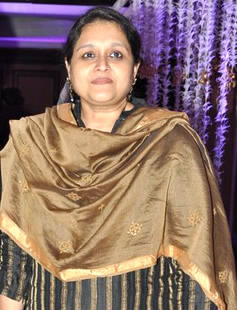
The stage was the audition room, and her career is the proof. She was performing in Biwiyon Ka Madersa at Prithvi Theatre when Jennifer Kendall saw her from the audience and recommended her to Shyam Benegal. Benegal cast her as Subhadra in Kalyug in 1981 and she won the Filmfare Award for Best Supporting Actress on her first film. No showreel, no casting director, no photograph sent to an office. Somebody watched her work in a room in Juhu and made a phone call.
That is not an anecdote, it is the mechanism that this entire page runs on. Gujarati and Hindi theatre in Bombay happened in the same few venues that film people drank in, which is why the pipeline existed there and not in Ahmedabad. Her first acting job of all had been her mother Dina Pathak's revival of Maina Gurjari, so she entered through Gujarati stage and left through a Hindi film within a couple of years. Her own first Gujarati film did not arrive until Carry On Kesar in 2016, thirty five years later, which is a measurement of the industry rather than of her.
Photo: Bollywood Hungama, CC BY 3.0, via Wikimedia Commons.
7Manoj Joshi

He came out of Adpodara village near Himmatnagar, went to the J. J. School of Arts, and then did something almost nobody manages: he built a stage career in three languages at once, starting in Marathi and working simultaneously in Gujarati and Hindi. That trilingual habit is why his National Film Award for Best Supporting Actor came in Marathi, for Dashakriya, in a language he entered through theatre rather than through film. Actors trained in one industry do not usually get to collect prizes in another.
Chanakya is the stage role, and the photograph here is him performing it at the Adi Vidrohi Natya Samaroh in Bhopal in December 2015, in the costume, on the boards, in front of a paying hall. It is the opposite end of the register from Kachra Seth. He also lost this career once and got it back: he suffered a stroke while filming Devdas, lost his vision and spent a year and a half bedridden. The Padma Shri came in 2018, and he is vice-president of the Bombay Art Society, which puts a J. J. graduate back where he started.
Photo: Suyash Dwivedi, CC BY-SA 4.0, via Wikimedia Commons.
8Darshan Jariwala

Most actors who love theatre say so in interviews. He capitalised a company. Leela Theatres coproduced the English play Salt & Pepper, written and directed by Vikranth Pawar, with him in it alongside Mandira Bedi, Kuki Grewal and Vikram Kochar, produced the English comedy Your Place Or Mine?, and produced Ramesh Aakhi Raat, a Gujarati double bill of two one-act plays built from the writings of the poet Ramesh Parekh. Putting Ramesh Parekh on a commercial stage is not a commercial instinct. It is somebody spending film money on the form that trained him.
His own acting runs across all three languages the Bombay circuit uses. The Gujarati plays include Hatheli Par Baad Baaki, Patro Mitro, Mulraj Mansion and Andhalo Pato, he did the Hindi play Uncle Samjha Karo, and the English solo show Going Solo 2. Feroz Abbas Khan wanted him for Gandhi in the play Mahatma v/s Gandhi first and could not get the dates, which is the clearest evidence available that the film role that won him a National Film Award was a stage casting decision that took a detour.
Photo: Chirag Thakkar, CC BY-SA 4.0, via Wikimedia Commons.
9Tiku Talsania

English Wikipedia describes him as performing as a freelance theatre artist, actively participating in Gujarati theatre productions. Read that as a job description rather than a hobby, because that is exactly what it was. The Gujarati stage in Bombay ran on freelancers who were on a Hindi film set on Tuesday and in a hired hall on Saturday, and the arrangement suited both sides: the films paid, the stage kept the instrument in tune.
The screen work is four decades of the specific thing Hindi cinema needed from that circuit, from Yeh Jo Hai Zindagi in 1984 through Dil Hai Ke Manta Nahin, Bol Radha Bol, Andaz Apna Apna and Mr. Bechara, and then Dharamdas in Sanjay Leela Bhansali's Devdas, which got him the notices that comic actors rarely get. The generational detail is the one worth sitting with. His daughter Shikha acts and his son Rohaan composes, and neither of them came up through a Gujarati natak company, because by then you did not have to. That is what a pipeline looks like when it stops being the only road.
Photo: Bollywood Hungama, CC BY 3.0, via Wikimedia Commons.
10Neha Mehta
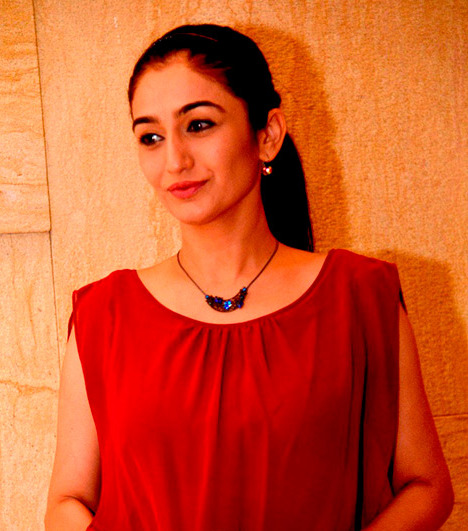
She is from Patan, took a master's degree in performing arts in Indian classical dance and a diploma in vocal and drama, and then did Gujarati theatre for years before any camera was involved. Sahebji is the play her biography names. That order matters, because the character she is known for nationally is a dietician in a Mumbai housing society, and the reason the performance never tips into caricature is a decade of playing to a live Gujarati audience that would have caught it instantly.
Anjali Mehta ran from 2008 to 2020, twelve years opposite Shailesh Lodha, on the show that gave Indian television its most durable Gujarati household. She hosted Wah! Wah! Kya Baat Hai! alongside it from 2012 to 2013 and has led four Gujarati films: Janmo Janam, Chahera Par Moharu, Better Half and Halkie Fulkee. Twelve years is longer than most Indian film careers, and she did it in a supporting role in someone else's living room, which is a stage actor's discipline more than a star's.
Photo: Bollywood Hungama, CC BY 3.0, via Wikimedia Commons.
What the stage exported besides actors
The two people here stopped performing long enough to build the things that hire performers.
11Deven Bhojani

The most interesting line in his biography is the education. A commerce degree from NMIMS in Mumbai, and then film direction at the University of Southern California. A Gujarati stage comic from Vile Parle who went to Los Angeles to study how to build a shot is an unusual combination, and it explains why he is the only person on this page whose most important credit is behind the camera.
What he carried across is not comedy, it is patience. The three best director awards came for a show whose grammar is theatrical: rooms rather than locations, scenes allowed to run, actors permitted to finish a thought before the cut. Every one of those choices is what a proscenium teaches and what television usually beats out of a director. He is here because the Gujarati stage did not only supply Indian screens with faces. It supplied at least one person who knew where to put the camera, and that is the harder export.
Photo: Jhonfarhman, CC BY-SA 4.0, via Wikimedia Commons.
12Jamnadas Majethia
He spent two decades in Gujarati theatre before he became one of the most consequential producers on Indian television, and the second career is unreadable without the first. Khichdi, Sarabhai vs Sarabhai, Badi Door Se Aaye Hain and the Wagle Ki Duniya revival are all built on stage architecture, which is why they work in a room and fall apart on a location. He was nominated for the Apsara Award for Best Actor in a Comic Role in 2011 for Himanshu Seth in Khichdi: The Movie, which is a reminder that he never stopped performing either.
The move that belongs on this particular page came in 2013, when he opened HatsOff Actors Studios. Think about what that is. A man trained by an apprenticeship system built a school, because the apprenticeship system was thinning out and somebody had to replace it with a syllabus. On his own verified Instagram he lists himself as chairman of the television and web wing of the Indian Film and TV Producers Council. A Porbandar boy who learned to act in Gujarati natak now sits on the body that decides how the industry hires.
Instagram: @jd_majethia (verified 2026-07-29).
The pipeline is still running
Two working actors who prove the circuit did not become a museum.
13Jimit Trivedi
His Wikipedia entry lists theatre alongside cinema and television rather than as a footnote to them, and that ordering describes the career accurately. He arrived in Hindi film first, in Bhool Bhulaiyaa in 2007, and then in 2015 took a lead in Gujjubhai The Great opposite Siddharth Randeria, which at the time was a commercially strange decision and turned out to be the right one. He led the sequel and carried Polam Pol as well.
The reason he sits in this section rather than in a Bollywood list is what he did with the stage habit while all that was happening. He kept it. In an era where a Hindi film credit is treated as a reason to stop doing plays, he stayed available to both, which is exactly the arrangement Tiku Talsania's generation ran and which most people assumed had died with satellite television. He also came back to Hindi film for 102 Not Out in 2018 with Amitabh Bachchan and Rishi Kapoor. Two industries, one circuit, no defection in either direction.
Instagram: @jimit_trivedi (verified 2026-07-29).
14Pratik Gandhi
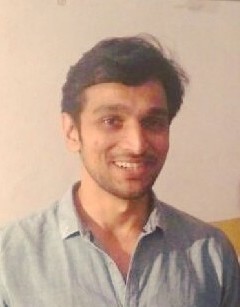
The photograph on this entry was taken backstage at Gandhi Smruti Bhavan in Surat, after he had finished a show. That is the correct image for him, and it is a better summary than any red carpet. Until 2016 he held a job at Reliance Infrastructure and acted in the hours around it, which meant learning a monologue on a train. In Mohan No Masalo he performed that monologue in English, Hindi and Gujarati on the same day, and the play entered the Limca Book of Records for it.
Name the director and the picture sharpens. Mohan No Masalo and Hu Chandrakant Bakshi both come out of Manoj Shah's company, Ideas Unlimited, which has staged over ninety plays, most of them biographical one-man pieces about Gujarati writers and thinkers: Bakshi, the poet Mareez, Shrimad Rajchandra, Manilal Dwivedi. Scam 1992 did not arrive from nowhere. It arrived from an actor who had spent years alone on a stage holding an audience with nothing but language, working for a director who only makes plays about people who lived by it.
Photo: Ravidesai22, CC BY-SA 4.0, via Wikimedia Commons.
What the numbers say
Live performance counts on the Gujarati stage
Two different measurements sit in one chart on purpose, and each bar says which it is. The top three are career totals across dozens of productions. The bottom four are single plays. All figures are as recorded in English Wikipedia biographies and are counts of ticketed live performances, not estimates.
Questions people actually ask
Why did Gujarati theatre produce so many film and television actors?
Because it was a paying, high-volume, professional circuit based in Mumbai, the same city as the Hindi film industry. A Gujarati commercial play could run several hundred shows and tour internationally, so an actor got constant work and constant practice, and the venues were close enough to the film business that casting happened by someone watching a performance. Supriya Pathak was recommended to Shyam Benegal after Jennifer Kendall saw her at Prithvi Theatre.
Who has done the most stage shows in Gujarati theatre?
Siddharth Randeria holds the record for the most live performances by an actor, having crossed 12,000 shows since 1970. Padmarani performed in over 6,000 Gujarati theatre shows, and Markand Bhatt acted in more than 1,500. Individual productions reach big numbers too: Lage Raho Gujjubhai completed 800 shows in three years.
Did Pratik Gandhi really work a corporate job while doing theatre?
Yes. He held a job at Reliance Infrastructure until 2016 and acted in Gujarati plays around it, including Hu Chandrakant Bakshi and Mohan No Masalo, in which he performed a monologue in English, Hindi and Gujarati on the same day. Wrong Side Raju, which won the National Film Award for Best Gujarati Film, released the same year he left the job.
Which Gujarati stage actors have run their own theatre companies?
Sanjay Goradia has produced more than a hundred Gujarati plays. Darshan Jariwala runs Leela Theatres, which has produced English and Gujarati work including the double bill Ramesh Aakhi Raat. Jamnadas Majethia founded Hats Off Productions and, in 2013, HatsOff Actors Studios. Manoj Shah's Ideas Unlimited has staged over ninety plays and produced the stage work that made Pratik Gandhi's reputation.
Is the Gujarati stage to screen pipeline still working?
It is, though it is narrower than it was. Pratik Gandhi and Jimit Trivedi both still work in theatre alongside film, and younger actors including Parikshit Tamaliya and Devarshi Shah are filed as stage actors as well as film actors. The clearest sign of change is generational: Tiku Talsania came up through Gujarati natak companies, and his children went into film and music without needing to.
Sources and image credits
All photographs are free-licensed files from Wikimedia Commons, reused with the attribution each licence requires. No press agency or studio photographs are hosted on this site. Instagram content is linked or embedded from the official account, never re-hosted.
- English Wikipedia biographies for all fourteen listed people, retrieved July 2026
- English Wikipedia articles on Pravin Joshi, Padmarani, Arvind Joshi, Sujata Mehta, Markand Bhatt, Kanti Madia, Jashwant Thaker and Manoj Shah, used for context and for the performance figures in the chart
- English Wikipedia category listings for Gujarati theatre and Indian male stage actors, used to build the candidate list
- Wikimedia Commons file pages for licence, photographer, date and image description on every photograph used, including the Gujarat Vishwakosh Trust and Government of India uploads
- Instagram profile scrapes for Jamnadas Majethia and Jimit Trivedi, run 29 July 2026, each confirmed by corroborating profile content rather than by name alone
- Limca Book of Records entry for Mohan No Masalo as recorded in the English Wikipedia article on Manoj Shah