Gujarati women have been working on the Indian screen since 1946, when Nirupa Roy and her husband answered a casting advertisement in a Gujarati newspaper and she was cast in Ranakdevi. She went on to over 250 films and three Filmfare Awards. Dimple Kapadia won the National Film Award for Best Actress for Rudaali in 1993, Shefali Shah holds a National Film Award, a Tokyo International Film Festival Best Actress prize and an International Emmy nomination, and Supriya Pathak has three Filmfare Awards. Television then became the bigger employer, from Dipika Chikhlia as Sita in Ramayan in 1987 to Disha Vakani as Daya from 2008.
There is already a page on this site about Gujarati actors in Bollywood, and it is mostly men. That is not a bias in the research, it is a bias in the industry: Hindi cinema hired Gujarati men as character actors and comic leads for eighty years, and it hired Gujarati women in three narrow shapes. The mother. The vamp. The mother in law. Nirupa Roy did over 250 films and got called the Queen of Misery for it. Bindu took seven Filmfare nominations for playing the woman the hero must not marry, and won none of them. The typecasting is not a footnote here, it is the story.
So this page is organised around what the women actually did with the shapes they were given. Sixteen careers, sorted by when they started rather than by rank sentiment: the Valsad coastline that produced three of them, the stars of the seventies through the nineties, the Pathak inheritance running from a mother with no surviving free photograph to two daughters with National School of Drama training between them, the crossover generation that used television as a launchpad into film, and the daily soap regulars who are the largest employed group of all. Every fact is checked against a public record and every entry carries a free licensed photograph.
The list at a glance
| Actress | Gujarati link | Signature work | Hardest credential |
|---|---|---|---|
| Nirupa Roy | Born in Kalwada, Valsad district | Over 250 films, 1946 to 1999 | Three Filmfare Awards and the 2004 Lifetime Achievement Award |
| Bindu | Born in Hanuman Bhagda, Valsad district | Shabnam in Kati Patang (1970) | Seven Filmfare Award nominations across 160 films |
| Dimple Kapadia | Daughter of the Gujarati businessman Chunibhai Kapadia | Bobby (1973) and Rudaali (1993) | National Film Award for Best Actress for Rudaali |
| Mallika Sarabhai | Born in Ahmedabad, runs Darpana Academy there | Draupadi in Peter Brook's The Mahabharata | Golden Star for Best Dance Soloist, Paris, 1977 |
| Neelam Kothari | Gujarati Jain father, Shishir Kothari | Fourteen films with Govinda from 1986 | Left acting to build Neelam Jewels, then returned on Netflix |
| Ameesha Patel | Gujarati father, Amit Patel | Kaho Naa... Pyaar Hai (2000) and Gadar (2001) | Filmfare Special Performance Award for Gadar |
| Ratna Pathak Shah | Daughter of Dina Pathak of Amreli | Maya Sarabhai in Sarabhai vs Sarabhai | ITA Award for Best Actress in Comedy, 2005 |
| Supriya Pathak | Daughter of Dina Pathak of Amreli | Hansa Parekh in the Khichdi franchise | Filmfare Award for Best Supporting Actress on her debut film, Kalyug |
| Shefali Shah | Gujarati mother, and Gujarati stage from age ten | Dariya Chhoru (1999) and Delhi Crime | National Film Award, Tokyo Best Actress, International Emmy nomination |
| Prachi Desai | Born in Valsad, Gujarat | Bani in Kasamh Se, and Sakshi in Rock On!! | An IIFA Award and four Indian Telly Awards |
| Dipika Chikhlia | Colors Gujarati and Gujarati film work, Baroda Lok Sabha seat | Sita in Ramayan (1987) | Elected to the Lok Sabha from Baroda in 1991 |
| Sanjeeda Sheikh | Family from Ahmedabad | Ek Hasina Thi (2014) and Heeramandi (2024) | ITA Award for Best Actress, and a Filmfare OTT nomination |
| Disha Vakani | Born in Ahmedabad, trained by Bhim Vakani | Daya in Taarak Mehta Ka Ooltah Chashmah | A role nobody has been able to recast since 2017 |
| Rashami Desai | Gujarati by origin, born in Nagaon, Assam | Tapasya in Uttaran, 2008 to 2015 | Best Debut Actress at the Gujarati Transmedia Awards, 2018 |
| Giaa Manek | Born in Ahmedabad, of Gujarati descent | Gopi in Saath Nibhaana Saathiya | Returned to the same franchise as a new character in 2021 |
| Shefali Jariwala | Born in Ahmedabad into a Gujarati family | The 2002 Kaanta Laga video | An engineering degree, and Bigg Boss 13 seventeen years later |
How this list was built
Inclusion needed one of three things, stated openly per entry rather than blurred: a documented Gujarati family in a public source, birth or upbringing in Gujarat, or a substantial body of Gujarati language stage and screen work. Aruna Irani was checked hard and cut, because English Wikipedia records only an Irani father and a Hindu mother and gives no Gujarat connection anywhere in the article. She is Bindu's first cousin, which is almost certainly why lists like this keep including her. Two names that belong on this page by every other measure were dropped for a reason that has nothing to do with their careers: Wikimedia Commons holds no free licensed photograph of Dina Pathak at all, and nothing of Parveen Babi except a signature file, and this site does not publish an entry it cannot illustrate honestly. Dina Pathak's work is described inside her daughters' entries instead. Sonali Kulkarni was excluded because the direction is reversed: she is a Marathi actress who did outstanding Gujarati films including The Good Road, which is the subject of a different page. Aashka Goradia was cut because English Wikipedia states no Gujarat birth or family for her, only a category tag. Asha Parekh, Sarita Joshi, Apara Mehta, Ketki Dave, Vandana Pathak, Suchita Trivedi, Rupal Patel, Drashti Dhami and Karishma Tanna are all documented Gujarati screen women and all of them are covered in depth on the child actors page or the Indian television page on this site, so they are not repeated here. Where the record contradicts itself the fact is dropped, not guessed: English Wikipedia gives Sanjeeda Sheikh two different debut years, so her debut year is left out of the chart.
The Valsad coastline
Two women from villages in the same south Gujarat district, thirty years apart, who between them defined the mother and the vamp for Hindi cinema.
1Nirupa Roy

She was fifteen when she married and moved to Bombay, and she got into films because she and her husband answered an advertisement in a Gujarati newspaper looking for actors. The first job was Ranakdevi in 1946, a Gujarati film. Two years later came Gunsundari, a Ratibhai Punatar production shot in 35 days for Ranjit Studios' Gujarati banner Ajit Pictures, released in both Gujarati and Hindi versions, and run for a silver jubilee at Swastik Cinema in Bombay. English Wikipedia calls it a major career success for her, and pairs it with Ranakdevi as one of the two films that established Gujarati cinema as a going concern. Everything the Hindi industry later did with her started in that Gujarati account book.
The Hindi half of the story is the part everyone quotes, and it is worth being precise about it. Over 250 films between 1946 and 1999. Three Filmfare Awards from four nominations, and the Filmfare Lifetime Achievement Award in 2004, the year she died. The trade nickname was Queen of Misery, because she spent two decades being the weeping mother of leading men who were often close to her own age. That is a real credential and it is also a cage, and the cage is the point of this page: Hindi cinema found a use for a Gujarati woman from a Valsad village and then repeated it 250 times.
Photo: Ajit Pictures, public domain, via Wikimedia Commons.
2Bindu

Her father was the producer Nanubhai Desai. He died in 1954, when she was thirteen, and as the eldest daughter of eight children the earning fell to her. That is the sentence that explains the career. She debuted at twenty one in Anpadh, took two Filmfare Supporting Actress nominations in a single year for Ittefaq and Do Raaste in 1969, and then did the thing that fixed her permanently in Indian memory: Shabnam in Kati Patang, with the cabaret number Mera Naam Shabnam attached to her name for the next fifty years.
Seven Filmfare nominations and not one win, which is the most honest single statistic on this page about how Hindi cinema treated the women it could not marry off in the last reel. She worked as the vamp, and she worked as the vamp while married, which broke an unwritten industry rule about who was allowed to be desirable on screen. Her first cousins are Aruna Irani, Indra Kumar, Adi Irani and Firoz Irani, and that family connection is the reason Aruna Irani turns up on lists like this one. The record does not support it, and this page says why in the methodology.
Photo: Camaal Mustafa Sikander aka Lens Naayak, CC BY-SA 4.0, via Wikimedia Commons.
The stars, 1973 to 2001
Four leads with nothing in common except a Gujarati parent and a decision about what to do once the leading roles stopped.
3Dimple Kapadia

Her father Chunibhai Kapadia was a Gujarati businessman from a wealthy Ismaili Khoja family, and he spent his own money and reputation trying to get his daughter into films. It worked immediately and then it stopped. Raj Kapoor cast her at fourteen in Bobby, she married Rajesh Khanna weeks before the film released, and she quit. Eleven years of nothing. She came back in 1984 and Saagar revived the career in 1985. Both Bobby and Saagar won her the Filmfare Award for Best Actress, which means her two most celebrated performances sit on either side of a decade she spent not acting.
What she did with the second half is the reason she belongs at the top of this list rather than in a nostalgia column. Kaash, Drishti, Lekin, and then Rudaali in 1993, the professional mourner, which won her the National Film Award for Best Actress and a Filmfare Critics Award. Krantiveer brought another Filmfare. Then Being Cyrus, Luck by Chance, Cocktail, Finding Fanny, and in 2020 Christopher Nolan's Tenet. A Gujarati girl from Santacruz who was sold to the public at fourteen as a body has spent the last thirty years being cast for her face doing something difficult.
Photo: Bollywood Hungama, CC BY 3.0, via Wikimedia Commons.
4Mallika Sarabhai

She is the only person on this page who has an MBA from IIM Ahmedabad and a doctorate in organisational behaviour, and she got both while working as a performer. She started in parallel cinema at fifteen. Mena Gurjari, the Gujarati film drawn from Gujarati folklore, released on 30 August 1975. Prakash Mehra's Himalay Se Ooncha, opposite Sunil Dutt, came the same year. Basu Chatterjee's Sheesha followed in 1986. The Hindi filmography is short by design, because she was never trying to build one.
The role that travelled was Draupadi in Peter Brook's staging of The Mahabharata, which put an Ahmedabad dancer in front of European theatre audiences as the moral centre of an Indian epic. She won the Golden Star for Best Dance Soloist at the Theatre des Champs Elysees in Paris in 1977. She runs Darpana Academy of Performing Arts in Ahmedabad and has produced thousands of hours of Gujarati television through Darpana Communications, and the Government of Gujarat gave her its Gaurav Puraskar. Most actresses use the screen to reach a stage. She used a stage to make the screen optional.
Photo: Chinchu.c, CC BY-SA 4.0, via Wikimedia Commons.
5Neelam Kothari

Born in Hong Kong to a Gujarati Jain father in the family jewellery trade, schooled at Island School, moved to Bangkok as a teenager, spotted by the director Ramesh Behl while on holiday in Bombay. That is an unusually diaspora route into Hindi cinema and it shows in the work. Jawaani in 1984 was not a commercial hit but the offers arrived anyway, and from 1986 she became one half of the most reliable romantic pairing of the late eighties: fourteen films with Govinda, including Love 86, Khudgarz, Hatya and Taaqatwar. Five hits with Chunky Pandey on top of that.
Then she left, which is the part worth studying. She had trained formally in jewellery design while still acting, and when she stopped taking films around 2001 she started Neelam Jewels commercially. Two decades later she came back on camera as herself, in three seasons of Netflix's Fabulous Lives of Bollywood Wives. It is a rare Indian film career that ends in a functioning business rather than a comeback attempt, and hers did.
Photo: Bollywood Hungama, CC BY 3.0, via Wikimedia Commons.
6Ameesha Patel

Trained in Bharatanatyam from the age of five, born to a Gujarati father and a Sindhi and Punjabi mother, and launched in 2000 into the single loudest debut of that year. Kaho Naa... Pyaar Hai was a phenomenon. Badri followed in Telugu, and then Gadar: Ek Prem Katha in 2001, which was the top grossing Indian film of its year and won her the Filmfare Special Performance Award. Two films, two years, and she was one of the most bankable women in the country.
The decline was fast and it is documented plainly in her own biography, including a public rupture with her family after her father used her earnings on a business. She kept working in supporting parts through Honeymoon Travels Pvt. Ltd., Bhool Bhulaiyaa and Race 2. Then in 2023 she reprised Sakina in Gadar 2 and it became the highest grossing release of her career, twenty two years after the original. Very few Indian actresses get to end a sentence about their own decline with a bigger number than the one they started with.
Photo: Bollywood Hungama, CC BY 3.0, via Wikimedia Commons.
The Pathak inheritance
Dina Pathak of Amreli acted in over 120 films and left no free photograph. Her two daughters carry the record instead.
7Ratna Pathak Shah

Her mother was Dina Pathak, born Dina Gandhi in Amreli in Kathiawar in 1922, who acted in over 120 films across six decades, ran the Bhavai production Mena Gurjari into the permanent repertoire, and took a Gujarati play to the Rashtrapati Bhavan. Dina Pathak has no free-licensed photograph anywhere on Wikimedia Commons, which is why she has no entry of her own here and why her daughters carry the line instead. Ratna grew up in the Parsi Colony in Dadar, went through J. B. Vachha High School and the 1981 batch of the National School of Drama, and arrived on Doordarshan in 1985 in Idhar Udhar, a twelve episode sitcom she shared with her actual sister.
Then a long career of being the smartest person in a scene she did not write. Mirch Masala. The Perfect Murder. Maya Sarabhai in Sarabhai vs Sarabhai, which won her the ITA Award for Best Actress in Comedy in 2005 and which two generations now quote at each other. Jaane Tu... Ya Jaane Na, Golmaal 3, Kapoor & Sons, Lipstick Under My Burkha and Dhak Dhak, each of them a Filmfare Supporting Actress nomination. She co-founded Motley Theatre Group and sat on the Padma Awards selection committee for 2012. Her first Gujarati film was Kutch Express, which arrived after roughly four decades of everything else.
Photo: Bollywood Hungama, CC BY 3.0, via Wikimedia Commons.
8Supriya Pathak

She started under her mother's direction, in the revival of Mena Gurjari, the Bhavai play Dina Pathak had performed herself. Then Biwiyon Ka Madersa at Prithvi Theatre, where Jennifer Kendal saw her and sent her to Shyam Benegal. Kalyug in 1981, Subhadra, and a Filmfare Award for Best Supporting Actress on the first film. She followed it with Vijeta, Bazaar, Masoom and Mirch Masala, which is about as strong a five film opening as the parallel cinema of that decade produced.
Then she did something few actors of that pedigree do without embarrassment. She went into a broad Gujarati flavoured sitcom and played Hansa Parekh in Khichdi, a woman whose comic engine is that she takes every idiom literally, and made her a national character. She has three Filmfare Awards and a Filmfare OTT Award. Filmfare called Dhankor Baa in Goliyon Ki Raasleela Ram-Leela the watershed of her career. She trained in Bharatanatyam at the Nalanda Dance Research Centre, ran a production house called Grass Company with Pankaj Kapur, and took until 2016 to make her first Gujarati film, Carry On Kesar.
Photo: Bollywood Hungama, CC BY 3.0, via Wikimedia Commons.
The crossover generation
Women who used one medium to get into the other, in both directions.
9Shefali Shah
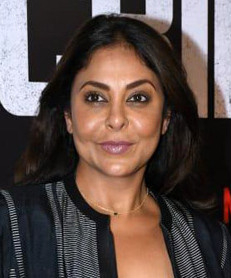
The Gujarati connection here runs through her mother Shobha, a homeopathy practitioner, and it started working when Shefali was ten years old and a school teacher's playwright husband asked her mother whether the girl could play a part modelled on the child from The Omen. She grew up in the Reserve Bank quarters in Santacruz speaking Tulu, Hindi, English, Marathi and Gujarati, and she built her early career in inter collegiate Gujarati plays. A 1995 piece in Rasa magazine had already called her a future star of Gujarati theatre before Hindi television knew her name.
In 1999 she led Dariya Chhoru, a Saurashtra coast love story directed by her future husband Vipul Shah opposite Jamnadas Majethia. It was named Best Film at the Gujarat State Film Awards and she won Best Actress, and the Routledge Handbook of Indian Cinemas lists it among the films that pushed Gujarati production budgets upward. What followed is the most decorated run by any actress on this page: a Filmfare Critics Award for Satya, Best Actress at the Tokyo International Film Festival for Kasturba Gandhi in Gandhi, My Father, the National Film Award for Best Supporting Actress for The Last Lear, DCP Vartika Chaturvedi in Delhi Crime, an International Emmy nomination for its second season, and a second Filmfare Critics Award for Three of Us. She also opened a restaurant in Ahmedabad in 2021, which is not an award but tells you where she keeps going back to.
Photo: Bollywood Hungama, CC BY 3.0, via Wikimedia Commons.
10Prachi Desai

Third woman on this list born in Valsad district, after Nirupa Roy and Bindu, which is a coincidence worth noticing on a coastline that also gave Gujarati cinema its first hits. She was schooled partly in Surat and partly at Panchgani, went to college in Pune, and at seventeen was cast by Ekta Kapoor as Bani Dixit in Kasamh Se on Zee TV. The show ran from January 2006 to March 2009 and she won the Indian Telly Award for Best Actress in a Lead Role on her first professional job. In 2007 she also won Jhalak Dikhhla Jaa 2, after having been eliminated once and returning through a wild card.
Then she did the thing daily soap leads are told is impossible. She left a running serial to take a film, and the film was Rock On!!, where she played Sakshi opposite Farhan Akhtar and got a Filmfare Best Female Debut nomination. Rajeev Masand wrote that she had the trickiest role in the picture and came off unscathed. Bol Bachchan, Once Upon Ay Time in Mumbai Dobaara, Azhar and then a move into streaming with Dhootha followed. She holds an IIFA Award and four Indian Telly Awards, a combination almost nobody on Indian television manages, because the two industries usually keep their own.
Photo: Bollywood Hungama, CC BY 3.0, via Wikimedia Commons.
11Dipika Chikhlia

She debuted as a lead in 1983 opposite Raj Kiran and worked across five languages before she was twenty five, with hits in Kannada opposite Shankar Nag, in Bengali opposite Prosenjit Chatterjee and in Tamil opposite Prabhu. None of that is why anyone recognises her. In 1987 Ramanand Sagar cast her as Sita in Ramayan, a serial that stopped Indian streets on Sunday mornings, and the country decided she was not playing a goddess so much as being one. She followed it with Luv Kush and The Sword of Tipu Sultan in 1989. Three Hindi films with Rajesh Khanna came out of it, of which two worked.
In 1991 she was elected to the Lok Sabha from Baroda on a Bharatiya Janata Party ticket, which is the most direct example on this page of Indian television converting recognition into political office. Her later work runs through Gujarati channels and Gujarati films: the Colors Gujarati serial Chutta Chheda in 2017 and the Gujarati film Natsamrat in 2018, plus a supporting role in Bala and a move into production with Dhartiputra Nandini in 2023. English Wikipedia does not state her family origin, so this page rests her place here on the Gujarati language screen work and the Vadodara seat rather than claiming an ancestry the record does not give.
Photo: Bollywood Hungama, CC BY 3.0, via Wikimedia Commons.
12Sanjeeda Sheikh

Born in Kuwait to a family that hails from Ahmedabad, which makes her the second person here to arrive at Hindi television from outside India rather than from a Bombay suburb. She spent nine years being cast as the other woman, most visibly as the vamp in Kayamath on Star Plus in 2007, and won Nach Baliye 3 with her then husband Aamir Ali the same year. Television was happy to keep her there. In 2014 Ek Hasina Thi gave her a double role built on revenge rather than seduction, she won the ITA Award for Best Actress, and the typecast broke.
The second half is unusually well planned. Gehraiyaan and Love Ka Hai Intezaar moved her toward streaming. Taish in 2020 was her Hindi film debut, followed the same year by the Netflix horror Kaali Khuhi opposite Shabana Azmi. In 2024 she was in Fighter, the highest grossing Hindi film of that year, and in Sanjay Leela Bhansali's Heeramandi, which earned her a Filmfare OTT Award nomination for Best Supporting Actress in a Drama Series. On 10 July 2026 she had two films release on the same day. English Wikipedia gives two different debut years for her first serial, 2005 in one place and 2006 in another, so this page does not use her debut year in the chart.
Photo: Bollywood Hungama, CC BY 3.0, via Wikimedia Commons.
The daily soap regulars
The largest employed group of Gujarati actresses in the country, and the least written about.
13Disha Vakani
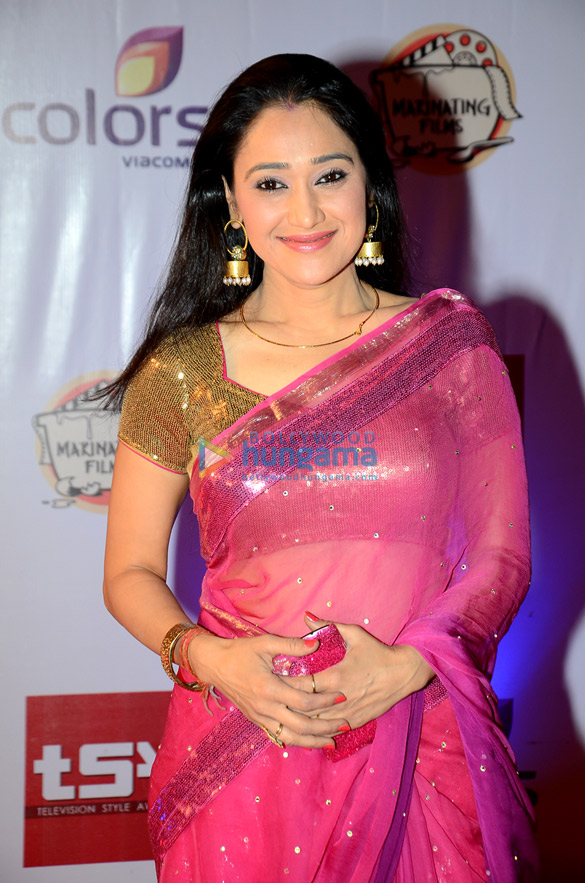
Before the sitcom there was a Gujarati stage childhood. Her father Bhim Vakani was a noted Gujarati theatre man and she began as a child theatre artiste alongside him, then took a degree in dramatic arts at Gujarat College in Ahmedabad, then did the commercial Gujarati circuit including Baa Retire Thai Che. That is a full apprenticeship completed before Hindi cinema gave her small parts in Devdas, Mangal Pandey: The Rising and Jodhaa Akbar. Her brother Mayur Vakani works in the same trade and plays her on screen brother.
From 2008 she played Daya Jethalal Gada, and a Gujarati housewife with a garba step and a catchphrase became the most imitated woman on Indian television. She went on maternity leave in September 2017 and, as of 2026, has not returned to the show. That is nine years of absence from a role nobody has been able to recast, which is a strange kind of monument: the character is still running, the actor is not, and the audience has refused to accept a substitute. Nothing else on this page demonstrates so cleanly how completely Indian television can absorb a performer into a name that is not hers.
Photo: Bollywood Hungama, CC BY 3.0, via Wikimedia Commons.
14Rashami Desai

A Gujarati family in Nagaon, Assam, is not where anyone looks for the next Hindi television lead, and the route out was correspondingly odd. An Assamese film at sixteen, a Hindi debut opposite Shah Rukh Khan and Raveena Tandon in Yeh Lamhe Judaai Ke in 2004, then a genuinely successful run in Bhojpuri cinema including Kab Hoi Gawna Hamar, which won the National Film Award for Best Feature Film in Bhojpuri. Four industries before the age of twenty.
Uttaran made her national. She played Tapasya from December 2008 to January 2015 across what became the third longest running series on Colors, and the show's success rested on the audience hating and forgiving her in roughly equal measure. Then she turned around and used it in Gujarat: Superstar in 2014 opposite Dhruvin Shah, which ran housefull into its seventh week and won her Best Debut Actress at the Gujarati Transmedia Awards in 2018, and Mom Tane Nai Samjay in 2025 opposite Amar Upadhyay. Most Hindi television actresses treat regional cinema as a retreat. She treated it as a second market and entered it at the top.
Photo: Bollywood Hungama, CC BY 3.0, via Wikimedia Commons.
15Giaa Manek

Ahmedabad born, Gujarati by descent, and cast in 2010 as Gopi in Saath Nibhaana Saathiya, a Star Plus serial about a Gujarati joint family that became one of the defining daily soaps of the decade. She played the daughter in law everyone underestimated. Two years in, Colors offered her Jhalak Dikhhla Jaa 5, the schedules would not reconcile, and she left the soap to dance. Very few people walk away from a running lead for a reality show, and fewer survive the decision.
She did survive it. Jeannie Aur Juju on SAB TV came directly out of the dance show, and she carried a comic fantasy lead for a channel that mostly hires men to be funny. Mahamohini on Zee followed in 2019, and from 2021 to 2022 she played Gopika Modi in Tera Mera Saath Rahe, the reboot of the show she had left nine years earlier. Going back into the same franchise as a different character, on a different channel, is a career manoeuvre with no real Hindi television precedent, and it worked.
Photo: Bollywood Hungama, CC BY 3.0, via Wikimedia Commons.
16Shefali Jariwala

An Ahmedabad girl who studied information technology engineering and came out of it with a computer applications degree, which is not the usual training for the most talked about music video of 2002. Kaanta Laga made her a single image in the national memory, and the press attached the phrase Kaanta Laga girl to her for the next twenty three years. Mujhse Shaadi Karogi followed in 2004, then the Kannada film Hudugaru in 2011, the ALT Balaji series Baby Come Naa in 2018, and reality television: Boogie Woogie, Nach Baliye twice with her husband Parag Tyagi, and Bigg Boss 13 as a wild card in 2019.
She spoke publicly about being diagnosed with epilepsy at fifteen, about a decade of treatment, and about using yoga and fitness to manage it, which was an unusually plain thing for an Indian television personality to discuss on the record. She died on 27 June 2025 at forty two. Her career is the clearest short case on this page of what Indian entertainment does with a woman it can reduce to one clip, and of how long she then has to spend proving there was a person attached to it.
Photo: Bollywood Hungama, CC BY 3.0, via Wikimedia Commons.
What the numbers say
Years since each actress's first documented screen credit
Elapsed years from each actress's first documented screen credit to July 2026. It measures how long ago the career started, not continuous employment. Sanjeeda Sheikh is not plotted because English Wikipedia gives two different years for her debut serial.
Questions people actually ask
Who was the first major Gujarati actress in Indian cinema?
Nirupa Roy, born Kokila Bulsara in Kalwada in Valsad district in 1931. She and her husband answered a casting advertisement in a Gujarati newspaper in 1946 and she was cast in the Gujarati film Ranakdevi. She worked until 1999, appeared in over 250 films and won three Filmfare Awards.
Is Aruna Irani Gujarati?
English Wikipedia does not say so. Her article records that she was born in Mumbai to an Irani father, Faredun Irani, who ran a drama troupe, and a Hindu mother, Saguna, and it makes no Gujarat claim anywhere. She is the first cousin of Bindu, who is documented as being from Valsad district, and that family link is probably why she is so often listed as Gujarati. This page leaves her out for that reason.
Which Gujarati actress has won the most important award?
Two have the strongest single credentials. Dimple Kapadia won the National Film Award for Best Actress for Rudaali in 1993. Shefali Shah won the National Film Award for Best Supporting Actress for The Last Lear and Best Actress at the Tokyo International Film Festival for Gandhi, My Father, and was nominated for an International Emmy for the second season of Delhi Crime.
Why are Dina Pathak and Parveen Babi not on this list?
Because there is no free licensed photograph of either of them on Wikimedia Commons. Dina Pathak, born Dina Gandhi in Amreli in 1922, has none at all, and Parveen Babi, born in Junagadh in 1954, has only a signature file. This site does not publish an entry it cannot illustrate honestly, so Dina Pathak's work is described inside the entries for her daughters Ratna Pathak Shah and Supriya Pathak.
Which part of Gujarat has produced the most Hindi film actresses?
On this list, Valsad district on the south Gujarat coast. Nirupa Roy was born in Kalwada, Bindu in the village of Hanuman Bhagda, and Prachi Desai in Valsad itself, across three generations. Ahmedabad accounts for the largest television cluster, including Disha Vakani, Giaa Manek and Shefali Jariwala.
Sources and image credits
All photographs are free-licensed files from Wikimedia Commons, reused with the attribution each licence requires. No press agency or studio photographs are hosted on this site. Instagram content is linked or embedded from the official account, never re-hosted.
- English Wikipedia biographies of the sixteen actresses, retrieved 29 July 2026
- English Wikipedia articles on Gunsundari (1948), Idhar Udhar, Kasamh Se, Uttaran, Masoom and Mirch Masala for dates, casts and channel records, retrieved 29 July 2026
- Wikimedia Commons file metadata for licence, photographer and date on every photograph used
- Wikimedia Commons category sweeps of Actresses from Gujarat, Actresses from Ahmedabad and Actresses in Gujarati cinema, 29 July 2026