The Gujarati directors with verified Hindi feature credits include Ketan Mehta, whose Gujarati debut Bhavni Bhavai led to Mirch Masala, Sardar and Manjhi, Vipul Amrutlal Shah, who followed the Gujarati film Dariya Chhoru with Aankhen and Namastey London, and Mikhil Musale, who took Wrong Side Raju to Maddock Films for Made in China and Sajini Shinde Ka Viral Video. Divyang Thakkar wrote and directed Jayeshbhai Jordaar for Yash Raj Films with Ranveer Singh, and it was a box-office failure. Krishnadev Yagnik remade his own Chhello Divas as the Hindi Days of Tafree, which reportedly earned Rs 60 lakh in its opening weekend against the Gujarati original's reported Rs 18 crore.
Every regional industry has an export route, and everybody in it can name the destination. Make one film that travels, take the meeting in Mumbai, come back with a Hindi picture. Gujarat's version of that route has been open since 1980 and the traffic on it has never been heavy. Twelve directors is roughly the entire list.
What makes it worth writing down is that the route does not reliably work. A National Award in Gujarati buys a Hindi feature. It does not buy a Hindi hit. This page tracks who crossed, what they actually directed on the other side, and, where the numbers are on record, whether it landed. Every Hindi credit here was checked against the film's own article rather than the director's, because director pages in this corner of the encyclopedia are generous with credits in a way film pages are not.
The list at a glance
| Director | The Gujarati credit | The Hindi credit | Did it work |
|---|---|---|---|
| Ketan Mehta | Bhavni Bhavai (1980) | Mirch Masala, Sardar, Mangal Pandey, Manjhi | Yes, two more National Awards and a French state honour |
| Mehul Kumar | Chandu Jamadar (1977) and eighteen Gujarati films after it | Tirangaa, Krantiveer, Mrityudaata, Kohram | Yes, Krantiveer was a blockbuster and won a National Award for its lead |
| Vipul Amrutlal Shah | Dariya Chhoru (1999) | Aankhen, Waqt, Namastey London, London Dreams, Action Replayy | Yes at first, with Namastey London reportedly earning Rs 71.40 crore worldwide |
| Mikhil Musale | Wrong Side Raju (2016) | Made in China (2019), Sajini Shinde Ka Viral Video (2023) | Two features for Maddock Films, both released |
| Abhishek Jain | Kevi Rite Jaish (2012), Bey Yaar (2014) | Hum Do Hamare Do (2021) | Released straight to Disney Plus Hotstar during the pandemic |
| Hardik Mehta | Amdavad Ma Famous (2015) | Kaamyaab, Roohi, Decoupled, Love Storiyaan | Roohi reportedly earned about Rs 30 crore against a reported Rs 20 crore budget |
| Divyang Thakkar | Kevi Rite Jaish (2012), as actor | Jayeshbhai Jordaar (2022), writer and director | No, the film was a box-office failure |
| Krishnadev Yagnik | Chhello Divas (2015) | Days of Tafree (2016) | No, a reported Rs 60 lakh opening weekend, and he has not directed in Hindi since |
| Pan Nalin | Chhello Show (2021) | Angry Indian Goddesses (2015) | He built the career in European co-production first, then came home |
| Vipul Mehta | Carry On Kesar (2017), Chaal Jeevi Laiye! (2019) | Kanjoos Makhichoos (2023), and writer on Maharaj (2024) | The Maharaj writing credit put him inside Yash Raj Films |
| Vijaygiri Bava | Kasoombo (2024) | The same film released in Hindi nationwide on 3 May 2024 | The film crossed. The director stayed in Gujarati |
| Ankit Sakhiya | Laalo: Krishna Sada Sahaayate (2025) | Hindi dubbed version, released 9 January 2026 | A reported Rs 100 crore worldwide without a Hindi remake |
How this list was built
A director ships here only with a verified Gujarati-language credit and a verified Hindi credit, each checked on the individual film article rather than on the director's biography page. That rule removed two entries that looked certain at the start. Vipul Amrutlal Shah's biography page credits him with Singh Is Kinng, but the film's own article credits Anees Bazmee as director and Shah appears as producer, so Singh Is Kinng is not counted among his directing credits below. Vipul Mehta is often described as the Hindi director of Maharaj, and the film's infobox in fact credits him as writer alongside Sneha Desai, with Siddharth P. Malhotra directing, so his Hindi directing credit here is Kanjoos Makhichoos. Umesh Shukla was cut entirely: he is a celebrated Gujarati stage director, but his filmography carries no Gujarati-language film as director, so he crossed from theatre rather than from Gujarati cinema. Kantilal Rathod, who directed the National Award winning Gujarati film Kanku in 1969 and then the Hindi Parinay in 1974, was cut for the opposite reason: the credit is real but no free-licensed photograph of him exists and he died in 1988, so there is no account to verify. Ravindra Dave is worth naming as the traffic running the other way, since he directed more than thirty Hindi films before moving to Gujarati cinema with Jesal Toral in 1971. Every remaining entry has either a Wikimedia Commons photograph or an Instagram profile confirmed by Apify scrape on 29 July 2026 with a biography or link that corroborates the credits. Box office figures are industry-reported and are labelled as such.
The old route
Three directors crossed decades before the new wave existed, and their Gujarati films are the reason anyone in Mumbai took the call.
1Ketan Mehta

Mehta is the proof that the route was open long before anyone thought of it as a route. His first film was Gujarati, it won the Nargis Dutt Award at the 28th National Film Awards, and seven years later he made Mirch Masala in Hindi with Naseeruddin Shah and Smita Patil. That film won Best Film at Hawaii and went out to 52 cinemas in the United States, a distribution footprint no Gujarati director has matched since.
The Hindi run after that is a career rather than an experiment. Sardar in 1993, a biopic of Vallabhbhai Patel written by the playwright Vijay Tendulkar, took him a second Nargis Dutt Award. Mangal Pandey: The Rising in 2005 brought Aamir Khan back after four years away. Manjhi, in 2015 with Nawazuddin Siddiqui, opened to strong reviews and soft business. Ten features, seven documentaries, two television serials, and the French government's Ordre des Arts et des Lettres. The Gujarati debut was the door, not the ceiling.
Photo: Bollywood Hungama, CC BY 3.0, via Wikimedia Commons.
2Mehul Kumar

Nobody on this page put in more Gujarati mileage before crossing. Kumar started as a journalist writing film reviews in the early 1970s, moved into Gujarati theatre, and made his directing debut with the Gujarati comedy Chandu Jamadar in 1977. After his bilingual Hindi and Gujarati film Phir Janam Lenge Hum found an audience the same year, he directed eighteen more successful Gujarati films before Hindi became his main address.
What he made there was mainstream at maximum volume. Marte Dam Tak in 1987 was a golden jubilee hit. Tirangaa paired Raaj Kumar with Nana Patekar. Krantiveer, built around the Bombay riots, became the third highest grossing film of its year, took four Filmfare awards, and won Patekar a National Film Award. Mrityudaata in 1997 was Amitabh Bachchan's comeback after five years and it failed. He runs a cinema, Mehul Cinemax, in Jamnagar. Two decades of Gujarati films funded that crossing, which is the opposite of how it is usually told.
Photo: Graphikamaal, CC BY 3.0, via Wikimedia Commons.
3Vipul Amrutlal Shah

Dariya Chhoru is a love story set on the Saurashtra coast between a poor man and a woman from a wealthy family, starring Jamnadas Majethia and Shefali Shah. It won nine awards from the state of Gujarat including Best Film and Best Director, and it was Shah's first film. Three years later he was directing Amitabh Bachchan, Akshay Kumar, Arjun Rampal and Sushmita Sen in Aankhen.
The interesting part is what he carried across. Aankhen is an adaptation of his own Gujarati stage play Andhalo Pato. Waqt, in 2005, came from a Gujarati play by Aatish Kapadia. Action Replayy, he has said, came from another Gujarati play of the same name. Namastey London in 2007 reportedly earned Rs 71.40 crore worldwide and was the ninth highest grossing Hindi film of its year. Three of his five Hindi features are Gujarati theatre in Hindi clothing, which is the quietest and most effective version of the crossing anyone here managed.
Photo: Bollywood Hungama, CC BY 3.0, via Wikimedia Commons.
The Maddock and Yash Raj pipeline
Since 2019 the crossing has run through two Mumbai studios in particular. Four directors made the trip. The results split neatly down the middle.
4Mikhil Musale
Musale is the cleanest example of the modern route working exactly as advertised. One Gujarati debut, one National Film Award for Best Feature Film in Gujarati at the 64th, and three years later Dinesh Vijan handed him Rajkummar Rao, Mouni Roy and Boman Irani for Made in China, released on Diwali 2019. The film is about a Gujarati businessman who goes to China to expand his trade, adapted from Parinda Joshi's novel, which is a strikingly Gujarati subject to bring into a Hindi Diwali release.
Sajini Shinde Ka Viral Video followed in 2023, again for Maddock, this time a mystery with Nimrat Kaur, Radhika Madan, Bhagyashree and Subodh Bhave, released on 27 October. Two Hindi features from one studio inside four years is a working relationship rather than a one-off audition. His own account lists Wrong Side Raju on Prime Video and both Hindi films on Netflix, which is the whole crossing compressed into three lines of a profile bio.
Instagram: @mikhilmusale88 (verified 2026-07-29).
5Abhishek Jain

The man credited with starting the Gujarati new wave took nine years to make a Hindi film, which tells you something about how little the industry needed him to. When he did, Dinesh Vijan produced it and the cast was Rajkummar Rao, Kriti Sanon, Paresh Rawal and Ratna Pathak Shah. Hum Do Hamare Do is a comedy about a man who rents a set of parents, which sits comfortably inside the family-satire register Jain had been working in Gujarati since Kevi Rite Jaish.
The release is the part worth recording honestly. Announced in February 2020, deferred by the pandemic, shot from October 2020 in Chandigarh, planned for theatres and then diverted, it went straight to Disney Plus Hotstar on 29 October 2021. Dimple Kapadia left the project during the delays and was replaced by Ratna Pathak Shah. Jain went back to Gujarat and to building OHO Gujarati, the first OTT platform dedicated to the language. He is the only director here whose Gujarati work is more consequential than his Hindi work, and he seems to know it.
Photo: GujLitFest, CC BY 3.0, via Wikimedia Commons.
6Hardik Mehta
Mehta went across on the strength of a kite-flying documentary and then stayed. Kaamyaab, about a washed up side actor chasing his five hundredth film, premiered at the Busan International Film Festival in 2018, got picked up by Shah Rukh Khan's Red Chillies Entertainment alongside Drishyam Films, and released theatrically in March 2020 to strong reviews. Roohi followed for Maddock in 2021 with Rajkummar Rao, Janhvi Kapoor and Varun Sharma. It reportedly earned about Rs 30 crore against a reported Rs 20 crore budget and took poor reviews in a post-pandemic market.
The writing is where his crossing paid better than the directing. He co-wrote Trapped with Vikramaditya Motwane and worked on the first season of Paatal Lok for Amazon Prime Video. He was director and showrunner on the Netflix series Decoupled with R. Madhavan, and in 2024 directed the opening film of the anthology Love Storiyaan for Dharmatic. He is the one on this list who treated Hindi as an industry to work inside rather than a prize to win.
Instagram: @serialclicker811 (verified 2026-07-29).
7Divyang Thakkar
Thakkar's route in is the odd one. He crossed as an actor first, playing the lead in Kevi Rite Jaish, which won him the Gujarat State Award for Best Actor, then reunited with Abhishek Jain for Bey Yaar. In 2022 he turned writer-director for Yash Raj Films with Jayeshbhai Jordaar, a comedy drama about a Gujarati patriarch's son who believes in equal rights between men and women, produced by Maneesh Sharma and starring Ranveer Singh with Shalini Pandey, Boman Irani and Ratna Pathak Shah.
That is the biggest platform any Gujarati filmmaker has been handed for a first directing job, and the film failed. Shot between December 2019 and February 2020, held through the pandemic across multiple postponements, released on 13 May 2022, it drew mixed reviews and emerged as a box-office failure. It is the cleanest counterexample on this page. A Gujarati state award for acting and a Whistling Woods degree got a first-time director Ranveer Singh, a Yash Raj banner, and no result. The route opens the door. Nothing about it guarantees the room.
Instagram: @divyangt (verified 2026-07-29).
The ones who took their own film with them
Three directors did not pitch a new idea in Mumbai. They carried across a story they had already told, or had already been telling somewhere else entirely.
8Krishnadev Yagnik
This is the sharpest number on the page. Chhello Divas, Yagnik's Gujarati debut about eight friends in their last year of college, opened on 231 screens, ran past fifty days and reportedly grossed Rs 18 crore. Ten months later he wrote and directed the official Hindi remake himself. Days of Tafree released on 23 September 2016, produced by Anand Pandit and Rashmi Sharma, with Yash Soni and Kinjal Rajpriya carried over from the original cast. It reportedly earned Rs 60 lakh in its opening weekend and English Wikipedia records the response as poor.
Same writer, same director, same story, roughly a thirtieth of the business. The lesson Yagnik appears to have drawn from it is the correct one. He has not directed a Hindi feature since, and instead built eight Gujarati features across a decade, co-founded Belvedere Films and Big Box Series, and took Best Gujarati Feature Film at the 71st National Film Awards for Vash. Vash was then remade in Hindi as Shaitaan by somebody else. He let the story cross and stayed home himself, which on this evidence was the better trade.
Instagram: @krishnadevyagnik (verified 2026-07-29).
9Pan Nalin

Nalin ran the export route backwards. His 2001 debut Samsara, about a Buddhist monk's search for enlightenment, was an international co-production between India, Germany, France, Italy and Switzerland. Valley of Flowers in 2006 was a French, German and Indian film with Milind Soman and Naseeruddin Shah. For two decades his money, his festivals and his audience were European, and Gujarat had very little to do with any of it.
Angry Indian Goddesses in 2015 was his Hindi feature, produced under his own Jungle Book Studio, and it finished second for the People's Choice Award at the Toronto International Film Festival. Only after all of that did he go home and make Chhello Show, the semi-autobiographical story of a Saurashtra boy who trades his lunch for a seat in a projection room. That one became India's official entry for the Best International Feature Film at the 95th Academy Awards and made the shortlist. Everybody else on this page treated Gujarati as the training ground. He treated it as the destination.
Photo: Faith Connections, CC BY-SA 4.0, via Wikimedia Commons.
10Vipul Mehta
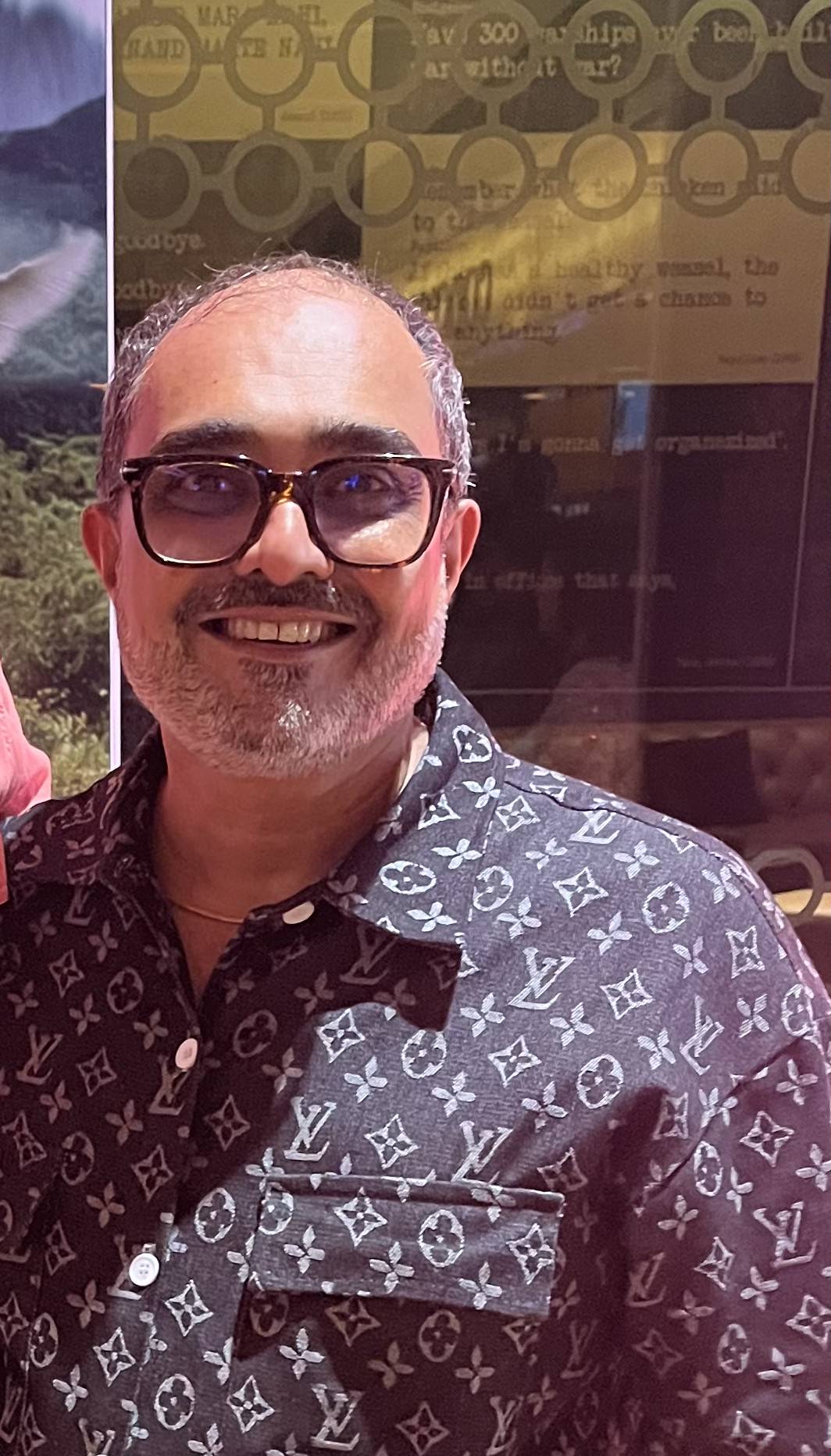
Mehta works in three languages and the through line in all of them is Gujarati source material. His Gujarati films are Carry On Kesar, Chaal Jeevi Laiye!, Kehvatlal Parivar and Bachu Ni Benpani. His Marathi film Ole Aale is a remake of his own Chaal Jeevi Laiye! with Nana Patekar. His Hindi directing debut, Kanjoos Makhichoos in 2023 with Kunal Khemu and Shweta Tripathi, is adapted from the Gujarati play Sajan Re Jhooth Mat Bolo and released on ZEE5 on 24 March.
The bigger credit is one he did not direct. Maharaj, the 2024 historical drama about the 1862 Maharaj Libel Case, is directed by Siddharth P. Malhotra and produced by Aditya Chopra for YRF Entertainment, and its infobox names Vipul Mehta and Sneha Desai as the writers. It went to Netflix on 21 June 2024 after the Gujarat High Court stayed the theatrical release. Adapting a Gujarati subject from Saurabh Shah's novel for a Yash Raj production is a different kind of crossing to the usual one, and on the evidence it has been the more durable one.
Photo: Editorharpsweetrolls, CC BY-SA 4.0, via Wikimedia Commons.
The films crossed, the directors stayed
The newest version of the export route skips Mumbai entirely. Release the Gujarati film in Hindi and keep the chair.
11Vijaygiri Bava
Kasoombo is a historical drama with Raunaq Kamdar, Dharmendra Gohil, Darshan Pandya, Chetan Dhanani, Shraddha Dangar and Monal Gajjar, written by Raam Mori, and it is the most expensive thing a Gujarati banner has attempted. It released in Gujarat on 16 February 2024. On 3 May it was officially released in Hindi across India, which is a route almost no Gujarati period film had taken before.
That distinction matters more than it sounds. A Hindi remake hands the story to another director and another cast, and the original filmmaker usually gets a cheque and a credit. A nationwide Hindi release of the same film keeps the director, the performances and the money in Gujarat and simply widens the screen count. Bava has stayed on Gujarati subjects across Premji, Montu Ni Bittu, 21mu Tiffin and Kasoombo, and got national distribution anyway. That is a crossing without an emigration.
Instagram: @vijaygiribava (verified 2026-07-29).
12Ankit Sakhiya
Laalo is a devotional drama about faith and Krishna made on a modest budget with Reeva Rachh and Shruhad Goswami leading and no marquee names anywhere in the cast. It opened on 10 October 2025 to a reported Rs 0.40 crore in its first week, then grew through word of mouth into the first Gujarati film reported past Rs 100 crore worldwide, with industry-reported lifetime figures near Rs 120 crore. The Hindi dubbed version followed on 9 January 2026.
The order of events is the story. For thirteen years the Gujarati playbook has been to prove yourself locally and then negotiate in Mumbai. Sakhiya got the biggest commercial result in the history of the language on his first film without a Hindi studio, a Hindi star or a Hindi remake, and the Hindi version arrived three months later as a consequence rather than a condition. In May 2026 the film became the first Gujarati title screened at the Cannes Film Festival. The export route now has a second lane.
Instagram: @ankitsakhiyaofficial (verified 2026-07-29).
What the numbers say
The wait, in years, between the Gujarati debut and the first Hindi feature
Measured in release years between the first Gujarati credit and the first Hindi feature, so pandemic delays inflate the two longest bars. Mehul Kumar, Hardik Mehta and Pan Nalin are left out because their timelines do not fit the measure: Kumar worked in Hindi and Gujarati in the same year he debuted, Mehta's Kaamyaab premiered at Busan in 2018 and released theatrically in 2020, and Nalin began in European co-production and reached Gujarati last.
Questions people actually ask
Which Gujarati director has been most successful in Hindi cinema?
By commercial record, Vipul Amrutlal Shah. After his Gujarati debut Dariya Chhoru won nine Gujarat state awards, he directed five Hindi features, of which Namastey London reportedly earned Rs 71.40 crore worldwide and finished as the ninth highest grossing Hindi film of 2007. By critical record, Ketan Mehta, whose Hindi films Mirch Masala, Sardar and Manjhi followed his Gujarati debut Bhavni Bhavai.
Did Krishnadev Yagnik's Hindi remake of Chhello Divas work?
No. Days of Tafree, which he wrote and directed himself in 2016, reportedly earned Rs 60 lakh in its opening weekend and English Wikipedia describes the box office response as poor. The Gujarati original, Chhello Divas, reportedly grossed Rs 18 crore. He has not directed a Hindi feature since and has built eight Gujarati features instead.
Who directed Jayeshbhai Jordaar?
Divyang Thakkar, who wrote and directed it for Yash Raj Films. It was produced by Maneesh Sharma and starred Ranveer Singh with Shalini Pandey, Boman Irani and Ratna Pathak Shah. Released on 13 May 2022 after repeated pandemic delays, it received mixed reviews and was a box-office failure. Thakkar had earlier played the lead in the Gujarati film Kevi Rite Jaish.
Did Vipul Mehta direct Maharaj?
No. Maharaj, the 2024 YRF Entertainment film released on Netflix, was directed by Siddharth P. Malhotra. The film's infobox credits Vipul Mehta and Sneha Desai as its writers. Mehta's own Hindi directing credit is Kanjoos Makhichoos, released on ZEE5 in March 2023 and adapted from the Gujarati play Sajan Re Jhooth Mat Bolo.
Do Gujarati directors still need to move to Hindi cinema?
Less than they did. Vijaygiri Bava's Kasoombo got a nationwide Hindi release of the same film on 3 May 2024 rather than a remake, and Ankit Sakhiya's Laalo reportedly crossed Rs 100 crore worldwide as a Gujarati release before a Hindi dubbed version appeared on 9 January 2026. Both kept the director, the cast and the revenue in Gujarat.
Sources and image credits
All photographs are free-licensed files from Wikimedia Commons, reused with the attribution each licence requires. No press agency or studio photographs are hosted on this site. Instagram content is linked or embedded from the official account, never re-hosted.
- English Wikipedia film articles, checked individually for director and writer credits, retrieved July 2026
- English Wikipedia director biographies, used only where a film article confirmed the credit
- IMDb-sourced Gujarati cinema credits database covering 118 films, 2012 to 2026, verified April 2026
- Wikimedia Commons file metadata for photographer, licence and date, retrieved July 2026
- Instagram profile details confirmed by Apify scrape, 29 July 2026
- Box office reporting cited on English Wikipedia from Bollywood Hungama, Pinkvilla and Box Office India