The Gujarati new wave began with Kevi Rite Jaish in 2012, directed by Abhishek Jain, and the same director's Bey Yaar in 2014 proved an urban Gujarati audience would pay for it. Chhello Divas made that audience a business in 2015, Wrong Side Raju took the National Film Award for Best Feature Film in Gujarati at the 64th National Film Awards in 2016, and Hellaro won the Swarna Kamal for Best Feature Film at the 66th in 2019. Chaal Jeevi Laiye! closed the decade at a reported Rs 50 crore, a Gujarati record that stood until 2025.
In 2011 Gujarat, a state of sixty million people with its own language and its own cinema going back to 1932, released fewer than ten Gujarati films in a year. The industry existed on paper. It made rural melodramas for a shrinking audience, played them in single screens outside the cities, and nobody under thirty in Ahmedabad had watched one on purpose. Then a twenty-something ad filmmaker made a satire about Patels desperate to move to America, and the arithmetic changed.
What follows is that decade laid out in order, not ranked. Nine years, twenty films, and a clear shape: proof of concept, then proof of scale, then proof of range, then proof of prestige, then a hard stop in March 2020 when the cinemas shut. Every credit here is checked against Wikipedia film infoboxes and an IMDb-sourced credits database. Every box office figure is labelled reported, because Gujarati cinema still has no audited tracker and the trade press disagrees with itself constantly.
The list at a glance
| Film | Year | Director | What it settled |
|---|---|---|---|
| Kevi Rite Jaish | 2012 | Abhishek Jain | That a modern Gujarati film could hold city screens for sixteen weeks |
| Bey Yaar | 2014 | Abhishek Jain | That the urban audience was big enough to be a business, at a reported Rs 8.5 crore |
| Chhello Divas | 2015 | Krishnadev Yagnik | That a cast of complete newcomers could carry a hit and become an industry |
| Gujjubhai the Great | 2015 | Ishaan Randeria | That the Gujarati theatre audience would follow a stage property into multiplexes |
| Premji: Rise of a Warrior | 2015 | Vijaygiri Bava | That the state jury would back a hard rural drama, with ten Gujarat State Awards |
| Amdavad Ma Famous | 2015 | Hardik Mehta | That Gujarati non-fiction could win a National Award and travel to festivals |
| Wrong Side Raju | 2016 | Mikhil Musale | That Bombay money would back a Gujarati film, and that it could win a National Award |
| Thai Jashe! | 2016 | Nirav Barot | That a middle-class Ahmedabad story needed no stars and no formula |
| Carry On Kesar | 2017 | Vipul Mehta | That performers of national standing would take a Gujarati lead role |
| Vitamin She | 2017 | Faisal Hashmi | That a first-time feature director could open a film on a radio voice |
| Love Ni Bhavai | 2017 | Saandeep Patel | That a Gujarati romance could run past 100 days on music and word of mouth |
| Dhh | 2017 | Manish Saini | That a Gujarati children's film could win a National Award and play Toronto |
| Shu Thayu? | 2018 | Krishnadev Yagnik | That the Chhello Divas cast had become a bankable ensemble on its own |
| Ventilator | 2018 | Umang Vyas | That a Bollywood lead would headline a Gujarati ensemble |
| Reva | 2018 | Rahul Bhole and Vinit Kanojia | That Gujarati literature was a viable source, and a National Award winner |
| Hellaro | 2019 | Abhishek Shah | That a Gujarati film could win the Swarna Kamal, India's top film award |
| Chaal Jeevi Laiye! | 2019 | Vipul Mehta | That the ceiling was a reported Rs 50 crore, not Rs 20 crore |
| Short Circuit | 2019 | Faisal Hashmi | That Gujarati could attempt science fiction on a reported Rs 1.5 crore |
| Luv Ni Love Storys | 2020 | Durgesh Tanna | That the bench was deep enough to field a five-hander with no single star |
| Golkeri | 2020 | Viral Shah | That the decade's momentum was real, right up to the week cinemas closed |
How this list was built
Twenty Gujarati-language films released between 2012 and 2020, selected for the argument they settled rather than for what they earned. A film qualifies here if it did something the industry had not done before: opened a new audience, proved a genre, won a national award, or shifted where the money came from. Box office is context, not the ranking. Credits are verified against English Wikipedia film infoboxes and an IMDb-sourced Gujarati cinema credits database covering 118 films, and every reported gross is labelled as reported because no certified box office tracker exists for the language. Two films that belong in this story were dropped under the image rule this site runs on, which is that every entry must carry a free-licensed Wikimedia Commons photograph of a verified director, producer or lead actor, or the film's own verified Instagram account, and nothing else. Karsandas Pay & Use (2017), Krishnadev Yagnik's second feature, and Chor Bani Thangaat Kare (2017) both fell out because no free-licensed photograph exists of anyone credited on them. Left out by choice, not by gap: GujjuBhai: Most Wanted (2018) and Sharato Lagu (2018), both covered on the box office page, and Montu Ni Bittu (2019), Gujarat 11 (2019), Best of Luck Laalu (2017) and Chhutti Jashe Chhakka (2018), which were good releases without a distinct argument to add to this one.
2012 to 2014: proof that anyone was watching
Two films by the same director, two years apart. The first proved a city audience existed. The second proved it could be counted in crores.
1Kevi Rite Jaish
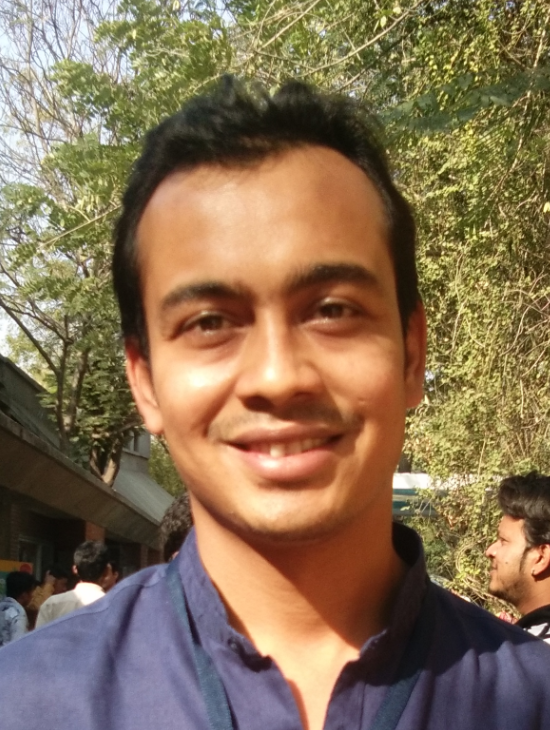
Abhishek Jain was an ad and short film director in his twenties when he made a satire about the one Gujarati obsession nobody had put on screen: the Patel migration to America and the motel empire it built there. Kevi Rite Jaish cost a reported Rs 1.75 crore, starred Divyang Thakkar, Veronica Gautam, Kenneth Desai, Anang Desai, Rakesh Bedi and Tom Alter, and opened on 15 June 2012. It ran ten weeks in Ahmedabad and Vadodara, six in Bharuch, and completed sixteen weeks in total. For a language whose films had stopped playing in city multiplexes altogether, sixteen weeks was not a result. It was a rebuttal.
The film swept seven of the eight categories it was nominated in at that year's BIG Gujarati Entertainment Awards, including Best Film, Best Director and both acting prizes. None of that is why it matters. It matters because it answered the question every Gujarati producer had stopped asking: is there anyone in Ahmedabad who will buy a ticket to a film in their own language. There was. Everything on this page is downstream of that one commercial fact, and the phrase new wave attaches to Gujarati cinema from this release onward.
Photo: Gazal World, CC BY-SA 4.0, via Wikimedia Commons.
2Bey Yaar

Two years later Jain came back with a friendship film. Bey Yaar opened on 29 August 2014 in only Ahmedabad, Surat and Vadodara, and the distribution plan tells you how little confidence the trade had. After the first week it expanded to Rajkot, Jamnagar and Bhavnagar. By the fourth week it was running 127 shows a day across Gujarat multiplexes. It then went to Melbourne and other overseas markets, and became the first Gujarati film hosted by the New York Indian Film Festival. Reported gross is an estimated Rs 8.5 crore against a reported Rs 2.25 crore budget, and it stayed in theatres for fifty weeks.
The writing credit is the part worth staring at. Bhavesh Mandalia and Niren Bhatt wrote it, and Bhatt went on to write Wrong Side Raju and Ventilator on this list before writing Bala, Made in China and the Munjya and Stree scripts in Hindi. Darshan Jariwala, Manoj Joshi, Amit Mistry, Kavin Dave, Divyang Thakkar and Pratik Gandhi were the cast. Gandhi was six years away from Scam 1992. Bey Yaar is where the modern Gujarati talent pipeline visibly starts, and where a Gujarati film first behaved like a product with a release strategy rather than a favour.
Photo: Suyash Dwivedi, CC BY-SA 4.0, via Wikimedia Commons.
2015: four different films, four different audiences
The year the revival stopped being one director's project. A college comedy, a stage adaptation, a rural drama and a documentary all landed inside twelve months, and each one found a separate crowd.
3Chhello Divas

Krishnadev Yagnik cast eight newcomers nobody had heard of and wrote them a last year of college. Malhar Thakar, Yash Soni, Aarjav Trivedi, Rahul Raval, Janki Bodiwala, Kinjal Rajpriya, Mitra Gadhavi and Netri Trivedi had almost no film credits between them when Chhello Divas released on 20 November 2015. What the film did that Kevi Rite Jaish and Bey Yaar had not was speak in the actual register of Ahmedabad college students, slang and all, with no attempt to soften it for a non-Gujarati listener. The Hindi industry noticed and remade it as Days of Tafree.
Read it as a casting event rather than a film and its place in this decade becomes obvious. Every one of those eight actors went on to lead or co-lead Gujarati films, and the ensemble reassembled three years later for Shu Thayu?. Before Chhello Divas, a Gujarati producer casting a lead had to borrow from theatre or television or Bollywood. After it, there was a bench. That is the single most valuable thing any film on this page produced, and it cost a reported Rs 2.8 crore.
Photo: Snehrashmi, CC BY-SA 4.0, via Wikimedia Commons.
4Gujjubhai the Great

Gujarati commercial theatre had a paying audience the whole time the film industry was starving. Siddharth Randeria had spent decades building the Gujjubhai character on stage in Mumbai and Ahmedabad, playing to full houses at ticket prices nobody thought would transfer. His son Ishaan Randeria wrote and directed the film version, PVR Pictures distributed it into national multiplex chains, and it opened on 18 September 2015 to a reported Rs 15 crore.
It arrived two months before Chhello Divas and did the opposite job. Yagnik's film recruited a young audience that had never watched Gujarati cinema. Randeria's film converted an older one that had been buying Gujarati tickets for thirty years, just in a different building. Between September and November 2015 the industry acquired both halves of its market, and the franchise that followed made Siddharth Randeria the only performer to headline Gujarati hits across three separate decades.
Photo: Nizil Shah, CC BY-SA 4.0, via Wikimedia Commons.
5Premji: Rise of a Warrior

While Ahmedabad was being sold comedies, Vijaygiri Bava made his debut feature about a boy from a Kutchi village who arrives in the city carrying a tragedy he cannot name. Mehul Solanki played Premji, Abhimanyu Singh played his father, and Aarohi Patel, Maulik Nayak, Malhar Pandya and Namrata Pathak filled out a cast that was almost entirely new to features. It released on 10 July 2015 and took ten Gujarat State Awards for that year, including Best Film, Best Director for Bava and Best Actor for Solanki.
The film also did something the new wave rarely managed in its first phase: it went back and fixed itself. A re-edited version opened in Mumbai on 31 March 2017 and was re-released in Gujarat, which is not a thing you do unless you believe the film has a longer life than its opening weekend. Bava went on to direct Montu Ni Bittu, 21mu Tiffin and Kasoombo, all produced by Twinkle Vijaygiri, making them the decade's most consistent director and producer pairing outside CineMan.
Photo: Imfarhad7, CC BY-SA 4.0, via Wikimedia Commons.
6Amdavad Ma Famous

Hardik Mehta followed an eleven year old kite runner named Zaid through Uttarayan in the old city of Ahmedabad. That is the entire film. It premiered at the Budapest International Documentary Festival on 24 September 2015, won the National Film Award for Best Non-Feature Film at the 63rd National Film Awards, took the Golden Conch for Best Documentary and Best Editor at the 14th Mumbai International Film Festival in 2016, won the Golden Plaque at Belgrade, and was selected at Hot Docs in Toronto and Palm Springs. It later landed on Netflix.
Every other film in this decade was arguing about the domestic box office. This one quietly proved a different point, which is that Gujarati as a language of non-fiction had international festival value the moment somebody shot it properly. Mehta's award in 2016 was the first national recognition the new wave received of any kind, arriving a full year before Wrong Side Raju's. The industry has still not built much on it. There is no Gujarati documentary pipeline, and that remains one of the clearest open doors on this list.
Photo: Ministry of Information and Broadcasting, GODL-India, via Wikimedia Commons.
2016 and 2017: a National Award, and a much wider bench
Once the audience was proven the question changed. Not can a Gujarati film work, but what kinds of Gujarati film can work. These five answered it in five different directions.
7Wrong Side Raju

A hit and run in Ahmedabad in 2013 gave Mikhil Musale his story, and Pratik Gandhi gave it a driver who is neither victim nor villain. What makes Wrong Side Raju structurally important is the producer line: Nayan Jain of CineMan alongside Vikas Bahl, Vikramaditya Motwane, Madhu Mantena and Anurag Kashyap of Phantom Films. That is the first time Bombay production capital of that weight came into a Gujarati film, and it came four years after Kevi Rite Jaish.
It released on 9 September 2016 and then went out to the United States, Canada, Australia and the United Kingdom, and took the National Film Award for Best Feature Film in Gujarati at the 64th National Film Awards, credited to Musale and CineMan. Notice how quickly the loop closed. Abhishek Jain restarted the industry, his production house then backed a first-time director, and that director won the language its first feature National Award of the revival. Four years, one banner, three landmark films.
Photo: Desmond Herzfelder, CC BY 4.0, via Wikimedia Commons.
8Thai Jashe!

Nirav Barot wrote and directed a film about a middle-class man in Ahmedabad trying to get somewhere and mostly not getting there. Manoj Joshi, Malhar Thakar and Monal Gajjar led it, it opened on 3 June 2016, and it took a reported Rs 4 crore against a reported Rs 2.25 crore budget. Modest numbers. It then took Best Film and Best Writer at the 16th Transmedia Gujarati Screen and Stage Awards from nine nominations, and Story of the Year at the Gujarati Iconic Film Awards.
It earns its place because of what it is not. It is not a college comedy, not a stage transfer, not a thriller and not a village drama. It is an ordinary salaried life in a city, treated as worth a feature, and that register had no precedent in Gujarati cinema at all. Malhar Thakar was seven months out of Chhello Divas when he made it, which is the first evidence that the 2015 bench could carry material that had nothing to do with the film that created it.
Photo: Limeknight9, CC BY-SA 4.0, via Wikimedia Commons.
9Carry On Kesar

Shyamji and Kesar Patel are an elderly childless couple in a small Gujarat town. A Paris-based designer arrives to learn Kesar's craft, something breaks open, and the couple decide to have a child at an age when their contemporaries are grandparents. Vipul Mehta wrote and directed it from Ankit Trivedi's play Baane Gher Babo Aavyo, and it released on 17 February 2017 with Darshan Jariwala, Avani Modi and Rittesh Mobh alongside the lead.
The lead was Supriya Pathak, and this was her first Gujarati film. That fact is the whole reason the entry is here. A performer with a Filmfare and decades of Hindi film and stage work behind her had never been offered a Gujarati lead worth taking, and in 2017 she was. Mehta went on to make Best of Luck Laalu the same year and Chaal Jeevi Laiye! two years later, which means the man who ended the decade with its biggest hit spent 2017 quietly proving the industry could attract national-grade casting.
Photo: Bollywood Hungama, CC BY 3.0, via Wikimedia Commons.
10Vitamin She

Faisal Hashmi's first feature is a romantic comedy about a man working out how differently he and the women in his life are wired. It released on 28 July 2017, ran six weeks, and took a reported Rs 3.9 crore against a reported Rs 1.35 crore budget. Theatre owners across Gujarat named it in the same breath as Bey Yaar, Chhello Divas, Gujjubhai the Great and Karsandas Pay & Use as one of the releases putting crowds back into halls.
The lead was Dhvanit Thaker, a radio jockey with an enormous Ahmedabad following and no film career. Casting a broadcaster rather than an actor was a bet on audience familiarity that no Gujarati producer had tried, and it worked well enough that Hashmi and Thaker did it again two years later on Short Circuit. It is a small film with a real lesson in it: in a market this size, the person the city already listens to every morning is an asset a production can actually afford.
Photo: Imfarhad7, CC BY-SA 4.0, via Wikimedia Commons.
11Love Ni Bhavai
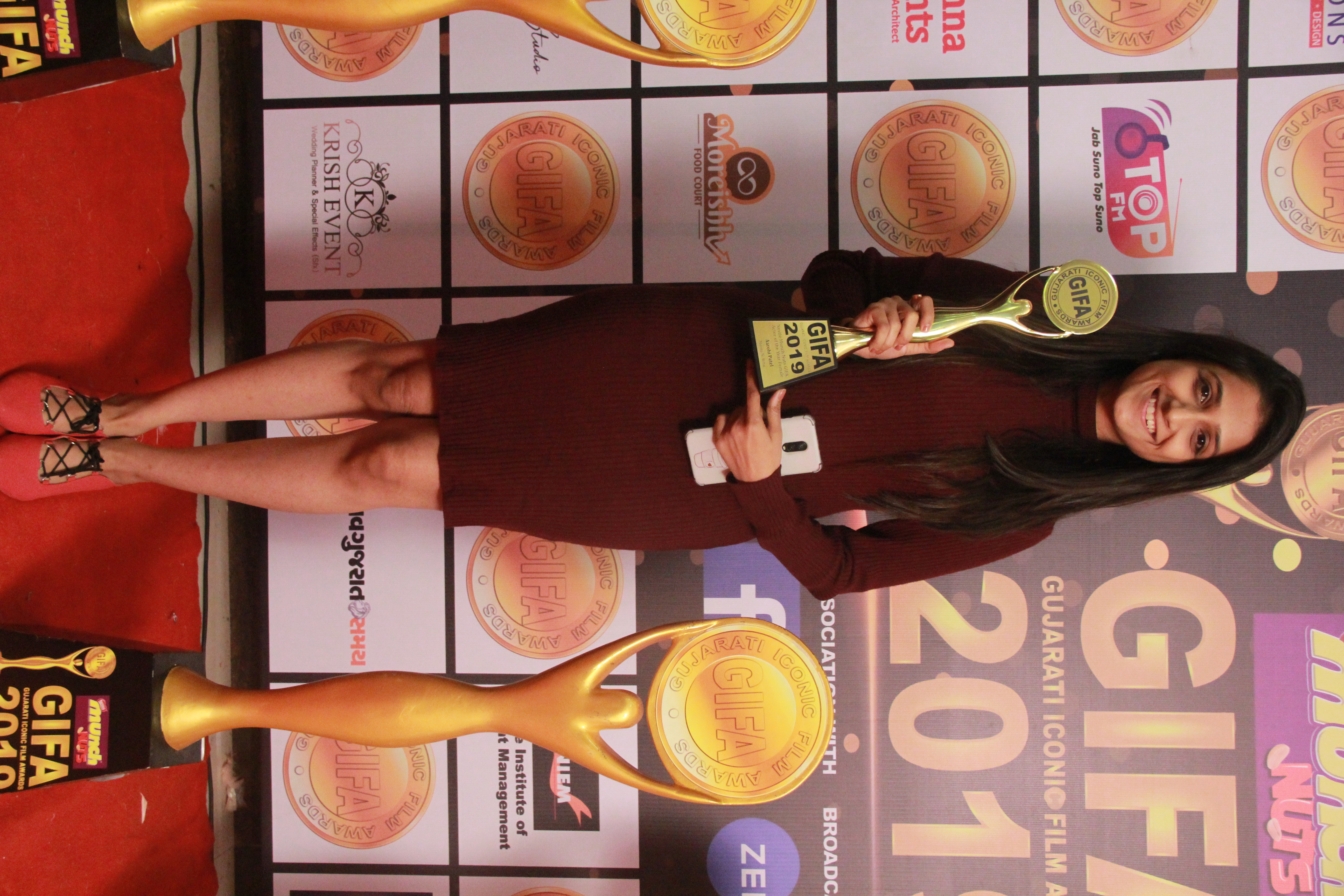
Malhar Thakar, Pratik Gandhi and Aarohi Patel in one romantic drama, released 17 November 2017, running past 100 days and taking a reported Rs 8 crore in India. Saandeep Patel directed, Aarti Patel produced, and Mitai Shukla and Nehal Bakshi wrote it. The same director and producer pair later made Aum Mangalam Singlem, so this is the start of a working unit rather than a one-off.
The under-discussed engine here is the soundtrack. Sachin-Jigar composed it with lyrics by Niren Bhatt, and a Gujarati film music album became a promotional asset in its own right for the first time in the revival. Sachin-Jigar went on to score Chor Bani Thangaat Kare, Best of Luck Laalu and Chaal Jeevi Laiye!, which means the composers who dominate Hindi film music were, for a stretch of the late 2010s, also the house band of the Gujarati new wave. Music is how a Gujarati release now reaches people who have not yet decided to buy a ticket.
Photo: Farhad Shaikh, CC BY-SA 4.0, via Wikimedia Commons.
12Dhh

Three boys who are hopeless at school write to their favourite magician for a trick that will get them through the annual exams. He writes back and tells them to teach everything they need to know to a doll. Manish Saini's debut feature is that simple and that good. Naseeruddin Shah plays the magician. It premiered at the International Children's Film Festival India on 13 November 2017, went out through Viacom18 Motion Pictures on 28 September 2018, and won the National Film Award for Best Feature Film in Gujarati at the 65th National Film Awards.
It was then selected in the kids category at the 2018 Toronto International Film Festival and took the Audience Choice Award at the UK Asian Film Festival. A Gujarati children's film, made by a first-time director who also co-produced it, playing Toronto. Saini went on to direct Shubh Yatra and Jai Mata Ji: Let's Rock. The National Award for Gujarati went to Amdavad Ma Famous in the non-feature category, then Wrong Side Raju, then Dhh, three straight cycles, and by the third one it had stopped being a surprise.
Photo: Ifpofficial, CC BY-SA 4.0, via Wikimedia Commons.
2018: the widest slate the industry had ever run
Remakes, adaptations, literary sources and a Bollywood headliner, all inside one year. This is where the new wave stopped depending on any single film to survive the calendar.
13Shu Thayu?

A man loses his memory days before his wedding and his friends have to reassemble it for him. Krishnadev Yagnik rebuilt the Tamil film Naduvula Konjam Pakkatha Kaanom around Malhar Thakar, Yash Soni, Mitra Gadhavi, Aarjav Trivedi, Kinjal Rajpriya, Netri Trivedi and Mayur Chauhan, shot it in 32 days across 28 locations, and released it on 24 August 2018. Reported figures are Rs 5.11 crore in the opening weekend and Rs 21 crore across the run.
The interesting thing is not the money, it is the casting logic. Six of the leads had come out of Chhello Divas three years earlier, and Yagnik put them back together in a completely unrelated story. That only works if audiences have started following performers rather than titles, which is the condition an industry needs before it can plan more than one film ahead. Gujarati cinema acquired it in 2018, and it is why the 2019 slate could be as varied as it was.
Photo: Dabhianil8, CC BY-SA 4.0, via Wikimedia Commons.
14Ventilator
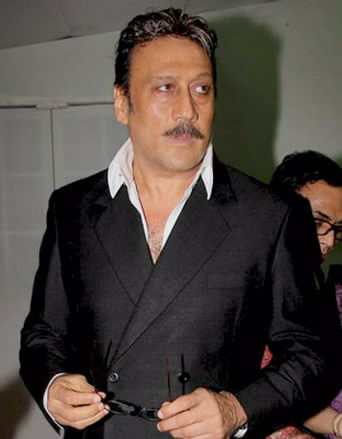
A family gathers around a dying patriarch on a ventilator and behaves exactly as families do, which is badly and lovingly at the same time. Umang Vyas directed the Gujarati adaptation of Rajesh Mapuskar's Marathi film, Niren Bhatt and Karan Vyas wrote it, and it released on 14 September 2018. The Times of India gave it four out of five and called it a perfect family film.
Jackie Shroff headlines an ensemble of Pratik Gandhi, Sanjay Goradia, Mitra Gadhavi, Suchita Trivedi, Mehul Buch and Utkarsh Mazmudar. A Hindi film star of that vintage taking top billing in a Gujarati production was a first, and the direction of travel matters: Shroff came to the Gujarati film, the Gujarati film did not go to Bombay for a cameo. Vyas later directed Jhamkudi and Dear Father, so this is also where one of the industry's most reliable commercial directors starts.
Photo: Bollywood Hungama, CC BY 3.0, via Wikimedia Commons.
15Reva

Dhruv Bhatt's Tatvamasi is a canonical Gujarati novel about a westernised man who walks the Narmada and slowly stops being the person who arrived. Rahul Bhole and Vinit Kanojia adapted it as Reva, shot it along the river, cast Chetan Dhanani and Monal Gajjar with Yatin Karyekar, Daya Shankar Pandey and Abhinay Banker, and released it on 6 April 2018 through AA Films. It won the National Film Award for Best Feature Film in Gujarati at the 66th National Film Awards.
This is the entry that connects the new wave to Gujarati literature, which had been sitting there unadapted for the whole revival while everyone made original comedies. Reported gross was Rs 3 crore, so nobody got rich. What it established is that the state's own bookshelf is a viable source for films that win national awards, and the 66th cycle carried a second lesson with it: Reva took Best Gujarati Feature while Hellaro took the Swarna Kamal outright, meaning two Gujarati films were being judged at two different levels in the same year.
Photo: Jaydev Pala, CC BY-SA 4.0, via Wikimedia Commons.
2019 and 2020: the Swarna Kamal, the ceiling, and the stop
The decade's best year and then a full stop. In eleven months Gujarati cinema won India's top film award and set a box office record it would hold for six years. Four months later the cinemas closed.
16Hellaro
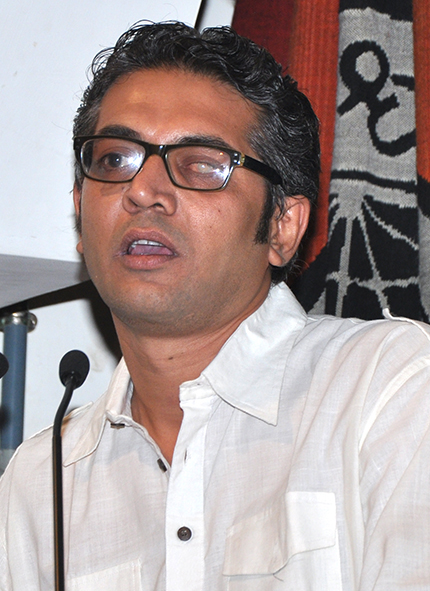
Women in a Rann of Kutch village in the 1970s are forbidden to dance. They find a drummer in the desert. Abhishek Shah's first film as director, written by him with Prateek Gupta and with dialogue and lyrics by the playwright Saumya Joshi, ran 121 minutes with an ensemble of thirteen actresses led by Shraddha Dangar, Kaushambi Bhatt, Niilam Paanchal, Tejal Panchasara, Shachi Joshi and Brinda Trivedi, opposite Jayesh More.
It won the Swarna Kamal for Best Feature Film at the 66th National Film Awards. Not best Gujarati film. Best film in India that year, across every language, decided by one jury. No Gujarati production had ever taken that award, and none has since. It opened Indian Panorama at the 50th International Film Festival of India, released commercially on 8 November 2019, and took a reported Rs 16 crore. Seven years earlier the industry could not fill a multiplex in its own state capital. That is the distance Hellaro measures.
Photo: Gujarat Vishw Kosh Trust, CC BY-SA 4.0, via Wikimedia Commons.
17Chaal Jeevi Laiye!

A son takes his father on a road trip and the father, it turns out, is the one doing the rescuing. Vipul Mehta wrote and directed it with Jainesh Ejardar, Rashmin Majithia produced under Coconut Motion Pictures, and Siddharth Randeria, Yash Soni and Aarohi Patel carried it. Released 1 February 2019, reported at an estimated Rs 50 crore, and remade in Marathi in 2024 as Ole Aale with Nana Patekar.
Ignore the record for a second and look at the run. This film entered its eighth year in cinemas on 1 February 2026, the first Indian film released this century to do that. What Chaal Jeevi Laiye! settled is the ceiling question. Until it landed, every Gujarati budget conversation assumed a hard limit somewhere around Rs 20 crore, and that assumption priced everything: what you could spend, who you could cast, how many screens you could ask for. One film moved the number by two and a half times and it held as the all-time Gujarati record until Laalo crossed Rs 100 crore in 2025.
Photo: Nizil Shah, CC BY-SA 4.0, via Wikimedia Commons.
18Short Circuit

A time loop film in Gujarati, made for a reported Rs 1.5 crore, released 11 January 2019. Faisal Hashmi wrote it with Bhargav Purohit and Mohsin Chavada, Dhvanit Thaker and Kinjal Rajpriya led it, and reviewers singled out the visual effects, which is not a sentence anyone had previously written about a Gujarati production. Reported gross was Rs 2.5 crore, so it made its money back and not much more.
It belongs on this list precisely because it did not become a blockbuster. Science fiction is the genre a small industry attempts last, because it costs money before it earns any and the audience has no habit for it. Hashmi went and did it in year seven of the revival on a budget smaller than most Gujarati comedies, and got out clean. Every genre lane Gujarati cinema has opened since, horror with Vash, horror comedy with Jhamkudi, historical with Kasoombo, follows the same logic this film tested first.
Photo: Snehrashmi, CC BY-SA 4.0, via Wikimedia Commons.
19Luv Ni Love Storys

Durgesh Tanna wrote and directed a multi-strand romantic comedy and cast Pratik Gandhi, Deeksha Joshi, Shraddha Dangar, Vyoma Nandi and Hardik Sangani across it. It released on 31 January 2020. The Times of India gave it three and a half out of five and called it a family drama working through different shades of love.
Two things make it a useful last-look at the decade. First, a film with five near-equal leads and no single marquee name was a viable commercial proposition in Gujarati by 2020, which would have been unthinkable in 2013. Second, Pratik Gandhi. This was his Gujarati release before Scam 1992 arrived in October 2020 and turned him into a national name, and he had been working steadily in this industry since Bey Yaar six years earlier. The talent the revival built was about to be visible to everybody, on terms Gujarati cinema no longer controlled.
Photo: Bollywood Hungama, CC BY 3.0, via Wikimedia Commons.
20Golkeri

Malhar Thakar and Manasi Parekh break up, and his parents, played by Sachin Khedekar and Vandana Pathak, decide the two of them should not. Viral Shah directed and co-wrote the Gujarati version of the Marathi film Muramba, and it opened on 28 February 2020. It won Best Film at the Toronto Gujarati Iconic Film Festival that year and later went to Amazon Prime Video.
Its theatrical run lasted about three weeks. Cinemas across India shut in March 2020 and the film was still playing when they did. Golkeri is the last release of the Gujarati new wave as a continuous run, and its reported Rs 9 crore is a fragment rather than a total. Note who produced it, though: Manasi Parekh and Parthiv Gohil under Soul Sutra, an actor and a singer financing their own films. That model came back after the shutdown and produced Kutch Express and Jhamkudi. The decade ended mid-sentence, and the sentence got finished.
Photo: Bollywood Hungama, CC BY 3.0, via Wikimedia Commons.
What the numbers say
Reported gross across the new wave, film by film, 2014 to 2020
Every figure here is industry-reported and not audited, and several are labelled as estimates by the sources that carry them. Gujarati cinema has no certified box office tracker. Eight films on this page carry no published lifetime gross at all, including Kevi Rite Jaish, which is recorded only by its reported Rs 1.75 crore budget and its sixteen week run, and Wrong Side Raju, Dhh, Amdavad Ma Famous, Ventilator, Carry On Kesar, Premji: Rise of a Warrior and Luv Ni Love Storys.
Questions people actually ask
Which film started the Gujarati new wave?
Kevi Rite Jaish, directed by Abhishek Jain and released on 15 June 2012. It was made for a reported Rs 1.75 crore, ran ten weeks in Ahmedabad and Vadodara and sixteen weeks in total, and won seven of the eight categories it was nominated in at the 2012 BIG Gujarati Entertainment Awards. Gujarat was releasing fewer than ten Gujarati films a year before it.
What is the difference between Hellaro's National Award and the ones Wrong Side Raju, Dhh and Reva won?
Wrong Side Raju, Dhh and Reva each won Best Feature Film in Gujarati, a language-specific award, at the 64th, 65th and 66th National Film Awards. Hellaro won Best Feature Film outright at the 66th, the Swarna Kamal, judged against every Indian film of that cycle in every language. It is the only Gujarati film ever to take it.
Which was the biggest Gujarati box office hit of the 2012 to 2020 decade?
Chaal Jeevi Laiye!, released 1 February 2019, at an estimated reported Rs 50 crore. It held the all-time Gujarati record for six years until Laalo: Krishna Sada Sahaayate crossed a reported Rs 100 crore in 2025, and it entered its eighth year in cinemas on 1 February 2026.
Why does Chhello Divas matter more than its box office suggests?
Krishnadev Yagnik cast eight untried young actors in 2015: Malhar Thakar, Yash Soni, Janki Bodiwala, Kinjal Rajpriya, Mitra Gadhavi, Aarjav Trivedi, Rahul Raval and Netri Trivedi. All of them went on to lead Gujarati films, and six reassembled for Shu Thayu? in 2018. A reported Rs 2.8 crore film produced the acting bench the industry ran on for the next decade.
Are these box office figures reliable?
Treat them as reported, not recorded. Gujarati cinema has no certified box office tracker equivalent to what Hindi films have, so figures come from trade press, distributor statements and Wikipedia infoboxes that often carry estimation tags. Where a film has no published lifetime gross, this page says so rather than inventing one.
Sources and image credits
All photographs are free-licensed files from Wikimedia Commons, reused with the attribution each licence requires. No press agency or studio photographs are hosted on this site. Instagram content is linked or embedded from the official account, never re-hosted.
- English Wikipedia film articles and infoboxes for each of the twenty titles, retrieved July 2026
- IMDb-sourced Gujarati cinema credits database covering 118 films from 2012 to 2026, verified April 2026
- National Film Awards records for the 63rd, 64th, 65th and 66th ceremonies
- Wikimedia Commons file pages for licence and photographer attribution on every image used
- Trade reporting carried as citations inside the Wikipedia articles, including The Times of India, DNA, Bollywood Hungama and BookMyShow box office pages