The National Film Award for Best Gujarati Feature Film has been given 15 times between the 1960 cycle and the 2024 cycle, from Mendi Rang Lagyo at the 8th National Film Awards to Maaran at the 72nd. Only one Gujarati film has taken the top all-India prize: Hellaro won Best Feature Film at the 66th National Film Awards, the cycle covering 2018. Two Gujarati performances have won acting awards in recent years, Manasi Parekh as Best Actress for Kutch Express at the 70th and Janki Bodiwala as Best Supporting Actress for Vash at the 71st. Note the trap that makes half the internet wrong on this subject: the ceremony number tracks the year of cinema being honoured, not the year the trophy is handed over. The 70th awards honoured films of 2022 and were presented in October 2024.
The National Film Awards are the only Indian film prize with a paper trail you can actually check. Every winner sits in a Directorate of Film Festivals catalogue or a Press Information Bureau release, signed and dated. That should make a page like this easy. It does not, because the awards carry two different years at once and almost nobody separates them. The 70th National Film Awards honoured films of 2022, were announced on 16 August 2024, and were handed out on 8 October 2024. Three years, one award. Write it carelessly and you have published a mistake that will be copied for a decade.
So here is the rule this page runs on. Wherever you see a year against an award, it is the year of cinema the ceremony honoured, which is the official award year, and the ceremony number sits right next to it. Where the announcement and presentation dates are verified, they are in the entry. Read it that way and the Gujarati record turns out to be short, lumpy and much more interesting than the round numbers suggest. Fifteen Best Gujarati Feature Film wins in sixty five award cycles. A forty three year gap in the middle where the jury gave the Gujarati award once. Then one film in 2018 that walked past the regional category entirely and took the Swarna Kamal.
The list at a glance
| Name | Award | Category | Year (ceremony) | Film |
|---|---|---|---|---|
| Hellaro | Best Feature Film | Feature film, all India | 2018 (66th) | Hellaro |
| The thirteen actresses of Hellaro | Special Jury Award | Acting, all India | 2018 (66th) | Hellaro |
| Kutch Express | Best Feature Film Promoting National, Social and Environmental Values | Feature film, all India | 2022 (70th) | Kutch Express |
| Bhavni Bhavai | Nargis Dutt Award for Best Feature Film on National Integration | Feature film, all India | 1980 (28th) | Bhavni Bhavai |
| Maaran | Best Gujarati Feature Film | Regional feature film | 2024 (72nd) | Maaran |
| Vash | Best Gujarati Feature Film | Regional feature film | 2023 (71st) | Vash |
| Chhello Show | Best Gujarati Feature Film | Regional feature film | 2021 (69th) | Chhello Show |
| Reva | Best Feature Film in Gujarati | Regional feature film | 2018 (66th) | Reva |
| Dhh | Best Feature Film in Gujarati | Regional feature film | 2017 (65th) | Dhh |
| Wrong Side Raju | Best Feature Film in Gujarati | Regional feature film | 2016 (64th) | Wrong Side Raju |
| The Good Road | Best Feature Film in Gujarati | Regional feature film | 2012 (60th) | The Good Road |
| Manvini Bhavai | Best Feature Film in Gujarati | Regional feature film | 1993 (41st) | Manvini Bhavai |
| Manasi Parekh | Best Actress in a Leading Role | Acting | 2022 (70th) | Kutch Express |
| Janki Bodiwala | Best Actress in a Supporting Role | Acting | 2023 (71st) | Vash |
| Niki Joshi | Best Costume Design | Craft | 2022 (70th) | Kutch Express |
| Abhishek Shah | Best Feature Film, as director | Direction and production | 2018 (66th) | Hellaro |
| Sanjeev Kumar | Best Actor, twice | Acting | 1970 (18th) and 1972 (20th) | Dastak and Koshish |
| Paresh Rawal | Best Supporting Actor | Acting | 1993 (41st) | Woh Chokri and Sir |
| Darshan Jariwala | Best Supporting Actor | Acting | 2007 (55th) | Gandhi, My Father |
| Sanjay Leela Bhansali | Best Direction | Direction | 2015 (63rd) | Bajirao Mastani |
| Kalyanji Anandji | Best Music Direction | Music | 1968 (16th) | Saraswatichandra |
| Alka Yagnik | Best Female Playback Singer, twice | Music | 1993 (41st) and 1998 (46th) | Hum Hain Rahi Pyar Ke and Kuch Kuch Hota Hai |
How this list was built
Every award year, category and ceremony number here was read off the English Wikipedia tables that mirror the Directorate of Film Festivals catalogues and the Press Information Bureau announcements, and each one was cross-checked against the category page and the ceremony page before it was written down. Two separate things get counted: the regional award, called Best Feature Film in Gujarati until the 69th cycle and Best Gujarati Feature Film from the 70th, and any all-India category won by a Gujarati film or a Gujarati person. People are listed where the award was individual. Films are listed where the award went to the production. Entries were dropped for one reason only, which is the photo rule this site runs on: no free-licensed Wikimedia Commons photograph and no scrape-verified Instagram account means no entry. That removed six Best Gujarati Feature Film winners whose makers are dead and unphotographed in the free-licence world: Mendi Rang Lagyo (1960 cycle, Manhar Raskapur), Nandanvan (1961, Ganpatrao Brahmbhatt), Jevi Chhun Tevi (1963, Gajanan Mehta), Kasumbi No Rang (1965, G. K. Mehta), Kanku (1969, Kantilal Rathod), Gun Sundari No Ghar Sansar (1972, Govind Saraiya) and Percy (1989, Pervez Merwanji, who died in 1993). Meera Lakhia, who won Best Production Design at the 28th cycle for Bhavni Bhavai, was dropped for the same reason, as was Manish Saini, director of the 65th cycle winner Dhh, whose name returns no Commons photograph and no account that verification could tie to him. One available file was rejected on licence grounds rather than availability: the Commons photograph of Rajendra Kumar, star of the 1960 winner, carries a CC BY-SA 4.0 tag over a credit line naming an unidentified photographer, which is not a licence anyone had the standing to grant. Films with no photograph of the film itself are illustrated with a Commons photo of a verified key person from that film, named in the alt text.
The awards that were not the Gujarati one
Four times a Gujarati production has won in an all-India category, competing against every language in the country rather than for the shelf marked Gujarati.
1Hellaro

This is the ceiling of the whole list. Best Feature Film is the one category with no language attached to it, and Hellaro is the only Gujarati film to have won it. Abhishek Shah co-wrote and directed a period drama set in a Kutch village in the 1970s, about women forbidden to dance who find a drummer in the desert, and it beat every Hindi, Tamil, Malayalam and Bengali entry in the 2018 cycle. The award was announced on 9 August 2019 after a delay caused by the general election, and presented on 23 December 2019.
Watch the years here, because this entry is where most write-ups fall over. Hellaro reached Indian cinemas in November 2019, which is why you will see it described everywhere as a 2019 film. The award it won belongs to the 2018 cycle, judged on films certified in 2018. Both statements are true and people keep collapsing them into one wrong sentence. The film also opened Indian Panorama at the 50th International Film Festival of India, and it did the thing Gujarati arthouse had never managed, which was to win the biggest prize in the country and then still sell tickets at home.
Photo: Imfarhad7, CC BY-SA 4.0, via Wikimedia Commons.
2The thirteen actresses of Hellaro
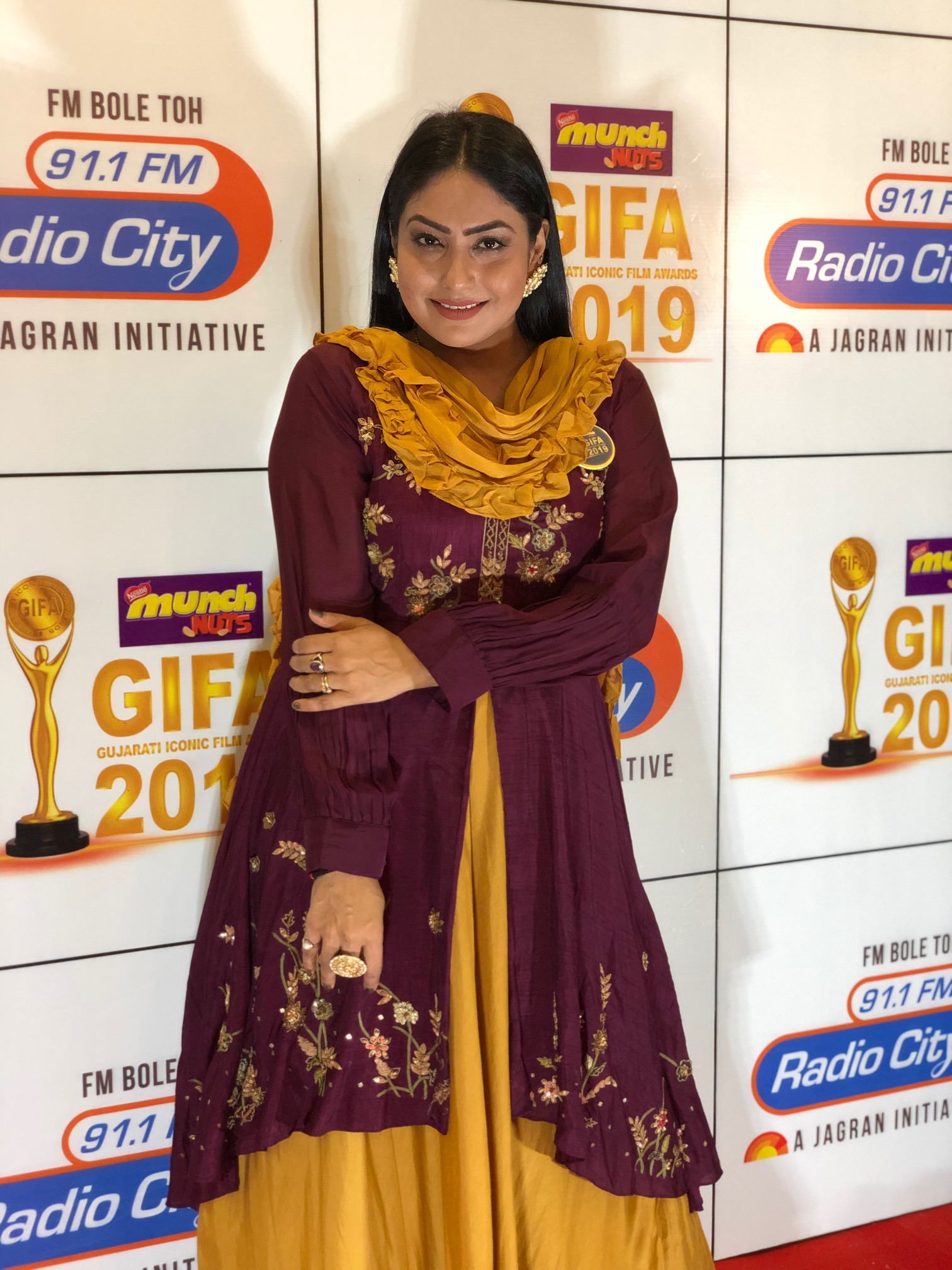
The 66th jury did something almost unheard of at these awards. Rather than pull one performance out of an ensemble, it handed the Special Jury Award to all thirteen women who play the village wives in Hellaro, as a single collective citation, sharing the category that year with the composer Indraadip Dasgupta for the Bengali film Kedara. Thirteen names on one Rajat Kamal. Nobody was singled out and nobody was left off.
It is worth reading that decision as a piece of criticism rather than a piece of generosity. Hellaro has no star turn in it because the film is structurally about a group, and the jury made its citation match the film's own logic. For most of the thirteen this remains the largest credential on the CV, and it is a genuinely rare one: an all-India acting award that no individual actor can claim alone.
Photo: Imfarhad7, CC BY-SA 4.0, via Wikimedia Commons.
3Kutch Express

Three awards from one film in a single cycle, which is the best haul any Gujarati production has managed at these awards. Viral Shah directed, Soul Sutra produced, and the film took the values category outright while Manasi Parekh took a shared Best Actress and Niki Joshi took Best Costume Design. What makes the sweep stranger is that the 70th jury gave no Best Gujarati Feature Film award at all that cycle. Gujarat won three Rajat Kamals in a year when its own regional category went empty.
The year labelling on this one catches people constantly. Kutch Express reached theatres in January 2023 and is correctly described as a 2023 release. It competed in the 2022 award cycle, because eligibility follows the certification year rather than the release date, and the trophies were handed over on 8 October 2024. If you see this film described as a 2024 National Award winner, that is the presentation date being mistaken for the award year.
Photo: Bollywood Hungama, CC BY 3.0, via Wikimedia Commons.
4Bhavni Bhavai

Ketan Mehta was born in Navsari, trained at the Film and Television Institute of India, and made his debut with a Gujarati film that tells the story of untouchability through the folk form of Bhavai. The 28th jury gave it the Nargis Dutt Award for Best Feature Film on National Integration, and gave Meera Lakhia the production design award for the same film. It later screened at the Museum of Modern Art and took a UNESCO Club human rights award at the Three Continents Festival.
Here is the detail that says everything about how these awards actually worked. In the 1980 cycle the Best Gujarati Feature Film category was left empty, as it was in every cycle from 1973 to 1988. So the most decorated Gujarati film of that entire stretch never held the Gujarati award, because the jury that was giving out no Gujarati prize was simultaneously handing this one two all-India Rajat Kamals. Any list that counts only the regional category misses it completely.
Photo: Bollywood Hungama, CC BY 3.0, via Wikimedia Commons.
Best Gujarati Feature Film, winner by winner
The regional award, called Best Feature Film in Gujarati until the 69th cycle and renamed Best Gujarati Feature Film from the 70th. Eight of the fifteen winners are listed here. The other seven were dropped under the photo rule and are named in the methodology.
5Maaran
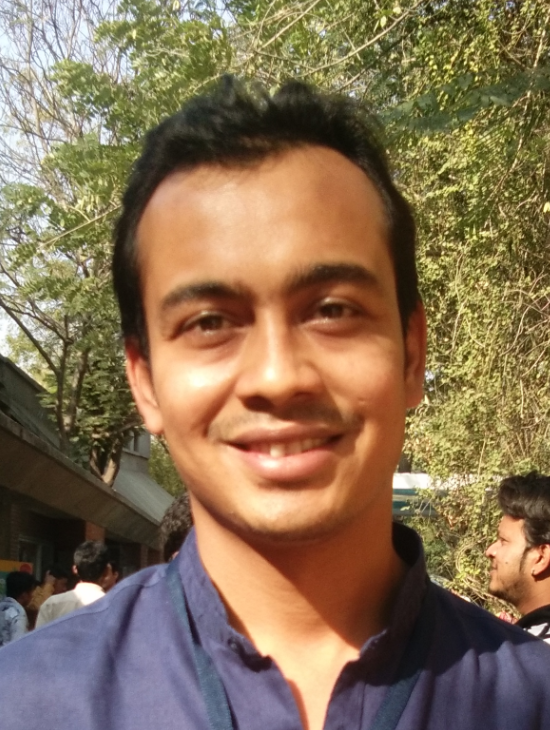
The most recent winner, announced on 18 July 2026 in the cycle honouring films of 2024, and the strangest entry on this page for one simple reason: at the time of the announcement Maaran had not reached cinemas. A thriller directed by Abhishek Jain for CineMan Productions, it was certified inside the 2024 window, entered, judged and awarded before the general public had a chance to see it. That is legal, ordinary and completely counterintuitive if you assume a National Award follows a hit.
Abhishek Jain is the pivotal name in the modern Gujarati industry. He directed Kevi Rite Jaish in 2012 and Bey Yaar in 2014, the two films usually credited with restarting a business that had spent the 2000s making nothing anybody watched. CineMan, his banner, also produced Wrong Side Raju, which means Jain's company is now attached to two Best Gujarati Feature Film winners eight years apart, at the 64th and the 72nd.
Photo: Gazal World, CC BY-SA 4.0, via Wikimedia Commons.
6Vash
A supernatural horror film about a family whose daughter is enslaved by a stranger using dark magic, written and directed by Krishnadev Yagnik, released on 17 February 2023 and awarded in the cycle that covers 2023. Two wins in one cycle: the regional feature award and a shared Best Supporting Actress for Janki Bodiwala. For once the release year and the award year line up, which makes this the easiest entry on the page to quote correctly.
Yagnik is the commercial engine of Gujarati cinema and this is his first National Award. He wrote and directed Chhello Divas, Shu Thayu?, Naadi Dosh and both Vash films, a run that has put more paying audiences into Gujarati cinemas than any of his contemporaries. Vash travelled further than any of them: it was remade in Hindi as Shaitaan in 2024 with Bodiwala reprising her performance, and that remake is what pulled national distribution towards the sequel.
Instagram: @krishnadevyagnik (verified 2026-07-29).
7Chhello Show

Known internationally as Last Film Show, this is the coming of age film about a boy in a Saurashtra village who falls in love with the projection booth. Pan Nalin was born in Adtala in Amreli district and sold tea on a railway platform with his father until he was twelve, which is not a detail the marketing invented. The film premiered at Tribeca in June 2021, released in India on 14 October 2022, and won the Gujarati feature award in the 2021 cycle, announced in August 2023.
It is also the film that carried Gujarati cinema into the Oscar conversation, selected as India's official entry for Best International Feature Film at the 95th Academy Awards and subsequently shortlisted. Read the calendar on this one slowly: premiere 2021, award cycle 2021, Indian release 2022, award announced 2023, award presented October 2023. Five dates, one film, and every one of them turns up somewhere as the answer to what year Chhello Show won.
Photo: Benny Crude, CC BY-SA 4.0, via Wikimedia Commons.
8Reva

Reva: A Journey Within is an adventure drama adapted from Dhruv Bhatt's novel Tatvamasi, directed by Rahul Bhole and Vinit Kanojia, produced by Paresh Vora, starring Chetan Dhanani and Monal Gajjar. It won the regional Gujarati award in the 2018 cycle, which is the same cycle in which Hellaro took the all-India Best Feature Film. That pairing is the single most confusing fact on this page and it is completely correct: the 66th gave Gujarati cinema two separate awards for two separate films.
The pattern it belongs to is worth naming. Gujarati cinema keeps winning national juries over with literary adaptation rather than original screenwriting: Reva from Dhruv Bhatt, Manvini Bhavai from Pannalal Patel, Kanku from Pannalal Patel again. Bhole and Kanojia went on to co-direct All The Best Pandya in 2025, moving from the award lane into the commercial one.
Photo: Parthkadecha94, CC0, via Wikimedia Commons.
9Dhh

A children's film named after a single Gujarati letter, about three boys who are weak at school and write to a stage magician asking for a trick that will get them through their exams. Manish Saini directed and co-produced, Naseeruddin Shah plays the magician, and it won the Gujarati feature award in the 2017 cycle, announced on 13 April 2018 and presented on 3 May 2018.
Dhh is the quiet proof that the Gujarati regional award is not simply a popularity vote transplanted from the box office. It premiered at the International Children's Film Festival in November 2017 and went to Indian cinemas nearly a year later in September 2018, a release pattern no commercial Gujarati producer would choose. The jury took it anyway, in a cycle where louder Gujarati films were available.
Photo: Ifpofficial, CC BY-SA 4.0, via Wikimedia Commons.
10Wrong Side Raju

A thriller drama built on a real hit and run case in Ahmedabad in 2013, directed by Mikhil Musale and produced by CineMan Productions with Phantom Films. It won the Gujarati award in the 2016 cycle, announced on 7 April 2017. Phantom Films coming in as a co-producer mattered: it was the first time a Mumbai production house with that kind of standing had put its name on a Gujarati feature.
The film's other legacy is the lead. Pratik Gandhi carried Wrong Side Raju four years before Scam 1992 turned him into a national name, and he is the clearest evidence that Gujarati cinema now functions as a proper talent pipeline rather than a dead end. Note the shape of that career: the National Award came first, the fame came later, and almost every profile written since has the order backwards.
Photo: Desmond Herzfelder, CC BY 4.0, via Wikimedia Commons.
11The Good Road

Written and directed by Gyan Correa and produced by the NFDC, The Good Road braids three stories together on a highway in rural Kutch. The 60th jury cited it for capturing the flavour of the never ending and undulating highways of the other India and its hidden facets. That win ended a nineteen year gap in the Gujarati category, the longest stretch since the award came back in 1989.
Then came the part everyone remembers. The Film Federation of India picked The Good Road over The Lunchbox as the country's entry for the 86th Academy Awards, a decision that produced a public argument loud enough to drown out the film itself. It was not nominated. Set the row aside and the record stands: the first Gujarati film ever sent to the Oscars by India, and a jury citation that reads like criticism rather than protocol.
Photo: Bollywood Hungama, CC BY 3.0, via Wikimedia Commons.
12Manvini Bhavai

Upendra Trivedi produced, directed and starred in an adaptation of Pannalal Patel's novel about Kalu and Raju, a love story set against famine in rural north Gujarat, with Anuradha Patel opposite him. It took the Gujarati feature award in the 1993 cycle, announced on 21 April 1994 and presented on 30 September 1994.
Trivedi was the dominant face of Gujarati cinema across its studio decades and this film is the summit of that career. It is also the loneliest win on the list. Between the 1972 cycle and the 2012 cycle the Gujarati category was awarded exactly twice, to Percy in 1989 and to this film in 1993, which means Manvini Bhavai stood as the most recent Gujarati National Award winner for nineteen straight years.
Photo: Chirag Umakant Thakkar, CC BY-SA 4.0, via Wikimedia Commons.
The individual winners
Awards given to a named person rather than a production, either for a Gujarati film or, in the older cases, for Hindi films made by people from Gujarat.
13Manasi Parekh

Monghi is a woman in a Kutch household who discovers what she is worth outside the role assigned to her, and Manasi Parekh plays her without a single beat of the pleading that the part invites. The 70th jury split Best Actress between her and Nithya Menen, and it is the first time a performance in a Gujarati film has taken that category in the modern era. The award was announced on 16 August 2024 and presented on 8 October 2024.
The credential most often misquoted is this one, so hold the two numbers apart. The award year is 2022. The presentation year is 2024. Parekh also produced the film with Parthiv Gohil under Soul Sutra, then produced and starred in Jhamkudi the following year, which puts her in a small group of Gujarati performers who now finance their own vehicles rather than wait to be cast in someone else's.
Photo: Bollywood Hungama, CC BY 3.0, via Wikimedia Commons.
14Janki Bodiwala

Bodiwala plays the daughter in Vash, the one the film's horror is done to, and the performance is physical in a way Gujarati cinema had not really asked of anyone before. The 71st jury split Best Supporting Actress between her and Urvashi, one of the most decorated actors in Malayalam cinema, which is the kind of company that tells you how the citation was meant.
The career arc behind it is unusual. She debuted in Chhello Divas in 2015, played this role in Gujarati in 2023, then played the same role again in the 2024 Hindi remake Shaitaan opposite Ajay Devgn and R. Madhavan, and returned to it once more in Vash Level 2 in 2025. Three versions of one character across two languages, and the National Award went to the original.
Photo: Bollywood Hungama, CC BY 3.0, via Wikimedia Commons.
15Niki Joshi
The only Gujarati craft win on this page, and the one that would be invisible without it. Kutch Express is a film about embroidery as livelihood and as inheritance, which means the costume department is not decorating the story, it is carrying the argument. Joshi took Best Costume Design in the 2022 cycle for exactly that work, in a category usually swept by Hindi and Telugu period spectacles with fifty times the budget.
Her own Instagram bio reads National Award Winner 24, and that is a perfect small illustration of the problem this page exists to fix. She received the award in October 2024 and describes it by the year she was handed it. The official award year is 2022. Both are honest. Only one of them belongs in a record.
Instagram: @styleitwithniki (verified 2026-07-29).
16Abhishek Shah
Best Feature Film is given jointly to the producer and the director, which makes Abhishek Shah the only Gujarati director holding a Swarna Kamal in that category. Hellaro was his first feature. Debuting with the biggest film award the country gives out is not a thing that happens, and it happened in Gujarati, in a village drama about women who dance.
What he did next is the more instructive part. Rather than take the award as a passport to Mumbai, he stayed and made Umbarro in 2025, another ensemble film about women stepping outside their assigned roles, and released it into multiplexes rather than festivals. The National Award opened the funding room. He used it to keep making Gujarati films at home.
Instagram: @abhishek_humanbeing (verified 2026-07-29).
17Sanjeev Kumar

Born Harihar Jethalal Jariwala in Surat, in what was then the Bombay Presidency and is now Gujarat, he is on this page under a framing that has to be stated rather than assumed: both his National Awards were for Hindi films, not Gujarati ones. He won Best Actor at the 18th National Film Awards for Dastak, playing Hamid Ahmed, and again at the 20th for Koshish, playing Hari Charan Mathur, a deaf and mute man raising a family. Two wins inside three award cycles.
The Gujarati connection is not decorative. He acted in Gujarati films through the same period, including Kalapi in 1966, playing the poet, directed by Manhar Raskapur, who had made the very first Best Gujarati Feature Film winner. He worked in Gujarati theatre before films and spoke the language at home. He died at forty seven, and the free-licensed photograph on this entry is a government image of him from 1973, captioned in the Ministry of Information and Broadcasting catalogue as the best actor for Koshish.
Photo: Ministry of Information and Broadcasting, GODL-India, via Wikimedia Commons.
18Paresh Rawal
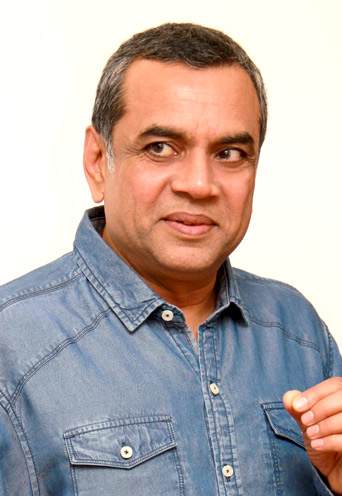
One award, two performances, one cycle. The 41st jury gave Rawal Best Supporting Actor for his work in both Woh Chokri and Sir, and he remains one of only two actors to have taken the category for two separate films in a single year. The same ceremony gave Manvini Bhavai the Gujarati feature award, which makes the 41st a good cycle for Gujarat in two entirely unconnected ways.
He belongs here on the Gujarati theatre route rather than the Gujarati cinema one. Born and raised in Bombay to a Gujarati family, he built his reputation on the Gujarati stage before Hindi films took him, and he never stopped: his Gujarati play Dear Father ran for years and was adapted into a film in 2022. Over 240 films, a Padma Shri in 2014, and exactly one National Award, won in the same twelve months at either end of two very different roles.
Photo: Bollywood Hungama, CC BY 3.0, via Wikimedia Commons.
19Darshan Jariwala

Jariwala plays Gandhi in Gandhi, My Father, a film that is really about Harilal, the son, and about what a great man costs the people nearest to him. Playing Gandhi as a father who is failing rather than a saint who is winning is a much harder assignment than the reverence version, and the 55th jury gave him Best Supporting Actor for it. Announced on 7 September 2009 and presented on 21 October 2009, for the 2007 cycle. Two years between the award year and the trophy.
He is the son of the Gujarati actress Leela Jariwala, which makes him second generation in a business that rarely had a second generation to speak of. He has kept working in Gujarati cinema throughout, in Bey Yaar, Kamthaan, Fakt Purusho Maate and All The Best Pandya, which is unusual for someone with a National Award and a long Hindi television career behind him.
Photo: Bollywood Hungama, CC BY 3.0, via Wikimedia Commons.
20Sanjay Leela Bhansali

Bhansali holds several National Film Awards across his career, but only one of them is the individual directing prize, and it is worth pinning down because it gets attached to the wrong film constantly. Best Direction went to him at the 63rd National Film Awards for Bajirao Mastani, in the cycle honouring films of 2015, announced on 28 March 2016. Not for Devdas, not for Black.
He is on this page under the same explicit framing as Sanjeev Kumar: a Gujarati who won for Hindi cinema. Born in Bhuleshwar in South Bombay into a Gujarati Jain family, he took his mother Leela's name as his middle name, and he still speaks Gujarati at home. None of his films are in Gujarati. That is precisely why the framing has to be stated rather than implied, because a list that quietly counts him as a Gujarati cinema winner is telling you something untrue.
Photo: ARCHANA MALPANI, CC BY-SA 4.0, via Wikimedia Commons.
21Kalyanji Anandji
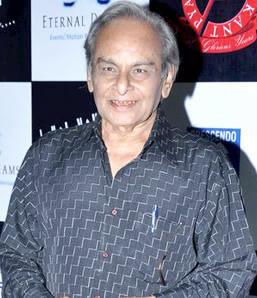
Two brothers from a Kutchi family who scored roughly 250 films together, and their National Award came for Saraswatichandra at the 16th National Film Awards, in the cycle covering 1968. The film is in Hindi, directed by Govind Saraiya, but it is adapted from Govardhanram Tripathi's Gujarati novel and it also took Best Cinematography and the award for Best Feature Film in Hindi that year. A Gujarati novel, a Gujarati director, a Gujarati composing duo, and a Hindi film.
The reason to keep them on a Gujarati awards page rather than file them under Bollywood is what they did with the position. Kalyanji Anandji were the mentors credited by later Gujarati musicians and singers with getting them into rooms they could not have reached alone, Alka Yagnik among them. The award is one line. The pipeline they built is the longer contribution.
Photo: Bollywood Hungama, CC BY 3.0, via Wikimedia Commons.
22Alka Yagnik
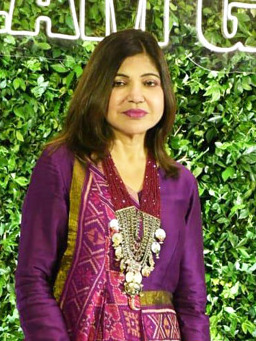
Two National Film Awards, five award cycles apart, both for Hindi songs. Ghoonghat Ki Aad Se from Hum Hain Rahi Pyar Ke took the 41st, in the cycle covering 1993, the same ceremony that gave Paresh Rawal his award and Manvini Bhavai the Gujarati feature prize. The title song of Kuch Kuch Hota Hai took the 46th, in the cycle covering 1998. Only two other female playback singers have won this category exactly twice.
She belongs on this page on the same explicit terms as Bhansali and Sanjeev Kumar. Born in Kolkata to a Gujarati family, a Bengali childhood and a Hindi career, with no Gujarati film credit driving either award. What ties her to this record is the mentorship line: she credits Kalyanji Anandji, two entries above, with shaping her voice, which means the Gujarati composing duo who won in 1968 helped produce the Gujarati singer who won in 1993.
Photo: Bollywood Hungama, CC BY 3.0, via Wikimedia Commons.
What the numbers say
How often Best Gujarati Feature Film was actually awarded, by decade of the award cycle
Counted by award cycle, meaning the year of cinema each ceremony honoured, from the 1960 cycle at the 8th National Film Awards to the 2024 cycle at the 72nd. Fifteen awards across sixty five cycles. The fifty empty cycles are not gaps in the record, they are cycles in which the jury declined to give the Gujarati award at all.
Questions people actually ask
Why does the National Film Award ceremony number not match the year?
Because the ceremony number tracks the year of cinema being judged, not the year of the ceremony. The 70th National Film Awards honoured films certified in 2022, were announced on 16 August 2024 and were presented on 8 October 2024. On this page the year always means the award cycle, with the ceremony number next to it, so nothing gets misread.
How many times has Best Gujarati Feature Film been awarded?
Fifteen times between the 1960 cycle and the 2024 cycle, from Mendi Rang Lagyo at the 8th National Film Awards to Maaran at the 72nd. In the other fifty cycles the jury gave no Gujarati award. The category went empty for every cycle of the 2000s and for a stretch of sixteen straight cycles from 1973 to 1988.
Has a Gujarati film ever won the top National Film Award for Best Feature Film?
Once. Hellaro, directed by Abhishek Shah and produced by Saarthi Productions, won Best Feature Film at the 66th National Film Awards in the cycle covering 2018, announced on 9 August 2019 and presented on 23 December 2019. The film reached Indian cinemas in November 2019, which is why it is often described as a 2019 film even though the award belongs to the 2018 cycle.
Which Gujarati actors have won National Film Awards for acting?
Manasi Parekh won Best Actress in a Leading Role for Kutch Express at the 70th, shared with Nithya Menen, and Janki Bodiwala won Best Actress in a Supporting Role for Vash at the 71st, shared with Urvashi. Thirteen actresses of Hellaro shared the Special Jury Award at the 66th. Sanjeev Kumar, Paresh Rawal and Darshan Jariwala all won acting awards for Hindi films rather than Gujarati ones.
Which Gujarati film has won the most National Film Awards in one cycle?
Kutch Express, with three at the 70th National Film Awards in the cycle covering 2022: Best Feature Film Promoting National, Social and Environmental Values, Best Actress in a Leading Role for Manasi Parekh, and Best Costume Design for Niki Joshi. That same cycle gave no Best Gujarati Feature Film award at all.
Sources and image credits
All photographs are free-licensed files from Wikimedia Commons, reused with the attribution each licence requires. No press agency or studio photographs are hosted on this site. Instagram content is linked or embedded from the official account, never re-hosted.
- English Wikipedia, National Film Award for Best Gujarati Feature Film, full winners table mirroring the Directorate of Film Festivals catalogues, retrieved July 2026
- Press Information Bureau announcements for the 66th, 69th, 70th, 71st and 72nd National Film Awards
- English Wikipedia ceremony pages for the 16th, 18th, 20th, 28th, 41st, 46th, 55th, 60th, 63rd, 64th, 65th, 66th, 69th, 70th, 71st and 72nd National Film Awards, used for announcement and presentation dates
- English Wikipedia category tables for Best Actor in a Leading Role, Best Actress in a Leading Role, Best Actor in a Supporting Role, Best Actress in a Supporting Role, Best Direction, Best Music Direction, Best Female Playback Singer and Best Costume Design
- Directorate of Film Festivals award catalogue PDFs cited in the Wikipedia tables, including the 41st National Film Awards catalogue
- English Wikipedia film articles for Hellaro, Kutch Express, Vash, Maaran, Last Film Show, Reva, Dhh, Wrong Side Raju, The Good Road, Manvini Bhavai and Bhavni Bhavai
- English Wikipedia biographies for Sanjeev Kumar, Paresh Rawal, Darshan Jariwala, Sanjay Leela Bhansali, Ketan Mehta, Pan Nalin, Kalyanji Anandji and Alka Yagnik
- Wikimedia Commons imageinfo API for every photograph licence, photographer credit and description on this page
- Instagram profile verification via the Apify Instagram scraper, 29 July 2026, for Krishnadev Yagnik, Abhishek Shah and Niki Joshi